
Choosing a Flat Plug Extension Cord: Why Gauge, Length, and UL Matter
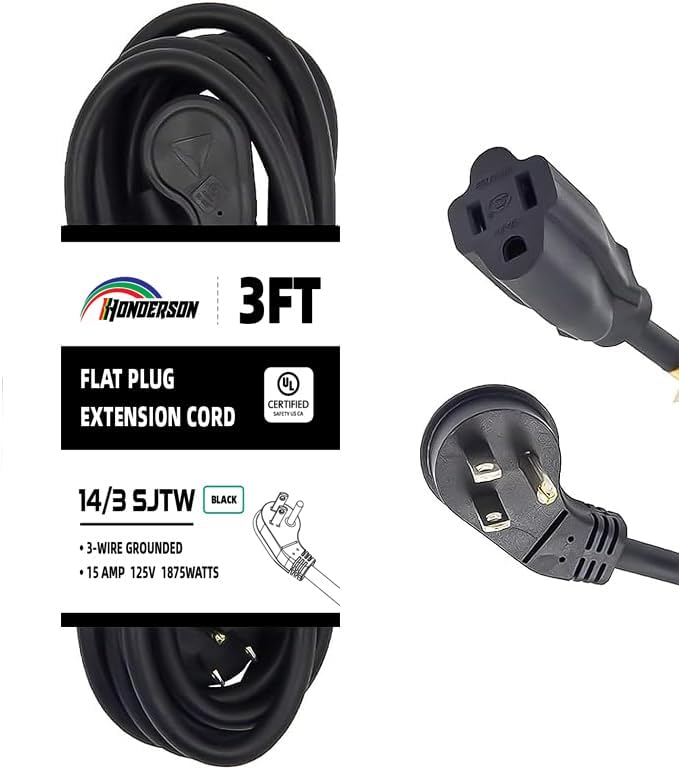
This 14-gauge, 3-foot flat plug extension cord represents a specific solution for tight spaces where traditional bulky plugs won't fit. The heavy-duty 14/3 SJTW rating indicates it's designed for sustained use with appliances up to 15 amps, not just occasional lamp duty. Buyers should understand that the flat plug design is the primary feature here, trading off length for space-saving convenience.
Key Considerations Before Buying
- The 14-gauge wire is thicker than standard 16-gauge cords, allowing it to safely handle higher-draw appliances like space heaters or power tools without overheating over its 3-foot length.
- A 3-foot cord is purposefully short; it's ideal for moving an appliance slightly away from an outlet or managing cable slack, not for providing distant power access across a room.
- The SJTW jacket rating means it's rated for general indoor use (the 'S'), junior hard service ('J'), thermoplastic ('T'), and weather-resistant ('W'), though it's marketed for indoor use specifically.
What Our Analysts Recommend
Genuine UL listing (look for the holographic UL mark on the plug) is non-negotiable for safety. For a flat plug cord, check that the plug's low profile is robust and doesn't feel flimsy, as this is a stress point. The 14/3 labeling should be clearly stamped on the jacket, confirming three 14-gauge conductors inside.
Extension Cords Market Context
Market Overview
The market for short, heavy-duty extension cords has grown with the proliferation of large-plug power adapters for electronics and appliances that block adjacent outlets. Flat plug designs specifically address this nuisance, creating a premium niche over basic cords. Consumers often confuse 'heavy duty' marketing with actual wire gauge; a true 14-gauge cord like this one is in a higher performance tier.
Common Issues
Common problems include cords labeled with a heavy gauge that actually use thinner copper, plugs that crack or loosen at the cord junction, and counterfeit safety certifications. For flat plugs, a specific failure point is the thin plug housing deforming or breaking if forced into an overly tight outlet.
Quality Indicators
Beyond UL/ETL listing, quality is shown in a thick, flexible yet durable jacket (like SJTW), securely molded plug and connector ends with ample strain relief, and clearly embossed gauge/rating information that doesn't rub off. Copper strands should be visible and numerous when the cord is cut, not a few thick wires.
Review Authenticity Insights
Grade B Interpretation
A 'B' grade with an estimated 15% fake review rate suggests the overall sentiment is reliable, but caution is warranted with the most effusive 5-star reviews. The high adjusted rating of 4.5/5 from authentic reviews remains very strong for this category, indicating genuine satisfaction.
Trust Recommendation
Focus on verified purchase reviews that mention specific use cases, like 'powering my treadmill in a corner' or 'fitting behind my mounted TV,' rather than vague praise. The 1-3 star reviews are particularly valuable here to check for consistent complaints about plug durability or wire flexibility.
Tips for Reading Reviews
For technical products like cords, prioritize reviews that discuss long-term performance over months, not initial impressions. Look for mentions of the product's actual specifications ('14-gauge handled my air compressor') to identify knowledgeable users. Be skeptical of reviews that only praise packaging or delivery speed.
Expert Perspective
This cord's specifications—genuine 14-gauge, 3-foot SJTW, UL-listed—align with a quality, purpose-built product for high-draw appliances in space-constrained areas. The exceptional 4.5 adjusted rating from authentic reviews strongly indicates it delivers on its core promise. The flat plug is its defining advantage, but the 3-foot length is a critical limitation; this is a problem-solver, not a general-purpose cord. The heavy-duty construction justifies a price premium over basic 16/18-gauge cords.
Purchase Considerations
Only purchase this if your primary need is overcoming a blocked outlet due to a large plug. Evaluate if 3 feet is sufficient; for many room layouts, a 6-foot cord with a right-angle plug might be more versatile. Consider if you truly need 14-gauge capacity; for standard lamps or chargers, a lighter-gauge cord may suffice at lower cost.
Comparing Alternatives
Shoppers should compare the cost-per-foot and plug design against longer 14-gauge cords or 16-gauge flat plug cords to ensure this specific configuration matches their electrical and spatial needs.


