
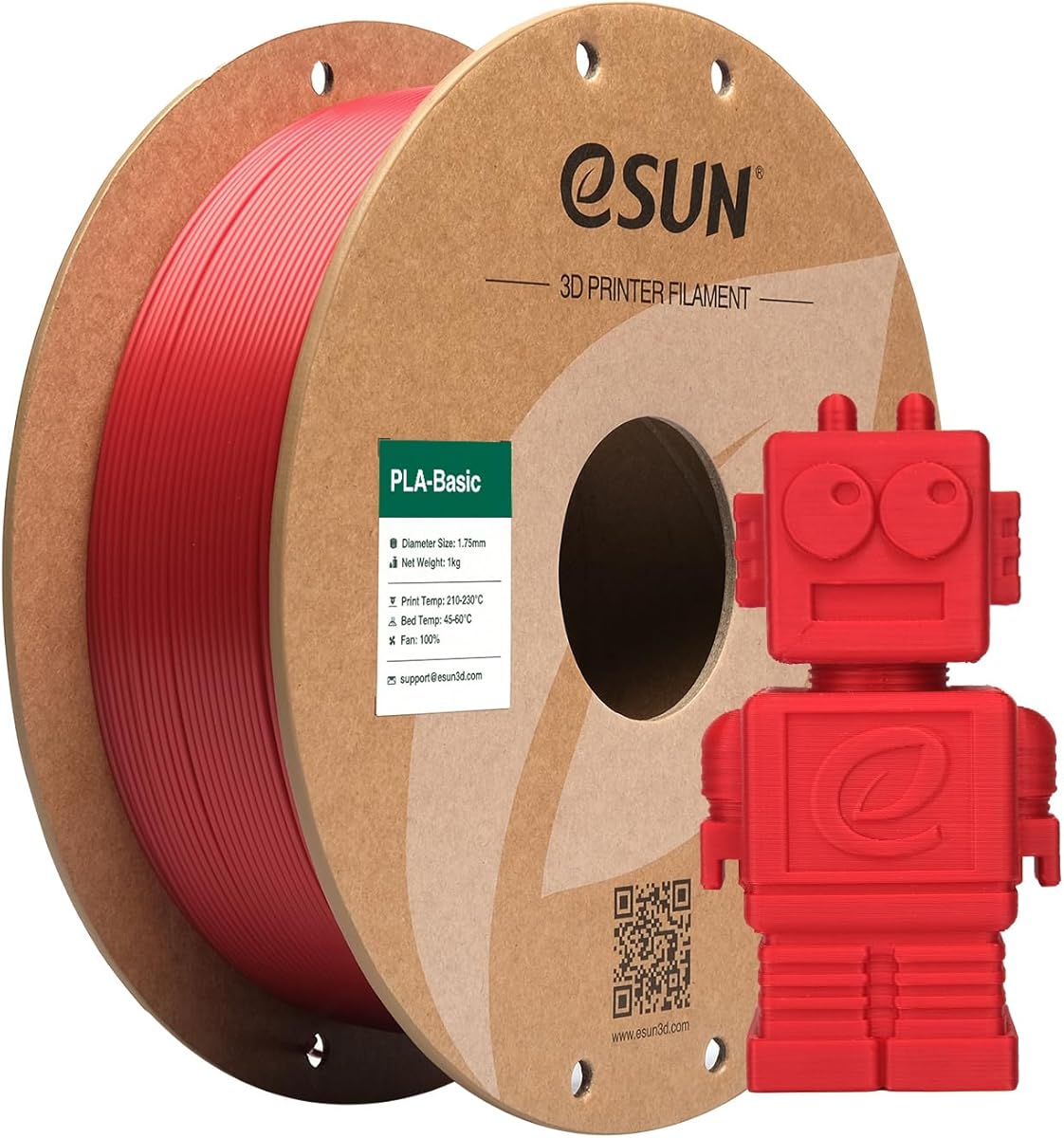
Choosing High-Speed PLA Filament: What eSUN's Fire Engine Red Offers
When selecting high-speed PLA filament like eSUN's 1.75mm Basic line, you're not just buying plastic—you're investing in print reliability at accelerated speeds. This specific formulation promises compatibility with fast 3D printers while maintaining the ease of use of standard PLA, making it crucial to understand its performance characteristics versus traditional filaments.
Key Considerations Before Buying
- High-speed PLA requires precise temperature tuning; eSUN's formulation may need different hotend temperatures than standard PLA to prevent under-extrusion during rapid movements.
- Spool winding quality directly impacts fast printing—poorly wound filament causes tension spikes that can ruin prints at high speeds, making consistent winding a critical factor.
- Color consistency matters for this Fire Engine Red variant; pigment concentration affects flow characteristics, which becomes more pronounced during high-speed extrusion.
What Our Analysts Recommend
Quality high-speed PLA should demonstrate minimal diameter variation (ideally ±0.02mm) to prevent clogs during rapid retractions. Check for reviews mentioning first-layer adhesion at accelerated speeds, as this reveals the filament's thermal stability under demanding conditions.
Market Context
Market Overview
The 1.75mm PLA filament market has bifurcated into standard and high-speed formulations, with manufacturers like eSUN developing specialized compounds for modern fast printers. This segmentation reflects the growing demand for materials that can keep pace with printer hardware advancements without sacrificing print quality.
Common Issues
High-speed PLA often suffers from brittleness if improperly formulated, leading to snapping during rapid retractions. Moisture absorption remains problematic despite specialized formulations, with wet filament causing inconsistent extrusion and surface defects during fast printing.
Quality Indicators
Look for manufacturers providing specific temperature profiles and flow rate data for their high-speed variants. Consistent diameter throughout the spool, minimal ovality, and vacuum-sealed packaging with desiccant indicate attention to quality control essential for reliable fast printing.
Review Authenticity Insights
Grade B Interpretation
A Grade B authenticity rating with 10% estimated fake reviews suggests mostly reliable feedback, though shoppers should remain slightly cautious of outlier reviews. The 0.20-point drop from the displayed 4.50 to adjusted 4.30 rating indicates some review inflation but not systematic manipulation.
Trust Recommendation
Focus on verified purchase reviews discussing specific high-speed printing experiences—look for mentions of acceleration settings, cooling requirements, or temperature adjustments unique to fast printing rather than generic praise.
Tips for Reading Reviews
Prioritize reviews that mention compatibility with specific high-speed printers (like Bambu Lab, Prusa MK4, or Creality K1) and note any required slicer adjustments, as these provide actionable insights beyond basic functionality claims.
Expert Perspective
eSUN's High Speed PLA Basic filament presents a compelling option for users seeking to maximize printer throughput without switching materials. The 4.30 adjusted rating from 2,615 reviews indicates solid performance, though the authenticity analysis suggests minor review inflation. This product's value lies in its positioning as an entry-point high-speed filament rather than a premium offering, making it suitable for users testing fast printing capabilities without premium material investment.
Purchase Considerations
Weigh this filament's cost against your printer's actual high-speed capabilities—if your machine rarely exceeds 100mm/s, standard PLA may suffice. Consider whether Fire Engine Red's specific pigment affects your intended applications, as some colors exhibit different thermal and mechanical properties.
Comparing Alternatives
Compare eSUN's high-speed formulation against similar offerings from Overture, Polymaker, and Hatchbox, noting differences in recommended temperature ranges and user-reported maximum reliable print speeds.


