
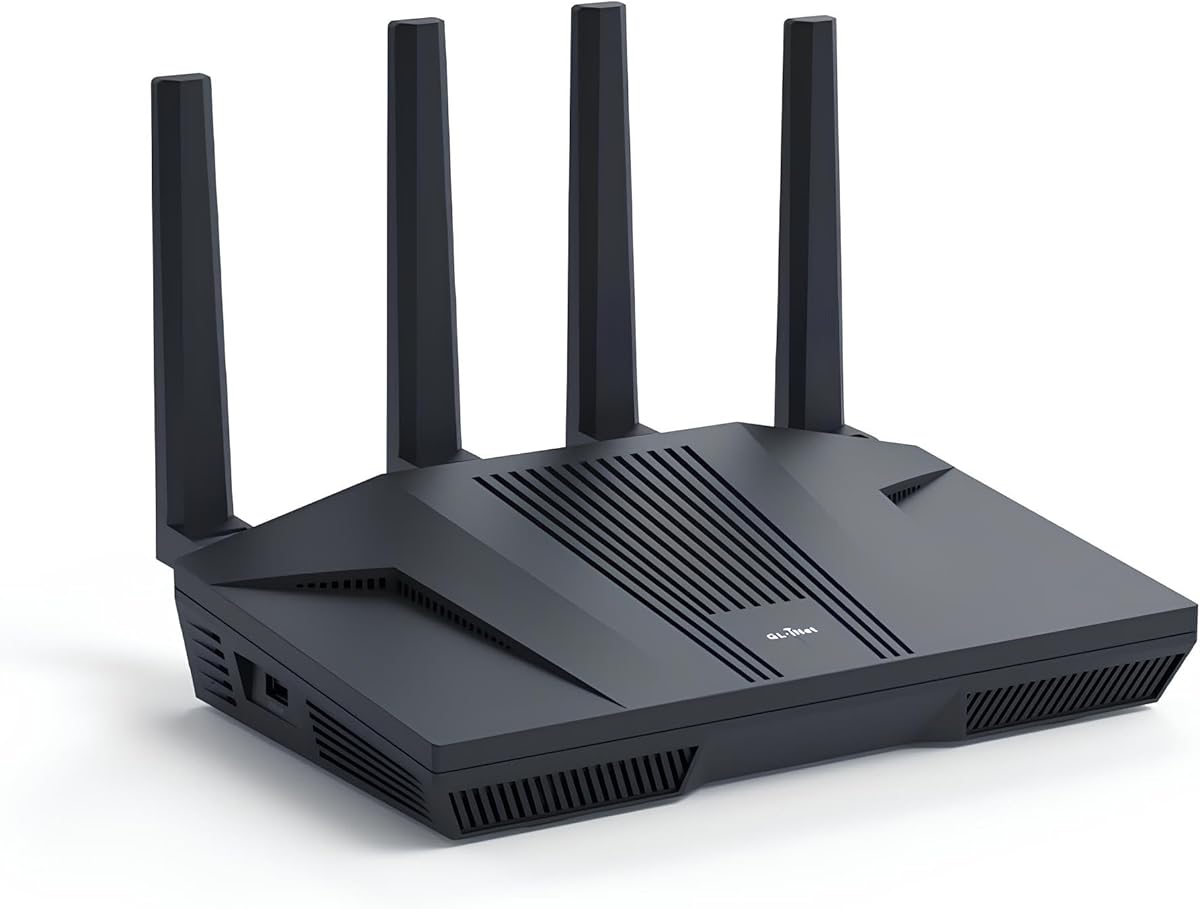
Choosing a Multi-Gig Router: Balancing Gaming, VPN Speed, and Device Management
The GL.iNet Flint 2 targets users who need more than basic Wi-Fi 6, specifically offering 2.5G WAN/LAN ports for future-proofing and advanced VPN hardware acceleration. This router's value proposition hinges on its open-source firmware, which enables custom VPN configurations and granular device control, making it distinct from mainstream consumer models. Buyers should evaluate if their use case justifies these specialized features over simpler plug-and-play alternatives.
Key Considerations Before Buying
- The dual 2.5G Multi-Gig ports are crucial for connecting to high-speed fiber internet (over 1Gbps) or creating a fast wired backbone for a NAS, but require compatible client devices and cabling to realize the benefit.
- The advertised 'Schnelles OpenVPN & WireGuard' performance relies on its MediaTek Filogic 830 chipset's hardware acceleration; verify your VPN provider supports these protocols and that your subscription speed matches the router's capability.
- As a 'Gaming-WLAN-Router', its gaming prioritization features work within the GL.iNet software ecosystem; competitive online gamers should research specific latency (ping) performance in reviews versus dedicated gaming routers from ASUS or Netgear.
- The open-source OpenWrt-based firmware offers powerful 'Massengerätekonnektivität' control but demands more technical confidence for setup compared to standard ISP-provided routers.
What Our Analysts Recommend
For routers in this class, scrutinize real-world throughput tests on the 2.5G ports and VPN performance, not just theoretical Wi-Fi 6 speeds. Quality is also indicated by long-term firmware update support for security patches and feature additions, a noted strength of GL.iNet's community-driven approach. Check that the power supply and thermal design are adequate, as sustained multi-gig and VPN processing can generate significant heat.
Routers Market Context
Market Overview
The Wi-Fi 6 router market is segmented, with the Flint 2 competing in a niche between consumer mesh systems and prosumer/enterprise gear, emphasizing customization and VPN functionality. There's growing demand for routers with multi-gigabit ports to accommodate faster internet plans and internal network transfers, moving beyond the ubiquitous 1Gbps standard.
Common Issues
Common pitfalls include overestimating Wi-Fi range from a single unit, compatibility issues with specific ISP modems, and the complexity of managing advanced features like VLANs or custom firewall rules. Heat dissipation can also be a problem for compact, high-performance routers under constant load.
Quality Indicators
Look for robust, consistent build quality, detailed and active firmware release notes, and a strong community or manufacturer support forum. Quality in this segment is also defined by software stability, the breadth of configurable options, and reliable hardware offloading for VPN and NAT to maintain speed.
Review Authenticity Insights
Grade B Interpretation
A Grade 'B' with an estimated 15% fake review rate suggests the overall sentiment is reliable, but a moderate level of inauthentic praise may be inflating the perfect 5.0 Amazon score. The adjusted 4.60/5 rating is a more realistic benchmark, still indicating very strong user satisfaction.
Trust Recommendation
Prioritize reviews that discuss specific, technical experiences—like WireGuard setup, 2.5G NAS performance, or heat management—over vague praise about 'fast Wi-Fi.' The high percentage of verified purchases ('V') adds significant credibility; pay closest attention to these detailed, verified accounts.
Tips for Reading Reviews
For technical products like this, seek out reviews that mention using the advanced features (OpenWrt, VLAN, VPN client/server). Be wary of reviews that only use generic marketing terms or lack any mention of setup challenges, as authentic experiences typically include some nuance.
Expert Perspective
The Flint 2 presents a compelling package for a specific user: the tech-savvy individual or small office needing robust VPN capabilities, multi-gig wired connectivity, and deep network customization in a single device. Its stellar adjusted 4.6/5 rating, backed largely by verified purchases, signals it delivers on its core promises for that audience. However, its open-source nature means it trades the polished, simplified UI of mainstream brands for greater power and flexibility, which is a key trade-off.
Purchase Considerations
You should purchase the Flint 2 if your priorities are hardware-accelerated VPN routing, open-source firmware flexibility, and future-proof multi-gig ports. Consider alternatives if you prefer a simpler setup process, need extensive mesh coverage, or rely heavily on proprietary gaming acceleration features from other brands.
Comparing Alternatives
Shoppers should compare the Flint 2's value and interface against alternatives like the ASUS RT-AX86U (for gaming features) or QNAP QHora-322 (for more enterprise-style multi-gig ports).


