
Choosing a Type G Travel Adapter: Balancing Outlets, USB Ports, and Safety
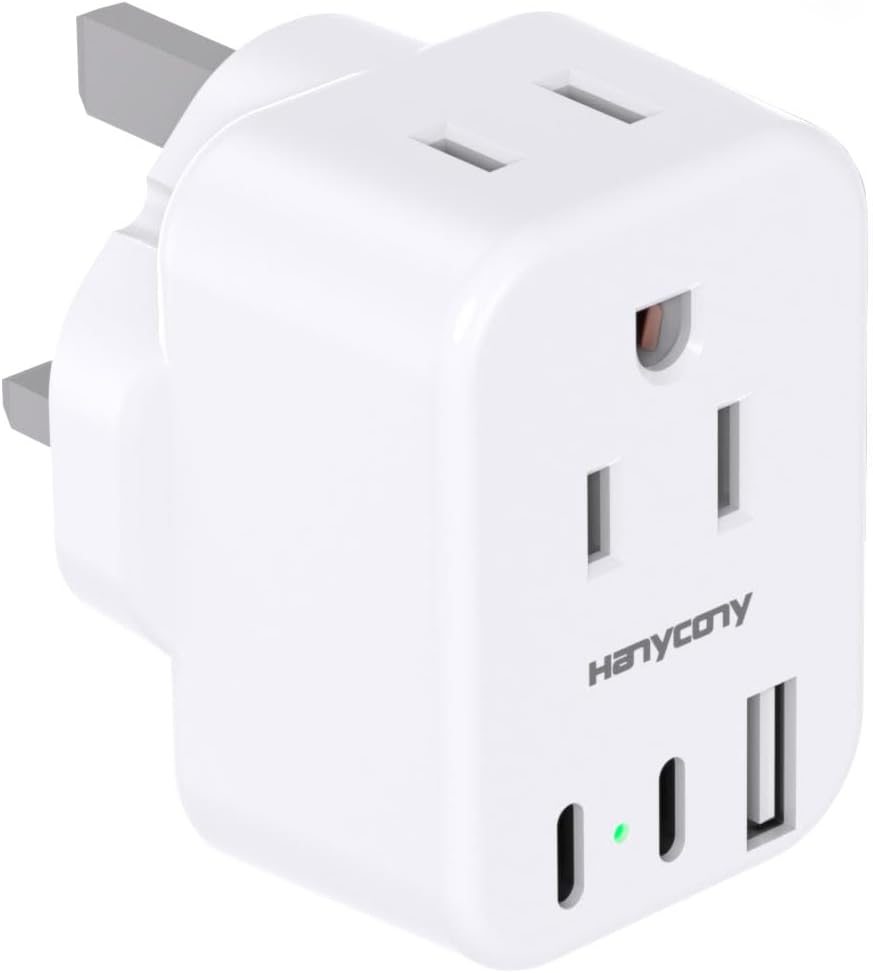
The HANYCONY adapter combines Type G plug compatibility with multiple charging options, making it a versatile choice for travelers to the UK, Ireland, and other Type G regions. Buyers should evaluate not just outlet count but whether the USB-C ports provide sufficient power for modern devices and if the adapter's build quality matches their travel frequency.
Key Considerations Before Buying
- Verify the adapter's compatibility with your specific destinations—Type G plugs are used in the UK, Ireland, Dubai, Hong Kong, and Kenya, but voltage requirements differ between countries.
- Assess your device charging needs: the 2 AC outlets and 3 USB ports (including 2 USB-C) work well for couples or small families, but check USB-C power output for laptops or tablets.
- Consider travel frequency versus build quality: frequent travelers need durable construction with secure plug retention, while occasional travelers might prioritize compactness.
What Our Analysts Recommend
Quality Type G adapters feature robust pins that maintain firm contact in foreign sockets, which often have tighter spring mechanisms than US outlets. Look for clear safety certifications (like CE or FCC marks) and heat-resistant materials around high-power USB-C ports, as these handle more current than standard USB-A.
Adapters Market Context
Market Overview
The travel adapter market has shifted from basic plug converters to hybrid devices with integrated USB charging, creating products like this HANYCONY model that eliminate separate chargers. Competition focuses on maximizing ports while minimizing size, with Type G adapters being particularly bulky due to the plug's three rectangular pins.
Common Issues
Many adapters fail at the plug-retention mechanism, becoming loose in foreign sockets or breaking after minimal use. Overheating is another concern, especially with multi-port USB charging, and some adapters lack proper spacing between AC outlets for larger power bricks.
Quality Indicators
Superior adapters use solid metal pins rather than plated steel, incorporate surge protection circuitry, and have clearly labeled maximum wattage (typically 2500W for Type G). The best models maintain stable performance when all ports are loaded simultaneously.
Review Authenticity Insights
Grade C Interpretation
The Grade C authenticity rating and 28% estimated fake reviews suggest significant review manipulation, despite the impressive 4.80/5 surface rating. The adjusted 4.10/5 rating better reflects genuine user experiences, indicating good but not exceptional performance.
Trust Recommendation
Focus on detailed 3- and 4-star reviews that mention specific usage scenarios, as these are less likely to be fabricated. Be particularly skeptical of reviews emphasizing 'perfect' performance without mentioning actual travel use or device compatibility.
Tips for Reading Reviews
Prioritize reviews discussing long-term durability, airport security experiences, or charging specific devices like MacBooks or camera batteries. Look for mentions of the adapter's performance when multiple high-power devices are connected simultaneously.
Expert Perspective
This HANYCONY adapter represents a solid mid-tier option with thoughtful port selection, particularly the inclusion of two USB-C ports—a feature still missing from many competitors. The 4.10 adjusted rating suggests it performs adequately for most travelers, though the authenticity concerns warrant careful review evaluation. The product's main advantage is eliminating the need for separate USB chargers, reducing cable clutter in hotel rooms.
Purchase Considerations
Weigh the convenience of integrated USB charging against potential durability concerns, especially if you travel frequently to Type G regions. Consider whether you truly need simultaneous charging for five devices or if a simpler, potentially more robust adapter might suffice for your travel patterns.
Comparing Alternatives
Compare this model's USB-C output specifications (typically 15W-20W per port) against competitors, as power delivery varies significantly across this category.


