Evaluating Countertop RO Systems: UV Sterilization and Remineralization Trade-offs
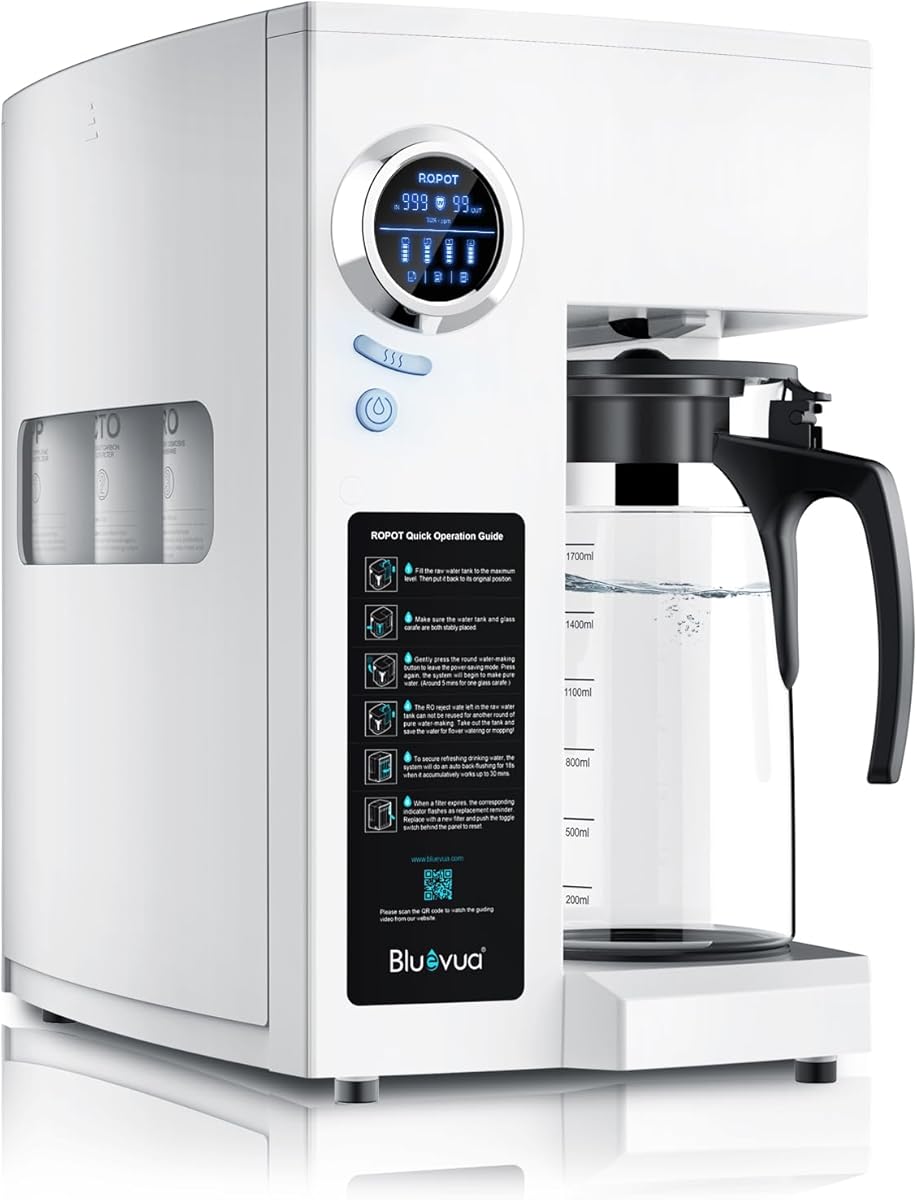
The Bluevua RO100ROPOT-UV represents a specific niche: countertop reverse osmosis systems that incorporate both UV sterilization and remineralization stages. Unlike under-sink RO units, this portable design requires no permanent installation but must balance purification power with practical counter space usage. Buyers should understand that the '6-stage' claim includes both pre-filtration, membrane, UV, and remineralization components in one compact unit.
Key Considerations Before Buying
- Countertop RO systems like the Bluevua require accessible electrical outlets for the UV light pump, limiting placement options compared to purely mechanical filters.
- The remineralization stage adds minerals back after RO purification, addressing the common complaint of 'flat-tasting' RO water, but may affect water chemistry differently than natural mineral water.
- Portability comes at the cost of smaller storage capacity—typically 1-2 gallons versus under-sink systems' 3-5 gallon tanks—affecting household water availability.
What Our Analysts Recommend
Genuine quality indicators include specific flow rate data (often 0.5-1 GPM for countertop RO), transparent filter replacement cost disclosures, and third-party certification for the UV sterilization component. For remineralization, look for details about which minerals are added (typically calcium, magnesium) and in what concentrations, as this affects both taste and potential health benefits.
Under-Sink & Countertop Filtration Market Context
Market Overview
The countertop RO market has expanded rapidly as renters and homeowners seek purification without installation hassles, with most units clustering in the $200-$400 range. Unlike pitcher filters or faucet attachments, these systems offer true reverse osmosis purification but compete with under-sink RO systems that provide higher capacity and hidden installation.
Common Issues
Countertop RO units frequently face complaints about slow filtration rates, noisy pumps, and confusing filter replacement indicators. The UV sterilization components can fail silently without visual indicators, while remineralization cartridges may exhaust faster than primary filters, creating staggered replacement schedules.
Quality Indicators
Superior countertop RO systems provide clear TDS (total dissolved solids) reduction percentages, NSF/ANSI certifications for specific contaminants, and modular designs that simplify filter changes. The most reliable units offer separate performance data for each stage, particularly the UV stage's log reduction values for microorganisms.
Review Authenticity Insights
Grade C Interpretation
A Grade C authenticity rating with 35% estimated fake reviews suggests significant review manipulation, particularly concerning given the product's high 4.89/5 rating. This discrepancy between the adjusted rating (4.00/5) and displayed rating indicates potential review suppression of critical feedback.
Trust Recommendation
Focus on the verified purchase reviews that discuss specific technical aspects like TDS meter readings, UV indicator functionality, or mineral cartridge longevity. Be skeptical of reviews emphasizing only 'amazing taste' or 'life-changing' benefits without detailing comparative water testing.
Tips for Reading Reviews
Prioritize reviews that mention using the system for at least 2-3 months, as they reveal maintenance realities and UV bulb longevity. Look for discussions about water pressure effects on flow rate and specific contaminant concerns addressed—these indicate genuine user experience rather than promotional content.
Expert Perspective
The Bluevua's combination of RO, UV, and remineralization in a countertop format addresses multiple consumer desires but creates complexity in a compact package. The significant authenticity concerns (35% fake reviews) undermine confidence in the advertised 4.89 rating, making the adjusted 4.00 rating more credible. The UV stage adds valuable protection against biological contaminants that RO membranes alone might not address, while the remineralization attempts to solve RO water's characteristic lack of minerals.
Purchase Considerations
Weigh the convenience of no installation against the counter space commitment and electrical requirement. Calculate the true cost including replacement filters ($150-$200 annually for 6-stage systems) and UV bulb replacements (typically yearly). Consider whether your water source actually requires UV sterilization—municipal water already contains disinfectants, making UV potentially redundant.
Comparing Alternatives
Compare with simpler 4-stage countertop RO systems without UV or remineralization, which often cost less and have lower maintenance, and with under-sink RO systems that offer higher capacity for similar long-term costs.