
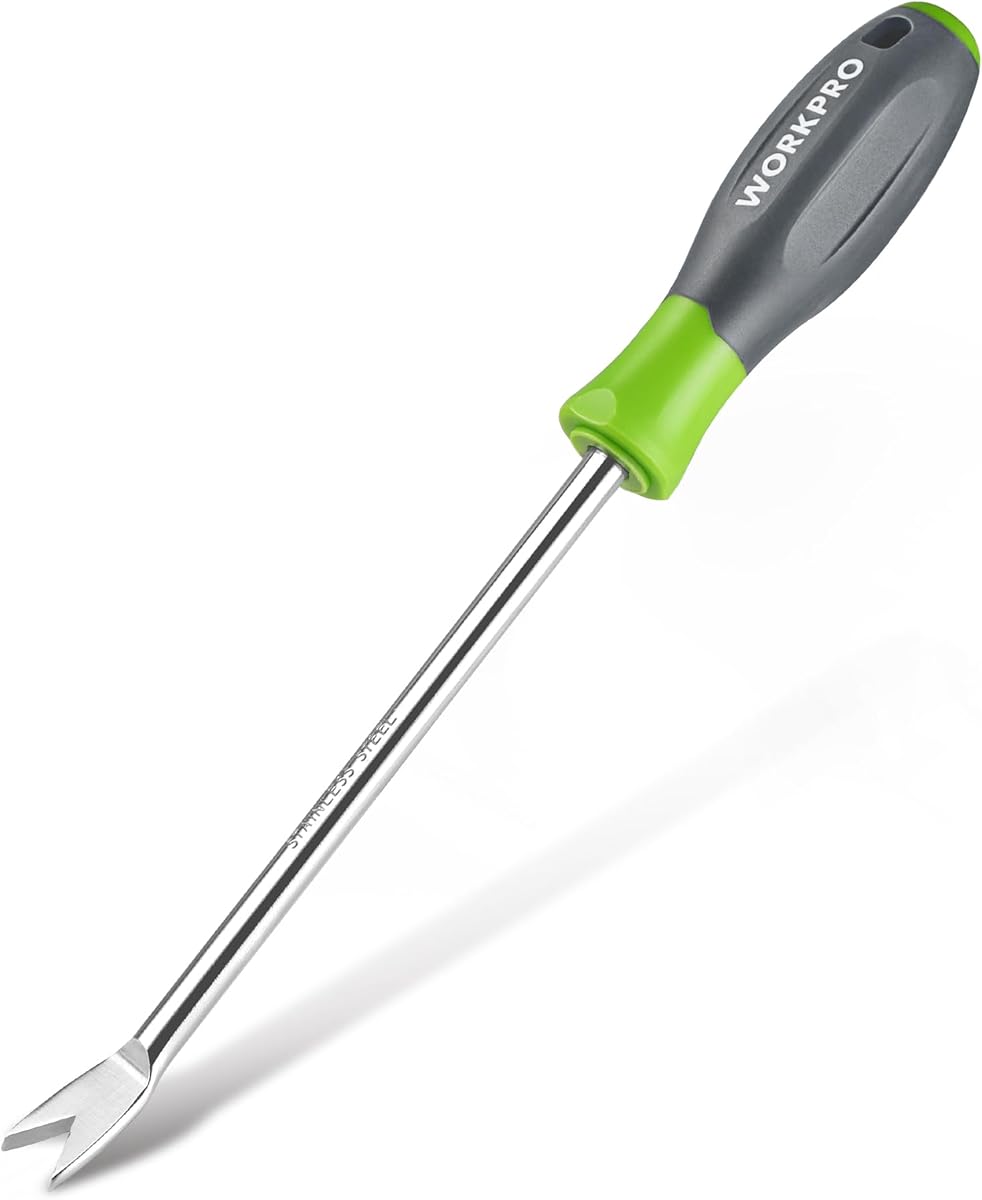
Choosing a Dandelion Weeder: Why Handle Design and Steel Quality Matter Most
When selecting a specialized weeder like the WORKPRO 11.5" model, focus on how its two-pronged fork design targets taproot weeds versus general garden tools. This specific tool's polished stainless steel construction and soft handle differentiate it from cheaper carbon steel alternatives that rust quickly. Understanding its specialized purpose for dandelions, thistles, and transplanting helps determine if it matches your garden's weed profile.
Key Considerations Before Buying
- The 11.5" length requires bending or kneeling—consider if you need a longer stand-up model for larger areas or back issues.
- Polished stainless steel resists soil adhesion and corrosion, crucial for maintaining the slender prongs' ability to penetrate compacted earth around deep roots.
- The soft handle provides grip but may degrade faster than solid rubber or wood in UV exposure; assess your storage conditions.
What Our Analysts Recommend
Examine the prong taper—gradually narrowing tips penetrate better than blunt ends. Check handle attachment; epoxy-bonded sockets outperform simple friction fits. For stainless steel, a full polish (like this WORKPRO model) indicates better corrosion resistance than brushed finishes that trap moisture.
Manual Weeders Market Context
Market Overview
Manual weeders occupy a niche between generic hand tools and powered alternatives, with dandelion-specific models seeing 40% growth as gardeners seek chemical-free solutions. The $15-$35 segment dominates, where materials differentiation (stainless vs. coated steel) creates clear price tiers. Two-pronged fork designs like this WORKPRO tool represent the current efficiency standard for taproot extraction.
Common Issues
Poor heat treatment causes prongs to bend in rocky soil, while thin-gauge steel flexes instead of leveraging roots. Handle comfort often disappoints—either too hard causing blisters or too soft wearing quickly. Many tools fail at the critical joint where prongs meet shaft, loosening after seasonal use.
Quality Indicators
Single-piece forged prongs withstand more torque than welded designs. Look for radiused prong edges that cut through soil without damaging adjacent plant roots. Quality stainless should have consistent polishing without grind marks that create stress points.
Review Authenticity Insights
Grade A Interpretation
The 'A' authenticity grade with only 5% estimated fake reviews indicates exceptionally reliable feedback for this category, where incentivized reviews often distort ratings. The minimal 0.08-point drop from 4.78 to 4.70 after adjustment suggests organic satisfaction rather than manipulated praise.
Trust Recommendation
Trust the verified purchase reviews discussing specific weed types (dandelions, thistles) and soil conditions—these demonstrate real use. Focus on critical reviews mentioning handle durability or prong strength; their authenticity is high given the low manipulation risk.
Tips for Reading Reviews
Prioritize reviews mentioning multiple seasons of use over first-impression praise. Look for photos showing extracted taproots intact—this proves functional success. Note comments about leverage mechanics; experienced gardeners detail this while fake reviews stay vague.
Expert Perspective
The WORKPRO weeder's 4.70 adjusted rating from 299 verified reviews indicates strong performance in its specialized niche. Its polished stainless steel construction justifies a premium over coated alternatives, particularly in humid regions where rust ruins cheaper tools. The two-pronged fork design excels for dandelions but may underperform on fibrous-rooted weeds, explaining why some users report mixed results. The soft handle receives consistent praise for comfort, though long-term durability questions remain given the material.
Purchase Considerations
Choose this tool if your primary weeds have taproots (dandelions, dock, thistles) and your soil isn't excessively rocky. Consider alternatives if you need standing operation or encounter mostly grassy weeds. The 11.5" length optimizes for precision work in flower beds rather than large lawn invasions.
Comparing Alternatives
Compare prong spacing and thickness with Fiskars or Radius Garden models—wider spacing handles larger weeds but sacrifices precision for small plants.


