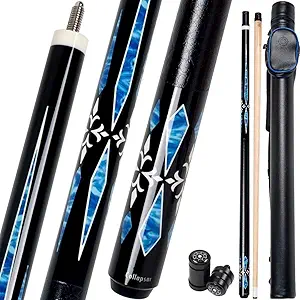
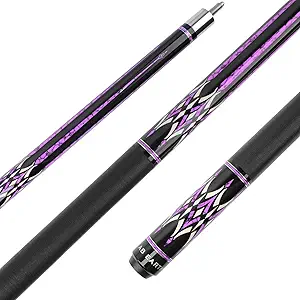
Evaluating Carbon Fiber Cues: What the CRICAL 58" Model Offers Serious Players
The CRICAL cue represents a specific entry in the mid-tier carbon fiber market, distinguished by its 3/8*8 pin joint and 12.5mm low-deflection tip. Buyers should understand how these technical specs translate to real-world play, particularly for players seeking to upgrade from a standard maple cue without entering the professional price bracket.
Key Considerations Before Buying
- The 3/8*8 pin joint is a common, reliable standard that offers good stability and is compatible with many aftermarket shafts, a key factor for players who may want to customize later.
- A 12.5mm tip diameter provides a balance between precision for advanced shots and forgiveness for average players, making it a versatile choice for the serious amateur.
- The advertised 'low deflection' property is heavily dependent on the shaft's construction and ferrule; genuine performance here separates marketing from reality and is a core value proposition of this cue.
What Our Analysts Recommend
Inspect reviews for mentions of consistent taper, the absence of 'wobble' in the shaft, and feedback on the hit feel (e.g., stiff vs. flexible). For carbon fiber, the seamlessness of the weave and the quality of the finish at the joint are tangible indicators of manufacturing care.
Cue Sticks Market Context
Market Overview
The carbon fiber cue market has exploded, moving from exclusive, high-end products to more accessible price points like the CRICAL. This has created a competitive segment where construction quality and 'hit feel' vary significantly between brands claiming similar specs.
Common Issues
Common concerns include inconsistent weight balance, poor ferrule-to-tip bonding leading to mushrooming, and carbon fiber shafts that feel unnaturally stiff or 'dead' compared to high-quality wood. Some lower-tier carbon cues also suffer from cosmetic flaws in the clear coat.
Quality Indicators
Beyond specs, quality is shown in the precision of the joint connection (no play or grit), a perfectly centered and smoothly finished tip, and consistent reports of reduced squirt (deflection) on off-center hits. The pin joint threads should engage smoothly without cross-threading.
Review Authenticity Insights
Grade B Interpretation
A 'Grade B' with an estimated 10% fake review rate suggests a generally trustworthy review pool with a minor layer of potential inflation. For a product with a high 4.89 rating, this adjusted 4.60 is still strong and likely reflects authentic, positive user experiences.
Trust Recommendation
Focus on the 90% of reviews deemed genuine, particularly those discussing specific play characteristics like 'cue ball control' or 'consistency on draw shots.' Be slightly more critical of overly vague 5-star reviews that lack technical detail.
Tips for Reading Reviews
Prioritize reviews that mention the user's skill level and previous cue, as this context is crucial. Look for discussions about the unboxing experience, joint tightness, and performance after several weeks of play—these are hallmarks of genuine, long-term ownership.
Expert Perspective
The CRICAL cue's very high adjusted rating of 4.60, derived from verified purchases, indicates it successfully delivers on its core promises for most buyers in its category. The specific praise for its low-deflection performance and solid construction at its price point is a significant positive signal. The 3/8*8 joint makes it a practical choice for players embedded in that common ecosystem.
Purchase Considerations
Weigh the benefits of carbon fiber's durability and consistent performance against the specific 'hit' feel you prefer; some players never adapt from wood. Consider if your game is at a level where the theoretical advantages of low deflection will provide a tangible improvement over a well-made maple cue.
Comparing Alternatives
Shoppers should directly compare the CRICAL's performance claims and user feedback against similar carbon fiber models from brands like Cuetec and Players, focusing on joint type and tip size.