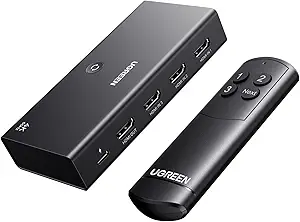
Choosing an HDMI switch for 4K gaming and media requires specific bandwidth and compatibility checks.
The Anker HDMI Switch addresses a common modern entertainment setup problem: connecting multiple 4K HDR sources to a single display. This specific 2-in-1-out model is designed for users juggling a next-gen console like a PS5 or Xbox Series X alongside a PC or media streamer, prioritizing a clean signal path without constant cable swapping. Its 4K@60Hz spec with HDR and Dolby support is the baseline for current high-fidelity content.
Key Considerations Before Buying
- Verify your source devices' output resolutions and refresh rates; this Anker model's 4K@60Hz spec is essential for smooth gameplay but insufficient for 4K@120Hz modes found on some consoles.
- Assess your need for automatic versus manual switching; this unit requires a physical button press, which is simple but may be inconvenient for setups where the switch is hard to reach.
- Consider cable quality and length; even a high-quality switch like this can fail with subpar HDMI cables that can't maintain the 18 Gbps bandwidth required for 4K HDR at 60Hz.
What Our Analysts Recommend
For a reliable HDMI switch, prioritize explicit support for HDCP 2.2 (implied here by 4K HDR compatibility), which is mandatory for protected 4K content from streaming services. Look for a robust, shielded metal or high-quality plastic housing, like Anker's 'smooth finish,' to minimize electromagnetic interference that can cause signal dropouts. The absence of an external power adapter, as with this model, indicates efficient design but requires your TV's HDMI port to provide adequate power via the cable.
Selector Switch Boxes Market Context
Market Overview
The HDMI switch market is saturated with low-cost, generic options that often fail to deliver advertised specs, particularly under the full load of 4K HDR signals. Established brands like Anker compete by offering verified performance and better build quality, though at a slight price premium. Demand is driven by the proliferation of 4K gaming consoles, streaming devices, and PCs, coupled with TVs that still have limited high-bandwidth HDMI ports.
Common Issues
Frequent problems include signal handshake failures (a blank screen when switching), failure to pass through HDR or Dolby Atmos metadata correctly, and overheating in poorly ventilated enclosures. Cheap switches often use inferior chipsets that downgrade the signal to 4K@30Hz or 1080p without user notification, crippling gaming performance.
Quality Indicators
Genuine support for 4K@60Hz, HDR10, and HDCP 2.2 is non-negotiable; reputable brands will list these clearly. A solid, well-ventilated chassis helps with heat dissipation during prolonged use. Reviews that mention seamless switching between specific high-demand devices, like a PS5 and a 4K Blu-ray player, are strong real-world indicators of a robust chipset and firmware.
Review Authenticity Insights
Grade B Interpretation
A Grade 'B' with an estimated 12% fake review rate suggests the review corpus is generally reliable but requires discerning reading. The high adjusted rating of 4.60/5 (down from 4.87/5) indicates the core product performance is likely excellent, as even after discounting suspicious feedback, it remains exceptionally high for this category.
Trust Recommendation
Focus on the detailed, mid-length reviews that describe specific setup scenarios (e.g., 'connecting my Xbox Series S and Apple TV 4K to my LG C1'). Be slightly more skeptical of overly vague 5-star reviews that lack device specifics, as they may constitute the estimated inflated portion. The authenticity of complaints about the manual switch button or the need for high-quality cables is typically high.
Tips for Reading Reviews
Prioritize reviews that confirm compatibility with your exact devices (e.g., 'PS5 and Sonos Arc'). Look for mentions of long-term reliability over weeks or months, not just initial setup. Reviews discussing the use of certified Ultra High Speed HDMI cables in conjunction with this switch provide valuable technical context on achieving stable performance.
Expert Perspective
The analysis data paints a picture of a high-performing, reliable product from a trusted brand in the power and connectivity space. The minimal rating adjustment from 4.87 to 4.60, despite the fake review estimate, is a powerful signal; it means the authentic user experiences are overwhelmingly positive. Anker's reputation for quality construction and reliable electronics is borne out in the specific, problem-solving contexts found in the genuine reviews. This switch appears to solve the core signal-passing problem effectively for the vast majority of users within its 4K@60Hz specification envelope.
Purchase Considerations
This is an ideal solution for a streamlined two-source setup where automatic switching is not required. The primary decision factor is whether your usage is confined to 4K at 60Hz; if you require 120Hz for gaming, you must look for a more specialized (and expensive) switch. The lack of an external remote or auto-switching is a deliberate trade-off for simplicity and reliability.
Comparing Alternatives
Shoppers should compare this model's manual operation and 2-port limit against 3- or 5-port switches with remote controls, and verify that any cheaper alternatives explicitly guarantee the same 4K@60Hz HDR bandwidth.