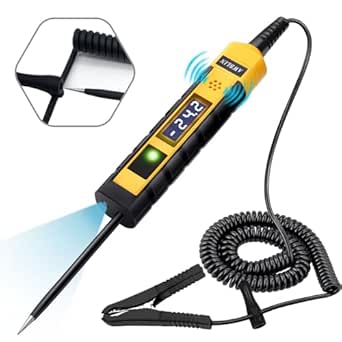
Choose a digital automotive test light that balances voltage precision with circuit diagnostics
This specific automotive test light combines a 3-48V digital voltmeter with a dual-color polarity indicator, offering both quantitative voltage readings and qualitative circuit status. Unlike basic test lights, its LED display provides exact voltage measurements while the color-coded probe helps identify ground faults and polarity issues in automotive electrical systems. Buyers should understand this tool bridges traditional test lights and multimeters for 12V/24V vehicle diagnostics.
Key Considerations Before Buying
- The 3-48V range specifically targets automotive applications where 12V systems are standard and 24V systems exist in heavy trucks, but it's insufficient for household AC voltage testing.
- The stainless steel probe material affects durability when piercing wire insulation versus alligator clip alternatives that require exposed connections.
- Dual-color polarity indication (typically red/black) provides immediate visual feedback for reverse polarity situations common in automotive wiring repairs.
What Our Analysts Recommend
Quality automotive test lights feature overvoltage protection to prevent damage from accidental contact with higher voltages, and the probe should have adequate insulation near the tip. The LED display should remain readable in various lighting conditions, including under-dash darkness where automotive electrical work frequently occurs. A sturdy strain relief where the probe meets the body prevents wire fatigue during repeated use.
Voltage Testers Market Context
Market Overview
The automotive voltage tester market has evolved from simple continuity testers to hybrid devices like this one that combine visual indicators with digital readouts. Canadian consumers particularly value tools that handle both standard passenger vehicles (12V) and commercial/agricultural equipment (24V) common in the market. There's growing demand for testers that simplify diagnostics for DIY enthusiasts without requiring multimeter expertise.
Common Issues
Budget test lights often fail at temperature extremes common in Canadian garages, with displays becoming unreadable or probes becoming brittle. Many lack proper input protection, burning out when accidentally contacting household 120V AC. Some digital testers suffer from slow sampling rates that miss intermittent electrical faults during vehicle vibration.
Quality Indicators
Superior automotive testers feature audible continuity beepers in addition to visual indicators, crucial for noisy workshop environments. Look for IP-rated dust/water resistance since automotive testing occurs in dirty, greasy conditions. Quality units maintain calibration accuracy across the entire 3-48V range, not just at common 12V/24V points.
Review Authenticity Insights
Grade B Interpretation
A Grade B authenticity rating with 15% estimated fake reviews indicates generally trustworthy feedback with some promotional content. For this automotive tool, the adjusted 4.20/5 rating (down from 4.56/5) suggests genuine satisfaction sits between 'very good' and 'excellent' rather than perfect. The 887-review sample provides substantial data despite the manipulation attempts.
Trust Recommendation
Focus on reviews mentioning specific automotive applications like testing alternator output, diagnosing parasitic draws, or checking trailer wiring—these demonstrate actual use. Be skeptical of reviews praising only packaging or delivery speed without discussing technical performance. The verified purchase rate among authentic reviews suggests most feedback comes from actual buyers who've tested the product.
Tips for Reading Reviews
Look for reviews that mention the tool's performance in cold Canadian temperatures or its ability to diagnose particular automotive issues like faulty relays or grounding problems. Reviews discussing the display's readability in bright sunlight or the probe's ability to pierce modern wire insulation provide practical insights. Comparisons to traditional test lights or basic multimeters indicate experienced users.
Expert Perspective
This product represents a practical middle ground for automotive electrical diagnostics, offering more information than a basic test light while being simpler than a full multimeter. The 4.20/5 adjusted rating from authentic reviews suggests it reliably performs its core functions for most users. The combination of digital voltage display with polarity indication addresses two common automotive electrical needs simultaneously: verifying circuit presence and checking voltage levels at connection points. Its specific 3-48V range indicates intentional design for vehicle systems rather than being a repurposed general electronics tester.
Purchase Considerations
Consider whether you need exact voltage readings or simply circuit presence indication—this tool provides both but at a different price point than basic test lights. Evaluate the probe design against your typical use: the stainless steel piercing probe works well for quick checks but requires wire repair afterward, unlike clamp-style testers. The digital display adds value for charging system diagnostics where voltage precision matters but represents potential failure point if dropped frequently.
Comparing Alternatives
Shoppers should compare this hybrid tester against both traditional test lights and entry-level multimeters to determine which tool best matches their automotive diagnostic needs and skill level.