
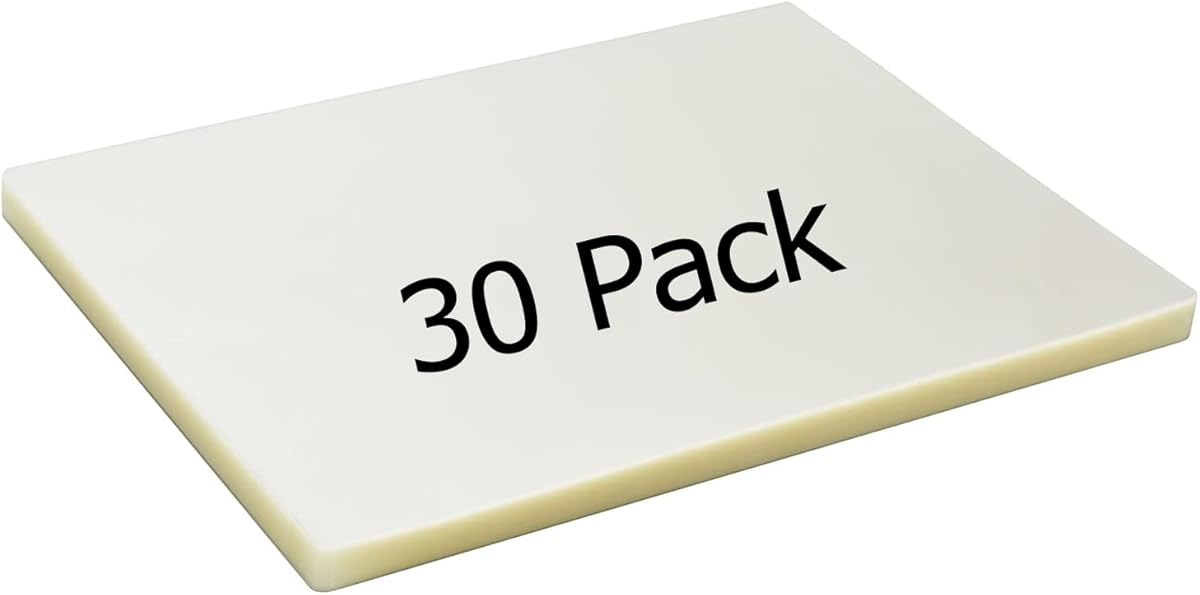
Choosing 5 Mil Laminating Sheets: Thickness, Size, and Adhesive Performance
When selecting laminating pouches like these 5 mil thermal sheets, buyers should focus on three critical factors: the 5 mil thickness for durability, the precise 9” x 11.5” dimensions that accommodate standard 8.5 x 11 paper with a proper border, and thermal adhesive quality that prevents bubbling. This specific product's 30-pack quantity makes it suitable for moderate office or classroom use rather than high-volume operations.
Key Considerations Before Buying
- The 5 mil thickness provides substantial rigidity and protection for frequently handled documents like ID cards, instructional materials, or restaurant menus, but may be too stiff for projects requiring flexibility.
- These sheets' 9” x 11.5” size creates a 0.25-inch border around standard letter paper, which is essential for proper sealing but requires careful alignment to avoid uneven edges.
- Thermal adhesive quality varies significantly between brands; look for consistent melt performance across the entire pouch surface to prevent cloudy spots or incomplete bonding.
What Our Analysts Recommend
Quality indicators include consistent pouch thickness without thin spots, anti-static properties that prevent dust attraction during handling, and packaging that prevents curling or creasing before use. Premium sheets often have slightly textured surfaces to reduce glare compared to cheaper glossy alternatives.
Laminating Supplies Market Context
Market Overview
The laminating supplies market has seen increased demand for home office and classroom use, with 5 mil becoming a popular middle-ground thickness between lightweight 3 mil sheets and heavy-duty 10 mil pouches. Most products now feature thermal adhesive technology rather than pressure-sensitive alternatives.
Common Issues
Common problems include inconsistent adhesive activation causing cloudy patches, pouches that jam in laminators due to improper sizing or static buildup, and sheets that yellow or become brittle over time when exposed to UV light. Lower-quality sheets may have uneven thickness that creates weak spots.
Quality Indicators
High-quality laminating sheets maintain consistent clarity without optical distortion, have reliable temperature activation ranges compatible with most desktop laminators (typically 3-5 mil settings), and feature anti-curl technology in their packaging. The best products use multi-layer construction with separate adhesive and protective layers.
Review Authenticity Insights
Grade B Interpretation
The Grade B authenticity rating with 10% estimated fake reviews indicates generally reliable feedback, though approximately 1 in 10 reviews may be artificially positive. The 4.60 adjusted rating (down from 4.89) suggests genuine satisfaction remains high after removing questionable reviews.
Trust Recommendation
Focus on reviews that mention specific use cases like classroom projects, document preservation, or small business applications rather than generic praise. Verified purchase status adds credibility, but still look for detailed experiences with the adhesive performance and compatibility with various laminator models.
Tips for Reading Reviews
Pay particular attention to reviews discussing edge sealing consistency, clarity retention over time, and whether the sheets work reliably with your specific laminator model. Reviews mentioning multiple uses (like ID cards, photos, and instructional materials) typically provide more balanced assessments than single-use testimonials.
Expert Perspective
This product's exceptionally high 4.60 adjusted rating suggests it performs well within its category, particularly for the price point. The 5 mil thickness represents a practical compromise between protection and flexibility for most common applications. The 30-pack quantity aligns with moderate usage patterns, making it suitable for small offices, teachers preparing classroom materials, or home users with periodic laminating needs rather than daily high-volume operations.
Purchase Considerations
Consider whether your laminator consistently reaches the proper temperature for 5 mil sheets, as some lower-wattage models struggle with thicker materials. Also evaluate your need for archival quality—while 5 mil provides good protection, documents requiring decades of preservation might benefit from thicker options or UV-protective coatings not present in standard sheets.
Comparing Alternatives
Shoppers should compare sheet counts per dollar and verify compatibility with their specific laminator model, as some machines handle certain pouch brands better than others.


