
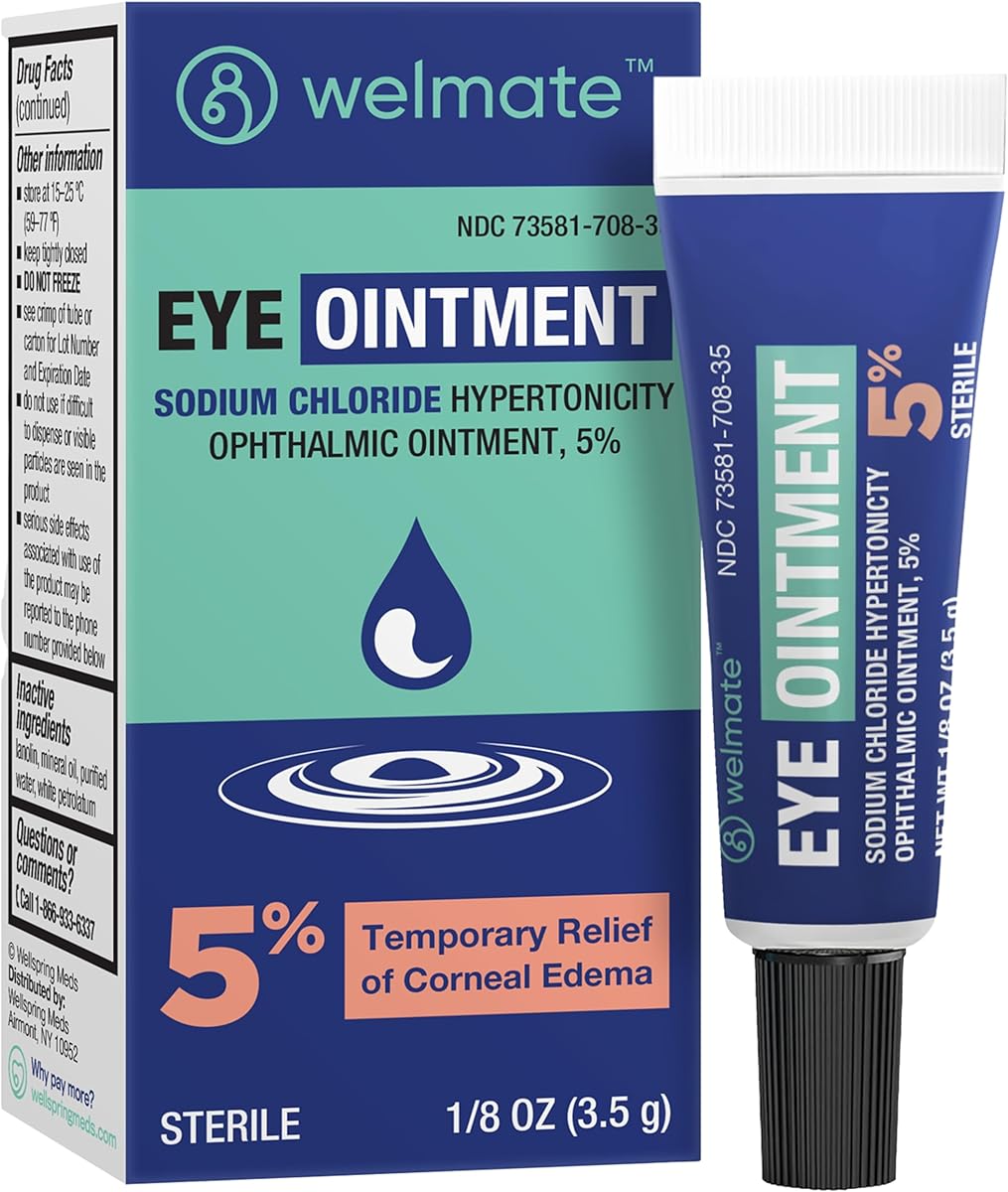
Choosing a Hypertonic Ointment for Corneal Edema Relief: Key Factors
When selecting a sodium chloride 5% ophthalmic ointment like WELMATE's, understanding its specific hypertonic mechanism is crucial. This product draws excess fluid from the cornea to reduce edema, and its lanolin and mineral oil base creates a protective, longer-lasting barrier compared to drops.
Key Considerations Before Buying
- Verify the hypertonicity percentage (5% sodium chloride) matches your doctor's recommendation, as strength directly impacts efficacy for corneal swelling.
- Assess your tolerance for ointment formulations; the lanolin and mineral oil provide prolonged relief but cause temporary blurry vision upon application.
- Confirm the product is sterile and preservative-free, especially for post-surgical use or sensitive eyes, to minimize irritation risk.
What Our Analysts Recommend
Quality indicators include explicit 'sterile' labeling, a precise 5% sodium chloride concentration, and an airtight, single-use tube design to prevent contamination. The travel-size 1/8 oz format is practical for portability but requires evaluating cost-per-ounce against your usage frequency.
Market Context
Market Overview
The hypertonic ophthalmic ointment market consists primarily of prescription generics and a few OTC options, with sodium chloride 5% being the standard concentration for corneal edema. Products compete on formulation base (like lanolin vs. petrolatum), sterility claims, and packaging convenience.
Common Issues
Users often report inconsistent viscosity between brands, tube tips that clog easily, and confusion between hypertonic ointments for edema and lubricating ointments for dry eye. Some experience stinging or residue from certain oil bases.
Quality Indicators
Look for pharmaceutical-grade inactive ingredients (USP mineral oil), tamper-evident seals, and manufacturing in FDA-regulated facilities. A clear differentiation between 'corneal edema relief' and general lubrication on labeling indicates targeted formulation.
Review Authenticity Insights
Grade B Interpretation
A Grade B with 15% estimated fake reviews suggests generally reliable feedback, but shoppers should be cautious of overly promotional language. The drop from 4.10 to 3.80 after adjustment indicates some inflated praise, though verified purchases add credibility.
Trust Recommendation
Focus on reviews that detail specific use cases like post-cataract surgery edema or Fuchs' dystrophy, as these demonstrate authentic therapeutic application. Be skeptical of reviews that don't mention the temporary blurred vision side effect—a genuine user experience hallmark.
Tips for Reading Reviews
Prioritize reviews discussing application frequency, tube longevity (3.5g lasts approximately 1-2 weeks with bilateral use), and comparisons to other hypertonic brands like Muro 128. Reviews mentioning doctor recommendations or specific diagnoses carry more weight.
Expert Perspective
WELMATE's offering fills a niche for an affordable, travel-sized hypertonic ointment with a verified 5% sodium chloride concentration. The 3.80 adjusted rating reflects solid user satisfaction, particularly for managing overnight corneal edema symptoms. Its lanolin and mineral oil base is a differentiating factor, providing enhanced occlusion but potentially feeling greasier than petrolatum-based alternatives. The sterile formulation is a significant advantage for therapeutic use.
Purchase Considerations
This product is best suited for those with diagnosed corneal edema seeking a cost-effective generic, especially for travel or trial use. Consider that the 1/8 oz size may not be economical for chronic daily use compared to larger tubes. Those with lanolin allergies or requiring preservative-free formulas should verify ingredient compatibility.
Comparing Alternatives
Shoppers should compare viscosity, price per gram, and base ingredients with other sodium chloride 5% ointments, as texture significantly affects user adherence.


