
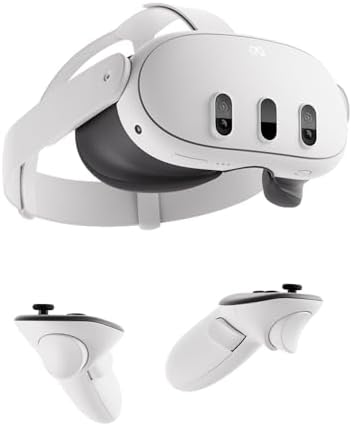
Evaluating Meta Quest 3's 512GB model for premium standalone VR experiences
The Meta Quest 3 512GB represents the high-storage tier of Meta's latest standalone VR headset, featuring pancake lenses and a Snapdragon XR2 Gen 2 chipset. Buyers considering this model should understand how its expanded storage capacity and claimed thirty percent resolution increase translate to real-world use, particularly for users who plan to install numerous high-fidelity games and applications.
Key Considerations Before Buying
- The 512GB storage is essential if you intend to maintain a large library of graphically intensive titles like Asgard's Wrath 2 or install productivity apps and media files directly on the device, as standalone headsets lack expandable storage.
- The 'thirty percent sharper resolution' claim refers specifically to the per-eye resolution increase over the Quest 2, but visual clarity is equally dependent on the new pancake optics and local dimming capabilities in supported content.
- The included 3-month trial of Meta Horizon+ provides access to a curated subscription library, but evaluate whether its rotating selection of 40+ games aligns with your long-term play patterns before considering ongoing subscription costs.
What Our Analysts Recommend
For the Quest 3 specifically, assess the fit of the included soft strap for extended play sessions, as many users upgrade to third-party halo-style straps for better weight distribution. Pay attention to real-world battery life reports, as the increased graphical processing power can drain the integrated battery faster during demanding applications, often necessitating an external battery pack for extended use.
Headsets Market Context
Market Overview
The standalone VR headset market is currently dominated by Meta's Quest series, with the Quest 3 positioned as a premium mixed-reality device competing against specialized PCVR hardware and emerging Apple Vision Pro. This 512GB model sits at the top of Meta's consumer lineup, targeting enthusiasts who want maximum onboard storage without tethering to a computer.
Common Issues
Standalone headsets like the Quest 3 often face thermal throttling during prolonged intensive use, which can affect sustained graphical performance. Another frequent concern is the 'screen door effect' reduction—while improved with the Quest 3's resolution bump, some users with high visual acuity may still notice pixelation in certain content.
Quality Indicators
Beyond specifications, quality in standalone VR is demonstrated by consistent tracking reliability in varied lighting conditions, minimal controller latency, and robust software support with regular OS updates that add features like improved hand tracking. The Quest 3's depth sensor for mixed reality passthrough is a key differentiator that should provide stable environmental mapping.
Review Authenticity Insights
Grade U Interpretation
The 'Grade U' and 0.00% fake review percentage indicate this specific 512GB SKU has no verified customer reviews yet, which is common for newly listed or lower-volume premium variants. This absence of data means you cannot rely on existing purchaser experiences for this exact storage configuration.
Trust Recommendation
Since this listing lacks established review history, seek out professional reviews from trusted VR publications that specifically test the 512GB model's storage management and performance. Also, examine reviews for the base 128GB Quest 3 for core performance insights, while noting that storage capacity doesn't affect processing power or display quality.
Tips for Reading Reviews
When reviews eventually appear, prioritize those that discuss real-world storage usage—how many AAA titles like Assassin's Creed Nexus actually fit on 512GB, and how the OS manages storage overhead. Be skeptical of reviews that don't mention specific games or applications used in testing.
Expert Perspective
The Meta Quest 3 512GB is positioned as the storage-maximized version for users who want a completely untethered experience with a large native game library, avoiding frequent deletions and re-downloads. The thirty percent resolution increase and doubled graphical power over Quest 2 are meaningful upgrades, particularly for text readability and mixed-reality applications. However, with zero current reviews for this specific model, prospective buyers must extrapolate from professional assessments of the platform's core hardware while considering if the premium for 512GB justifies avoiding external storage solutions.
Purchase Considerations
Weigh the $150 premium over the 128GB model against your actual storage needs—if you primarily use cloud-saved games or stream PCVR content via Air Link, the lower storage tier may suffice. Consider that the included Meta Horizon+ trial offers temporary access to games, which may reduce your need for permanent large installations during the trial period.
Comparing Alternatives
Shoppers should compare the Quest 3's standalone capabilities against PC-tethered headsets like the Valve Index for raw fidelity, and against the Quest Pro for enterprise-focused features, noting the Quest 3's unique position in consumer mixed reality.


