
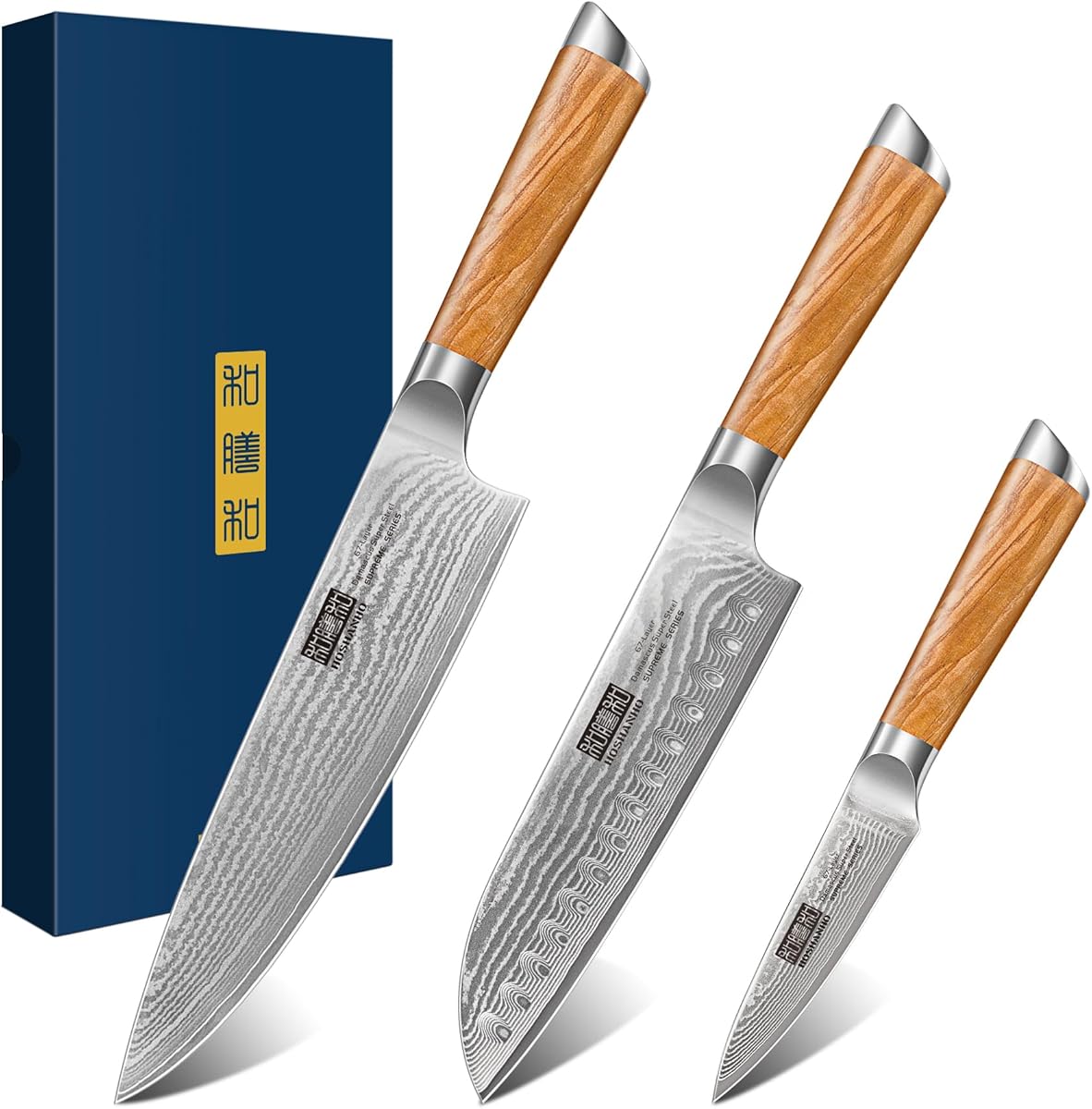
Evaluating Damascus Knife Sets: What Makes HOSHANHO's 3-Piece Stand Out
When considering a Damascus knife set like HOSHANHO's 3-piece collection, focus on the specific steel composition—10Cr15CoMoV—which indicates a high-carbon stainless steel with cobalt and molybdenum additives for edge retention. This particular set combines Western (8" chef) and Japanese-inspired (7" santoku) profiles, offering versatility for different cutting techniques. The ergonomic handle design should complement the blade geometry for balanced performance.
Key Considerations Before Buying
- The 10Cr15CoMoV steel offers superior corrosion resistance compared to traditional carbon steel Damascus, requiring less maintenance while maintaining the distinctive wavy pattern through layered forging.
- The combination of an 8" chef knife and 7" santoku provides overlapping functionality; consider whether you prefer the rocking motion of the chef knife or the chopping action of the santoku for your primary tasks.
- Damascus knives at this price point often use etched patterns rather than traditional forge-welded layers; verify through reviews whether the pattern wears with sharpening or remains visible.
What Our Analysts Recommend
Examine how the Damascus etching interacts with the blade's cutting edge—quality sets maintain pattern clarity right to the edge. Check for full tang construction (where the steel extends through the handle) which provides better balance and durability. The handle material should offer secure grip even when wet, with no visible seams or gaps where moisture could penetrate.
Knife Sets Market Context
Market Overview
The sub-$100 Damascus knife market has expanded significantly, with Chinese manufacturers like HOSHANHO offering traditionally expensive patterns at accessible prices using modern steel alloys. These sets compete directly with entry-level German and Japanese brands by emphasizing visual appeal alongside functional claims. The 3-piece configuration has become a popular entry point, covering basic kitchen tasks without overwhelming beginners.
Common Issues
Many budget Damascus sets suffer from inconsistent heat treatment, leading to edge retention that doesn't match the steel's potential. The etched patterns can sometimes feel textured rather than smooth, potentially affecting food release. Handle materials may not match the premium appearance of the blades, with some using plastic composites that feel lightweight or insubstantial.
Quality Indicators
Look for specific steel designations like 10Cr15CoMoV rather than vague 'high-carbon' claims, as this indicates measurable alloy composition. Quality Damascus patterning should be consistent across all blades in the set without obvious repeating patterns. The spine and choil (where blade meets handle) should be smoothly finished, not sharp or rough to the touch.
Review Authenticity Insights
Grade B Interpretation
A Grade B authenticity rating with 15% estimated fake reviews suggests generally reliable feedback, though approximately 1 in 7 reviews may be artificially positive. The 4.50 adjusted rating (down from 4.89) indicates genuine satisfaction likely falls between 'very good' and 'excellent' rather than near-perfect. All reviews being verified purchases significantly increases credibility compared to unverified reviews common in this category.
Trust Recommendation
Focus on reviews that discuss specific performance aspects like how the 10Cr15CoMoV steel holds up after months of use, or whether the ergonomic handle truly reduces fatigue during extended prep sessions. Be skeptical of reviews that only praise visual appearance without mentioning cutting performance or maintenance requirements. The high percentage of genuine reviews suggests consensus opinions about sharpness and balance are likely accurate.
Tips for Reading Reviews
Prioritize reviews that mention using all three knives for different tasks, as this indicates actual set experience rather than single-blade testing. Look for comments about the paring knife's precision or the santoku's food release—specific feedback reveals more than general sharpness claims. Reviews discussing resharpening experiences are particularly valuable for assessing long-term durability of the Damascus steel.
Expert Perspective
The HOSHANHO set presents a compelling value proposition by combining Damascus aesthetics with 10Cr15CoMoV steel—an alloy that typically performs above its price point in edge retention and stain resistance. The 4.50 adjusted rating from verified purchasers suggests most users experience genuine satisfaction, particularly with initial sharpness and visual appeal. The three-blade selection covers fundamental kitchen tasks effectively, though the similar lengths of the chef and santoku knives may represent some functional overlap rather than distinct specialization. The ergonomic handle claims warrant particular attention, as comfort during prolonged use separates adequate knives from exceptional ones.
Purchase Considerations
Weigh whether the Damascus pattern provides sufficient value over plain-finish knives at similar prices, as the etching process doesn't inherently improve cutting performance. Consider your sharpening capabilities—while 10Cr15CoMoV holds an edge well, it requires proper stones or systems when maintenance becomes necessary. The set's versatility makes it suitable for cooks who want both rocking (chef knife) and chopping (santoku) options without committing to a single blade style.
Comparing Alternatives
Compare this set's 10Cr15CoMoV steel composition and handle design against similarly priced Damascus options from Tuo Cutlery or Yoshihiro, as subtle differences in blade geometry can significantly affect cutting feel.


