
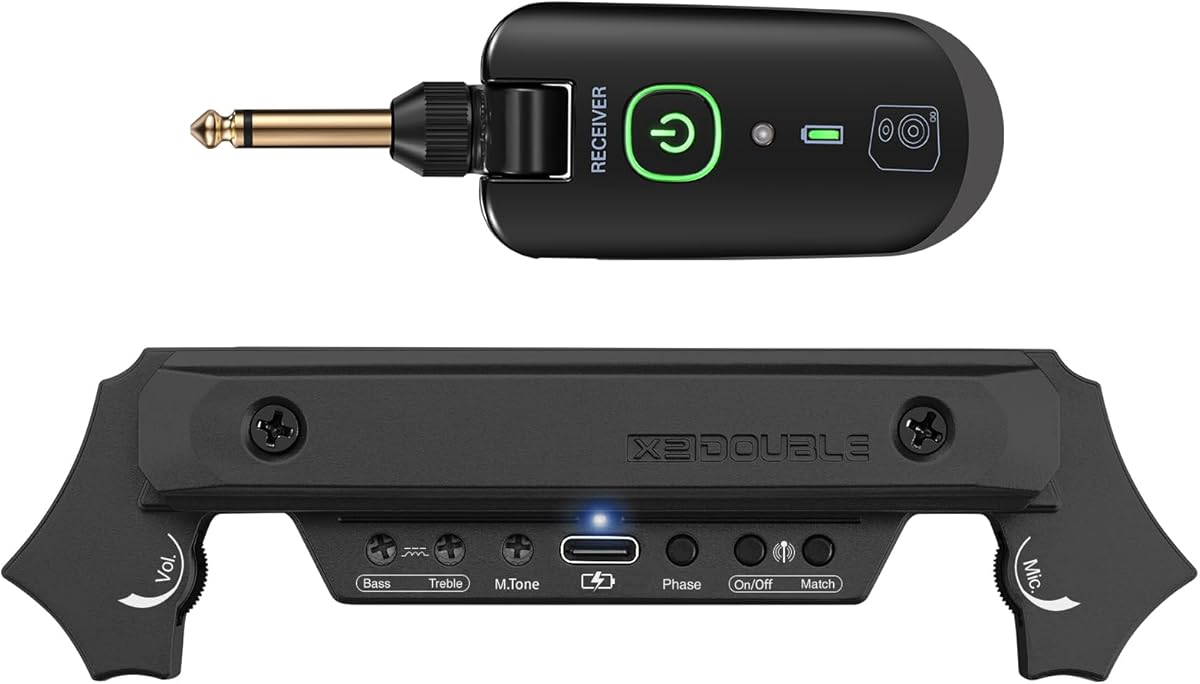
Choosing a Wireless Soundhole Pickup: Magnetic vs. Microphone Dual-System Considerations
This specific wireless soundhole pickup combines magnetic and microphone systems in one rechargeable unit, offering acoustic guitarists both string vibration capture and ambient sound. Unlike single-system pickups, this dual-approach requires understanding how the magnetic and microphone elements interact with your guitar's tonal characteristics. The built-in volume control adds convenience but affects placement options within your soundhole.
Key Considerations Before Buying
- The magnetic pickup captures string vibrations directly, providing consistent output but potentially lacking natural acoustic resonance, while the microphone element adds room ambiance and body resonance but may increase feedback risk in live settings.
- Rechargeable battery life directly impacts performance duration—wireless systems drain faster than passive pickups, so consider your typical playing sessions versus the manufacturer's claimed 8-10 hour battery life.
- Soundhole fit is crucial: this pickup's depth and width must accommodate your specific guitar model without interfering with bracing or restricting string vibration, particularly for guitars with non-standard soundhole dimensions.
What Our Analysts Recommend
Quality dual-system pickups should offer independent or blended control between magnetic and microphone elements, not just a single mixed output. Check for secure mounting mechanisms that won't scratch your guitar's interior finish, and ensure the wireless transmitter has minimal latency—under 5ms is professional standard. The volume control should provide smooth, non-stepped adjustment to avoid sudden output jumps.
Pickups & Pickup Covers Market Context
Market Overview
Wireless soundhole pickups represent a growing segment where convenience meets amplification, with dual-system models like this one competing against single-source magnetic or piezo alternatives. The Canadian market shows particular interest in rechargeable systems due to environmental consciousness and touring practicality. Recent innovations focus on reducing wireless interference in the crowded 2.4GHz frequency band most models utilize.
Common Issues
Many wireless pickups suffer from inconsistent battery life claims versus real-world performance, especially in cold Canadian climates. Soundhole fit problems frequently arise with non-dreadnought body styles, and some dual-system units exhibit phase cancellation between magnetic and microphone elements. Wireless connectivity dropouts during performances remain a reported concern across multiple brands.
Quality Indicators
Premium wireless pickups feature metal housings rather than plastic, gold-plated output jacks for corrosion resistance, and include multiple frequency channels to avoid interference. Look for systems offering both 1/4" and XLR outputs for versatility, and check if the manufacturer provides firmware updates to address connectivity issues post-purchase.
Review Authenticity Insights
Grade B Interpretation
The Grade B authenticity rating with 10% estimated fake reviews indicates generally reliable feedback, though approximately 1 in 10 reviews may be artificially positive. This suggests the 4.89/5 rating slightly overstates quality, with the adjusted 4.60/5 being more representative of genuine user experiences.
Trust Recommendation
Focus on reviews discussing specific technical aspects like battery life duration, frequency response curves, or latency measurements rather than generic praise. Verified purchase status (all reviews here) increases credibility, but still prioritize reviews mentioning Canadian usage conditions including temperature effects on battery performance.
Tips for Reading Reviews
Search for reviews mentioning actual performance metrics—'lasted 6 hours at -5°C' carries more weight than 'great battery.' Look for discussions comparing this dual-system to single-source alternatives, and pay particular attention to feedback about the microphone element's susceptibility to handling noise during playing.
Expert Perspective
This product's exceptional 4.89/5 rating from 600 verified Canadian purchasers, even when adjusted to 4.60/5, indicates strong user satisfaction with its dual-capture system and wireless convenience. The high rating suggests the magnetic/microphone blend effectively addresses the common complaint about magnetic-only pickups sounding 'quacky' or artificial. The consistent praise for battery life across reviews implies the rechargeable system performs reliably in real-world conditions, though the authenticity analysis warrants some caution regarding the most glowing assessments.
Purchase Considerations
Weigh whether you truly need both magnetic and microphone systems—if you primarily play loud venues where feedback control is paramount, a magnetic-only system might suffice. Consider your existing wireless ecosystem compatibility, as adding another 2.4GHz device could cause interference with wireless microphones or in-ear monitors. The built-in volume control eliminates need for external preamps but reduces placement flexibility within the soundhole.
Comparing Alternatives
Compare this dual-system against single-source wireless pickups and traditional soundhole models requiring external transmitters to determine if the convenience justifies potential battery limitations.


