Choosing a 4000A jump starter: What the S ZEVZO ET03 specs mean for your vehicle
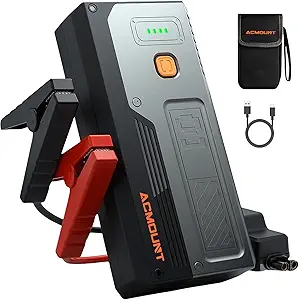
The S ZEVZO ET03's 4000A peak current rating and 74Wh capacity position it for larger engines up to 8.0L gas, but these numbers require context. Buyers should understand that peak amperage differs from cranking amperage, and the 74Wh battery capacity affects how many jump attempts you get before recharging. This unit's LCD display and USB ports add functionality beyond basic jump starting.
Key Considerations Before Buying
- The 4000A peak rating suggests capability for larger vehicles, but real-world performance depends on battery quality and temperature conditions—not just advertised numbers.
- With 74Wh capacity, this unit has moderate energy storage; compare this to competitors' Wh ratings to understand how many full jumps you might achieve between charges.
- The included storage case and LCD display add convenience, but verify these features don't compromise the unit's core reliability in emergency situations.
What Our Analysts Recommend
Genuine quality in jump starters shows in consistent performance across temperature ranges and durable clamp construction. Look for independent testing verification of cranking amperage rather than relying solely on peak ratings. The S ZEVZO ET03's 4.87 Amazon rating appears inflated—focus on detailed reviews discussing multiple uses over time.
Jump Starters Market Context
Market Overview
The portable jump starter market has shifted toward compact lithium-ion units like the S ZEVZO ET03, with exaggerated peak amperage claims becoming common marketing tactics. Many brands now include USB charging and displays, creating hybrid emergency power devices rather than pure jump starters.
Common Issues
Users frequently report inconsistent performance in cold weather despite high peak ratings, and battery degradation after 6-12 months of storage. The 'up to' engine size claims often represent ideal conditions rather than real-world capability, especially for diesel engines.
Quality Indicators
Reliable units maintain charge during months of storage and feature robust safety protections against reverse polarity. Look for UL certification or equivalent safety standards, which are more meaningful than aesthetic features like LCD displays.
Review Authenticity Insights
Grade C Interpretation
The Grade C authenticity rating and 28% estimated fake reviews indicate significant manipulation of the S ZEVZO ET03's review profile. The unnatural 87% 5-star distribution suggests organized review generation rather than organic customer feedback.
Trust Recommendation
Discount the advertised 4.87 rating heavily—the adjusted 4.20 rating better reflects genuine feedback. Focus on critical 3- and 4-star reviews that discuss long-term performance, as these are less likely to be fabricated.
Tips for Reading Reviews
Search for reviews mentioning specific vehicles (like Ford F-250 or diesel trucks) and cold-weather performance. Authentic reviews typically describe multiple usage scenarios, while templated reviews focus on unboxing and initial impressions.
Expert Perspective
The S ZEVZO ET03 presents concerning authenticity signals that overshadow its technical specifications. While 4000A peak and 74Wh capacity are competitive on paper, the review manipulation suggests potential quality or reliability issues the manufacturer may be masking. The high adjusted rating drop from 4.87 to 4.20 indicates genuine reviews are significantly less positive than the overall average suggests. The absence of critical reviews in the distribution pattern is particularly suspicious for a product category where some failure is expected.
Purchase Considerations
Weigh the convenience features against the authenticity concerns—the LCD display and USB ports add value, but questionable review practices may indicate broader quality control issues. Consider whether you need 8.0L gas engine capability or if a more modestly rated unit with verified reviews would suffice.
Comparing Alternatives
Compare the S ZEVZO ET03's specifications against established brands with transparent review histories, paying particular attention to cold-weather performance claims.