
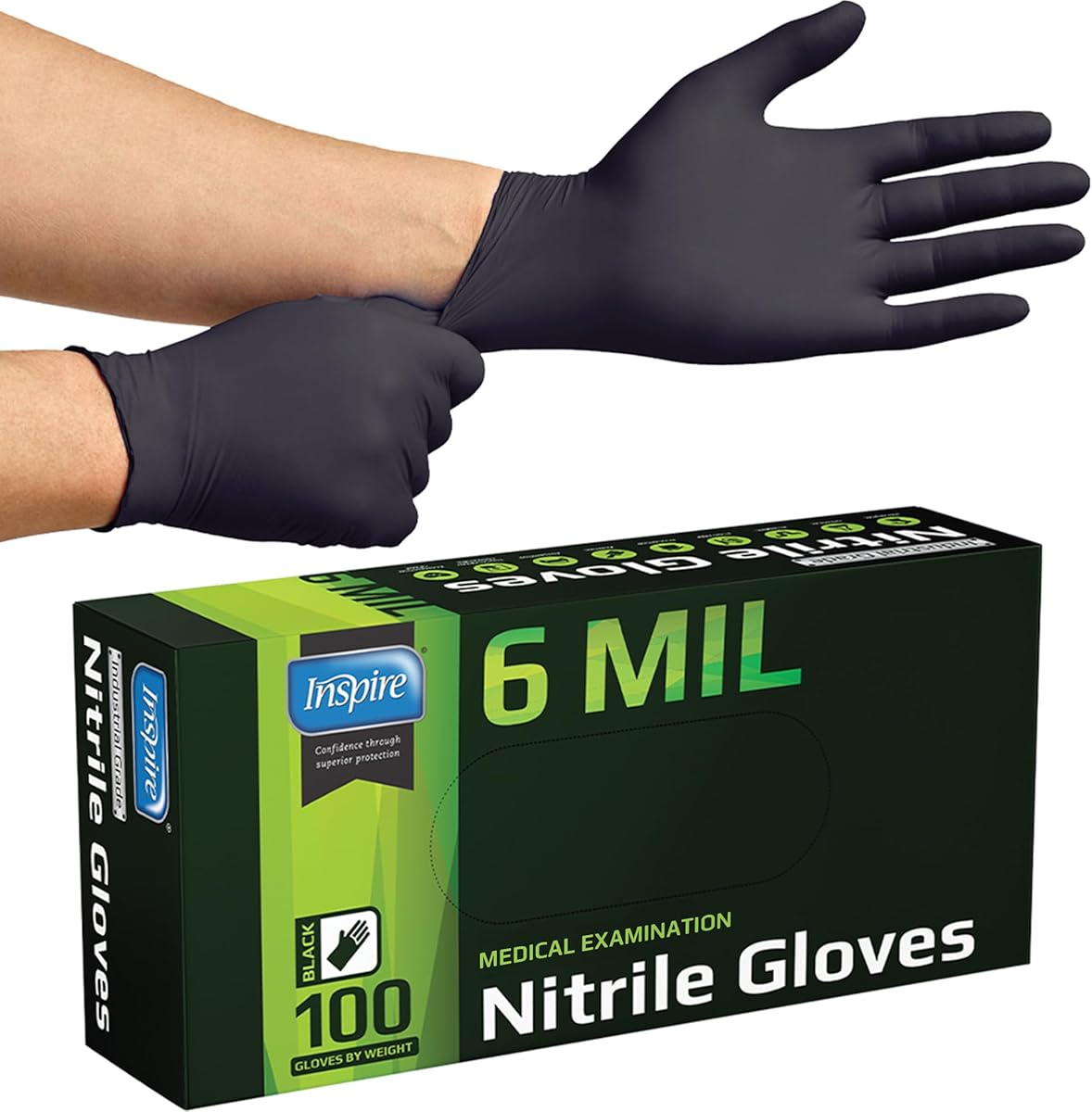
Choosing 6 Mil Nitrile Gloves: When Heavy Duty Chemical Resistance Matters
For the Inspire Black Nitrile Gloves specifically, buyers should understand that 6 mil thickness represents a substantial step up from standard 4-5 mil disposable gloves. This product's black coloration isn't just aesthetic—it hides stains and indicates industrial-grade formulation, making it suitable for chemical handling, automotive work, and demanding cleaning tasks where standard gloves fail.
Key Considerations Before Buying
- The 6 mil thickness provides superior puncture resistance but reduces tactile sensitivity—consider whether your tasks require fine dexterity or maximum protection.
- True chemical resistance varies by formulation; these gloves claim broad resistance but may degrade with certain solvents like acetone or chlorinated hydrocarbons.
- Black nitrile runs hotter than lighter colors during extended wear, which can affect comfort in warm environments or during prolonged use.
What Our Analysts Recommend
Examine the cuff design—a beaded edge like on these gloves prevents rolling during donning. Quality indicators include consistent 6 mil thickness throughout (not just palms), powder-free certification for medical/food applications, and ASTM D6319 certification for chemical permeation resistance. The Inspire gloves specifically mention medical, cooking, and cleaning compatibility, suggesting a balanced formulation.
Chemical Resistant Gloves Market Context
Market Overview
The chemical-resistant glove market has expanded beyond industrial settings into consumer spaces, with nitrile dominating due to latex allergy concerns. The 6 mil segment represents the premium disposable category, competing with reusable gloves but offering contamination control advantages. Pricing has stabilized post-pandemic, but quality variation remains significant between brands.
Common Issues
Thinner-than-advertised mil measurements, inconsistent sizing (especially in Asian-sourced gloves), and chemical resistance claims that don't match real-world performance plague this category. Some gloves labeled 'heavy duty' use inferior nitrile blends that tear easily or become brittle with chemical exposure.
Quality Indicators
Beyond thickness, examine the polymer formulation—high-quality nitrile maintains flexibility at low temperatures. Look for third-party certifications like FDA compliance for food contact and specific chemical resistance testing data. The Inspire gloves' 4.89/5 rating across 13,000+ reviews suggests consistent manufacturing quality control.
Review Authenticity Insights
Grade B Interpretation
A Grade B with 10% estimated fake reviews indicates generally reliable feedback but warrants careful review scrutiny. For this specific product, the high volume (13,053 reviews) helps dilute suspicious content's impact, and the 4.60 adjusted rating remains exceptionally strong for industrial gloves.
Trust Recommendation
Focus on verified purchase reviews mentioning specific chemical exposures (automotive fluids, cleaning concentrates, food acids) rather than generic praise. The 0.29-point drop from raw to adjusted rating suggests some inflated positive reviews, so weigh critical reviews about sizing or chemical compatibility carefully.
Tips for Reading Reviews
Prioritize reviews discussing actual chemical resistance testing (e.g., 'held up against brake cleaner for 30 minutes') over general durability comments. Look for patterns in negative reviews—if multiple users report tearing at the same finger joint, that indicates a potential design flaw. Reviews mentioning medical or food service use validate the manufacturer's multipurpose claims.
Expert Perspective
The Inspire gloves present a compelling value proposition in the 6 mil nitrile space, with review data suggesting excellent durability for their price point. The maintained 4.60 rating after authenticity adjustment indicates genuine user satisfaction, particularly for demanding tasks like automotive repair, commercial cleaning, and food processing. The black coloration serves practical purposes beyond aesthetics—hiding contaminants in medical settings and indicating industrial-grade formulation. However, the 10% fake review rate necessitates careful evaluation of chemical resistance claims against your specific use cases.
Purchase Considerations
Evaluate whether your applications truly require 6 mil protection or if 4-5 mil would suffice with better dexterity. Consider glove sizing carefully—multiple reviews note these run slightly large, which affects chemical splash protection. For food service applications, verify the powder-free certification meets your facility's requirements, as some users report minimal powder residue.
Comparing Alternatives
Compare thickness consistency and cuff design with competitors like Venom Steel or SAS Safety 6 mil gloves, as construction quality varies significantly at this thickness level.


