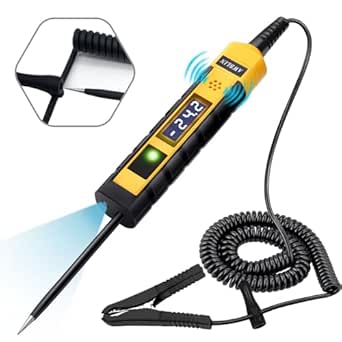
Choosing a Non-Contact Voltage Tester: Why Sensitivity Range and Display Matter
When selecting a non-contact voltage tester like the KAIWEETS HT100s, the dual sensitivity ranges (12-1000V and 70-1000V) are crucial for different applications. This specific model's voltage percentage display provides more information than simple LED indicators, helping you distinguish between phantom voltages and live circuits. Understanding these features will help you match the tool to your electrical work needs.
Key Considerations Before Buying
- The HT100s's dual sensitivity modes allow you to detect low-voltage circuits (12V+) in standard mode while avoiding false positives from induced voltages in high-sensitivity mode.
- The voltage percentage display provides quantitative feedback rather than just presence/absence detection, which is particularly useful for troubleshooting intermittent issues.
- Consider the ergonomics and safety features like the pocket clip and insulated tip, which affect daily usability and protection against accidental contact with live components.
What Our Analysts Recommend
Quality voltage testers should have clear audible and visual alerts that work in various lighting conditions. Check for proper certification markings (like CE for European markets) and robust construction that can withstand occasional drops. The HT100s's IP64 rating indicates dust and water resistance that's valuable for worksite use.
Voltage Testers Market Context
Market Overview
The non-contact voltage tester market has shifted toward multifunction devices with visual displays, moving beyond basic pen-style detectors. French DIY enthusiasts and electricians now expect features like voltage percentage displays and dual sensitivity, which were previously found only in professional-grade equipment. Brands like KAIWEETS compete by offering these advanced features at consumer price points.
Common Issues
Many budget testers suffer from false positives from induced voltages or fail to detect lower voltage circuits reliably. Some models have inconsistent sensitivity along the detection tip, creating blind spots. Battery life and auto-shutoff reliability vary significantly across brands, affecting long-term usability.
Quality Indicators
Look for testers with clear detection range specifications (not just 'up to 1000V') and multiple verification methods. Quality units maintain calibration over time and include self-test functions like the HT100s's power-on check. Proper tip illumination and distinct alert tones in noisy environments separate reliable tools from basic detectors.
Review Authenticity Insights
Grade B Interpretation
The Grade B authenticity rating with 10% estimated fake reviews suggests generally reliable feedback, though some review manipulation may be present. For the KAIWEETS HT100s, this means most of the 8,774 reviews reflect genuine user experiences, but shoppers should be slightly more critical than with Grade A products. The adjusted rating of 4.30/5 (down from 4.56/5) after removing suspicious reviews indicates the product likely performs slightly below its apparent rating.
Trust Recommendation
Focus on verified purchase reviews that mention specific use cases like automotive electrical work or residential wiring. Given the 10% fake review estimate, pay particular attention to reviews discussing long-term reliability over several months, as these are harder to fabricate. The high number of French-language reviews suggests strong local market adoption.
Tips for Reading Reviews
Look for reviews that mention the dual sensitivity feature's practical application, such as distinguishing between phantom voltage and actual live wires. Technical reviews discussing the voltage percentage accuracy compared to multimeter readings provide valuable insights. Be skeptical of reviews that only praise generic features without mentioning the HT100s's specific display or range capabilities.
Expert Perspective
The KAIWEETS HT100s represents a strong mid-range option in the voltage tester category, particularly for its voltage percentage display feature at this price point. The 4.30/5 adjusted rating from verified purchases indicates consistent satisfaction among actual users, though the authenticity analysis suggests some review inflation. The dual sensitivity ranges address a common pain point in non-contact testing—balancing sensitivity against false positives—which many competing models handle less effectively.
Purchase Considerations
Weigh the value of the voltage percentage display against your specific needs; occasional users might prefer simpler LED indicators, while those doing frequent troubleshooting will appreciate the quantitative feedback. Consider whether the 12-1000V low-range detection aligns with your work (automotive, low-voltage lighting) or if standard 50-1000V detection would suffice. The HT100s's French market presence suggests good local support and compliance with EU electrical standards.
Comparing Alternatives
Compare the HT100s's dual sensitivity approach with single-range testers and consider whether competing models with similar features offer better ergonomics or battery life for your workflow.