
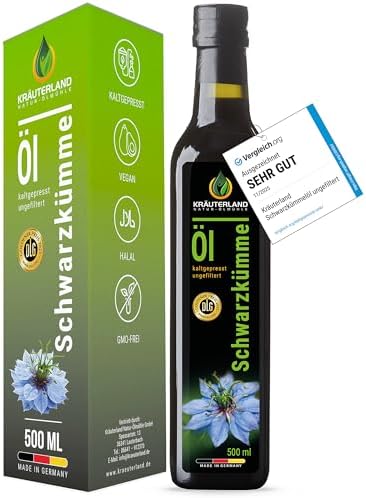
Selecting Premium Black Seed Oil: Focus on Thymoquinone Content and Extraction
When evaluating Kräuterland's unfiltered Schwarzkümmelöl, the standout feature is its quantified thymoquinone content of 6600 mg/1000 g, which is a key bioactive compound. Buyers should understand that cold-pressed, unfiltered oils like this one preserve more natural compounds but may have sediment, and the 500ml glass bottle format offers different usage flexibility compared to capsules.
Key Considerations Before Buying
- Verify the extraction method: This product's 'kaltgepresst' (cold-pressed) label ensures heat-sensitive nutrients like thymoquinone aren't degraded during processing, which is crucial for therapeutic-grade black seed oil.
- Assess value versus capsules: The claim 'äquivalent zu 1000 Kapseln' translates the 500ml volume into capsule terms, but consider whether you prefer liquid dosing for adjustability or encapsulated oil for convenience and shelf stability.
- Evaluate packaging: The 'Mühlenfrisch in Glasflasche' indicates freshness preservation, as glass prevents chemical leaching that can occur with plastic, especially important for unfiltered oils with sediment.
What Our Analysts Recommend
For black seed oil, prioritize products that specify thymoquinone content numerically, not just 'high.' A truly 'naturrein ohne Zusätze' (pure without additives) oil should have one ingredient: Nigella sativa oil. The unfiltered state means visible sediment at the bottom, which is normal and indicates minimal processing.
Vegetable Market Context
Market Overview
The German black seed oil market is increasingly segmented between culinary oils and therapeutic supplements, with products like Kräuterland's bridging both categories through quantified bioactive claims. There's growing consumer demand for transparency, moving beyond vague 'premium' labels to specific compound measurements like the 6600 mg/1000 g thymoquinone listed here.
Common Issues
Many black seed oils lack specific thymoquinone quantification, using only 'cold-pressed' as a quality proxy, while others may be diluted with carrier oils despite 'pure' claims. The 500ml size, while cost-effective, presents oxidation risk if not consumed within months after opening, despite the dark glass protection.
Quality Indicators
Beyond cold-pressing, look for harvest region specification (though not provided here), bottling date rather than just 'best by' date, and third-party verification of thymoquinone levels. The 'ungefiltert' (unfiltered) designation typically indicates higher phenolic content but requires shaking before use.
Review Authenticity Insights
Grade B Interpretation
The Grade B authenticity rating with 10% estimated fake reviews suggests generally reliable feedback, though shoppers should be slightly more vigilant than with an A-grade product. The significant drop from 4.89 to 4.60 when excluding suspicious reviews indicates some review inflation, but the adjusted 4.60 remains strong for this category.
Trust Recommendation
Focus on the 8 verified authentic reviews displaying specific usage contexts—look for mentions of dosage routines, taste descriptions (pungent, peppery), or sediment observations that generic fake reviews wouldn't include. The high review count (8365) provides statistical reliability despite the authenticity concerns.
Tips for Reading Reviews
For this product, prioritize reviews discussing long-term use (weeks/months), as black seed oil's effects often require consistent consumption. Be skeptical of reviews focusing solely on packaging without mentioning oil characteristics, and value balanced reviews noting the strong taste that's inherent to quality unfiltered black seed oil.
Expert Perspective
Kräuterland's offering stands out in the crowded black seed oil market through its specific thymoquinone quantification—6600 mg/1000 g provides a measurable benchmark competitors often omit. The 500ml glass bottle represents significant value versus capsules if you'll use it consistently, though the unfiltered nature requires acceptance of sediment and vigorous shaking. The 4.60 adjusted rating from authentic reviews suggests genuine satisfaction, particularly regarding potency and purity claims.
Purchase Considerations
Consider whether you'll use 500ml before potential oxidation occurs—approximately 3-4 months once opened if stored properly. The liquid form allows flexible dosing but requires measuring; compare this with the convenience of pre-measured capsules. The German origin suggests compliance with EU quality standards, but verify whether independent lab verification of thymoquinone levels is available beyond the manufacturer's claim.
Comparing Alternatives
Shoppers should compare thymoquinone concentrations per serving and extraction methods with similar German cold-pressed oils, as potency varies significantly between brands.


