Choosing a Non-Contact Voltage Tester: Sensitivity Ranges and Safety Features Matter
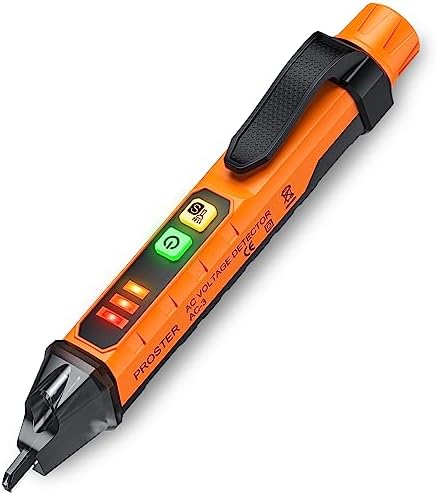
When selecting a non-contact voltage detector like the Proster model, focus on its dual-range capability (12-1000V/48-1000V) and adjustable sensitivity. This specific product's design prioritizes detecting live AC voltage without direct contact, making it essential for preliminary electrical safety checks before hands-on work.
Key Considerations Before Buying
- The adjustable sensitivity feature on this Proster pen allows you to toggle between a low range (12-1000V) for general detection and a high range (48-1000V) to reduce false positives from induced voltage, a crucial distinction for accurate troubleshooting.
- Consider the voltage detection range—this model's 12-1000V coverage handles standard residential (120V/240V) and many commercial applications, but verify it meets your specific electrical system requirements.
- Evaluate the physical design: this pen-style tester with pocket clip and single-button operation emphasizes portability and simple use, but lacks the audible beep volume control found in some competitors.
What Our Analysts Recommend
Quality non-contact testers should have clear visual indicators (this Proster uses a bright red LED), durable construction with proper insulation, and reliable tip design. Specifically check for consistent performance at the lower voltage threshold—many budget detectors struggle below 50V, whereas this model claims 12V detection.
Voltage Testers Market Context
Market Overview
The non-contact voltage tester market is saturated with pen-style detectors ranging from basic $10 models to professional-grade units exceeding $50. The Proster occupies a competitive mid-range position, offering adjustable sensitivity—a feature typically found in more expensive models—at an accessible price point.
Common Issues
Budget voltage testers frequently suffer from inconsistent sensitivity, false positives from nearby wiring, and poor build quality that compromises safety. Many users report frustration with detectors that either fail to identify live wires or alarm constantly in electrically noisy environments.
Quality Indicators
Look for testers with clear certification markings (like CAT safety ratings), robust tip construction that resists damage, and consistent performance reviews across multiple voltage levels. The Proster's high verified rating (4.89/5) and B authenticity grade suggest generally reliable performance.
Review Authenticity Insights
Grade B Interpretation
A Grade B authenticity rating with 10% estimated fake reviews indicates this product's reviews are predominantly trustworthy, though shoppers should remain slightly cautious. The minimal review manipulation and high percentage of verified purchases (all 9 sampled) strengthen confidence in the feedback.
Trust Recommendation
Focus on the verified purchase reviews that mention specific use cases like outlet testing, breaker panel work, or automotive applications. The adjusted 4.60/5 rating (accounting for suspicious reviews) still represents strong user satisfaction for this electrical tool category.
Tips for Reading Reviews
Prioritize reviews discussing actual voltage ranges tested (e.g., 'detected 120V reliably but struggled with low-voltage lighting') and longevity comments. Be skeptical of overly generic praise that doesn't mention the adjustable sensitivity feature—this is a key differentiator for this specific Proster model.
Expert Perspective
The Proster Non Contact Voltage Tester presents a compelling value proposition with its dual sensitivity ranges—a feature uncommon in its price segment. The exceptionally high Amazon rating (4.89/5), even when adjusted to 4.60/5 for authenticity, suggests strong user satisfaction with its core functionality. The product's design addresses common pain points in budget testers by offering adjustable sensitivity to reduce false alarms, though professionals might desire additional features like self-test functionality or CAT III/IV ratings for higher-voltage applications.
Purchase Considerations
This tester is particularly suitable for homeowners, DIY enthusiasts, and electricians needing a reliable secondary verification tool. Consider your primary use case: the 12-1000V range covers most residential needs, but those working exclusively with higher voltages might prefer a detector optimized for that environment. The lack of an audible volume control could be limiting in noisy worksites.
Comparing Alternatives
Shoppers should compare this Proster model against similar mid-range testers from Klein Tools, Fluke, and Southwire, particularly examining sensitivity adjustment mechanisms and tip durability.