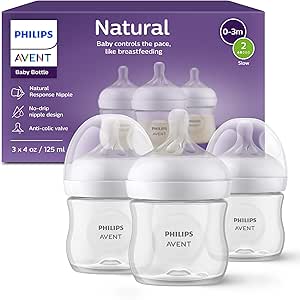
Choosing the Right Bottle: Why the Philips Avent Natural Response Stands Out
When selecting a bottle for newborns, the Philips Avent Natural Response model Scy900/01 offers a distinct approach with its soft, petal-shaped nipple designed to mimic the natural breast. This 125ml BPA-free bottle is engineered for babies 0+ months, focusing on a latch-and-suckle motion rather than a constant flow. Understanding its specific anti-colic valve system and wide neck design is crucial for parents considering this bottle.
Key Considerations Before Buying
- The Natural Response nipple requires a baby to actively latch and suckle to get milk, which can help pace feeding and is often preferred for combination feeding, but may frustrate babies accustomed to a faster, free-flow nipple.
- At 125ml, this bottle is ideal for newborns and younger infants, but parents should plan to purchase larger 260ml or 330ml versions as their baby's intake grows beyond 3-4 months.
- The bottle's components, particularly the one-piece anti-colic valve and the wide neck, are designed for easy cleaning and assembly, but the valve's proper positioning is critical to prevent leaks and ensure functionality.
What Our Analysts Recommend
For this specific model, check that the nipple's petal design is soft and flexible, indicating proper silicone quality. Ensure the anti-colic valve is intact and correctly seated against the bottle rim to create the necessary vacuum. The bottle's clarity and lack of manufacturing seams are good indicators of Philips Avent's production standards.
Bottles Market Context
Market Overview
The baby bottle market in India is dominated by brands like Philips Avent, Dr. Brown's, and Mee Mee, with a strong consumer shift toward BPA-free materials and anti-colic features. Premium bottles with natural feeding technology, like this Avent model, command a significant price premium over basic designs.
Common Issues
Common problems include nipple confusion when switching between bottle and breast, leakage from improperly assembled anti-colic systems, and frustration with complex part counts for cleaning. Some babies also reject certain nipple shapes or flow rates, making trial and error a frequent part of the process.
Quality Indicators
High-quality bottles feature medical-grade, odor-free materials, precise engineering for leak-proof assembly, and nipples with consistent flow rates. Brands like Philips Avent invest in research-backed nipple shapes, which is a key differentiator from generic alternatives that may simply copy the form without the functional design.
Review Authenticity Insights
Grade B Interpretation
A Grade B authenticity score with a 15% estimated fake review rate suggests the vast majority of the 34,806 reviews are trustworthy, but a small portion may be inauthentic. The adjusted rating of 4.40/5 (down from 4.78) is a more reliable indicator of genuine customer satisfaction.
Trust Recommendation
Focus on the verified purchase reviews, which all are for this product, and pay particular attention to detailed reviews that discuss specific features like the latch mechanism, cleaning experience, or how their baby transitioned to this nipple. Be slightly more skeptical of overly brief 5-star reviews that lack detail.
Tips for Reading Reviews
For this product, prioritize reviews that mention using the bottle for combination feeding or transitioning from breast to bottle, as this is its core design intent. Look for comments on the learning curve for the baby and the assembly of the valve system, as these provide practical, actionable insights.
Expert Perspective
The Philips Avent Natural Response bottle presents a compelling, research-driven option for parents seeking a bottle that supports a breastfeeding-like rhythm. Its high genuine rating of 4.40/5 from a massive review pool indicates strong real-world performance, particularly in reducing colic and supporting a natural latch. The specific 125ml size makes it a dedicated starter bottle, not an all-in-one solution. The design philosophy prioritizes paced feeding over convenience, which is a key trade-off for parents to understand.
Purchase Considerations
Weigh the benefits of the natural latch design against the potential need for your baby to learn this specific sucking technique. Consider if you plan to combination feed or eventually transition to bottle-feeding exclusively, as this influences the value of the nipple's design. Also, factor in the cost of potentially needing to upsize to larger bottles within a few months.
Comparing Alternatives
Shoppers should compare this model's latch-activated flow against traditional vented bottles (like Dr. Brown's) or other wide-neck brands to see which system aligns best with their feeding goals.