
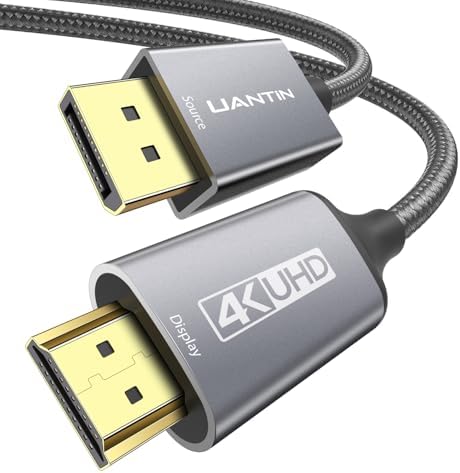
Choosing the Right DisplayPort to HDMI Cable for 4K@30Hz Connectivity
This specific 6-foot braided cable converts DisplayPort 1.2 output to HDMI 1.4 input, supporting 4K resolution at 30Hz refresh rates. Buyers should understand that this uni-directional design only works from DP source to HDMI display, not in reverse, which is critical for connecting modern computers to monitors or TVs.
Key Considerations Before Buying
- Verify your source device's DisplayPort version supports 1.2 or higher, as this cable won't function properly with older DP 1.0/1.1 sources despite physical compatibility.
- The 30Hz refresh rate at 4K resolution is suitable for productivity and media consumption but insufficient for high-frame-rate gaming; 2K resolution provides 60Hz for smoother motion.
- This cable's uni-directional nature means it cannot convert HDMI output to DisplayPort input, so confirm your connection direction matches the DP (source) to HDMI (display) requirement.
What Our Analysts Recommend
Quality indicators include the braided nylon exterior for durability and strain relief, plus proper certification for both DisplayPort 1.2 and HDMI 1.4 standards. Check that the connector housings are precisely molded without gaps, as poor construction can cause signal dropouts at 4K resolutions.
HDMI Cables Market Context
Market Overview
The DisplayPort to HDMI adapter cable market has expanded as more computers feature DisplayPort outputs while displays maintain HDMI inputs, creating compatibility gaps. Current offerings range from basic passive cables like this model to active converters supporting higher refresh rates and resolutions.
Common Issues
Users frequently encounter confusion about directional limitations, refresh rate caps at different resolutions, and compatibility mismatches between source and display standards. Many cables fail to maintain stable 4K signals beyond 3-4 feet without proper shielding.
Quality Indicators
Look for cables specifying exact standards compliance (DP 1.2 to HDMI 1.4), adequate shielding for 6-foot runs, and reinforced connectors. Premium versions include gold-plated contacts and ferrite cores to reduce electromagnetic interference at higher resolutions.
Review Authenticity Insights
Grade B Interpretation
The Grade B authenticity rating with 15% estimated fake reviews indicates generally reliable feedback but suggests some review manipulation exists. The adjusted rating of 4.50/5 (down from 4.89/5) better reflects genuine user experiences after removing suspicious content.
Trust Recommendation
Focus on reviews discussing specific technical aspects like 4K stability, compatibility with particular GPU brands (AMD/NVIDIA), or performance at the 2K@60Hz specification. Verified purchase reviews provide more reliable insights about build quality and real-world performance.
Tips for Reading Reviews
Prioritize reviews mentioning exact device combinations (e.g., 'Dell XPS to Samsung 4K TV') and those noting limitations like the 30Hz refresh rate at 4K. Be skeptical of reviews lacking technical details or repeating marketing language verbatim.
Expert Perspective
This cable represents a solid mid-range solution for users needing basic 4K connectivity from DisplayPort 1.2 sources to HDMI 1.4 displays. The 4.50 adjusted rating from authentic reviews suggests reliable performance for its intended use case, though the 30Hz limitation at 4K makes it unsuitable for gaming or fast-motion content. The braided construction and 6-foot length address common durability concerns in this category.
Purchase Considerations
Consider whether your workflow requires 60Hz at 4K resolution—if so, you'll need a more expensive active converter. Also evaluate if your display supports HDMI 2.0, as this cable's HDMI 1.4 limitation caps color depth to 8-bit at 4K rather than 10-bit HDR.
Comparing Alternatives
Shoppers should compare this cable's specifications against active converters supporting 4K@60Hz and bi-directional cables if their connection needs might reverse.
![UANTIN USB C to HDMI Cable 6Ft | 4K High-Speed USB 3.1 Type-C to HDMI Cord [Thunderbolt 3/4/5 Compatible] with MacBook, Galaxy S9 to S24, iPhone 15/16, iPad Pro, iMac, Surface : Electronics](https://m.media-amazon.com/images/I/41PCWGGiE1L._SX342_SY445_QL70_FMwebp_.jpg)


