
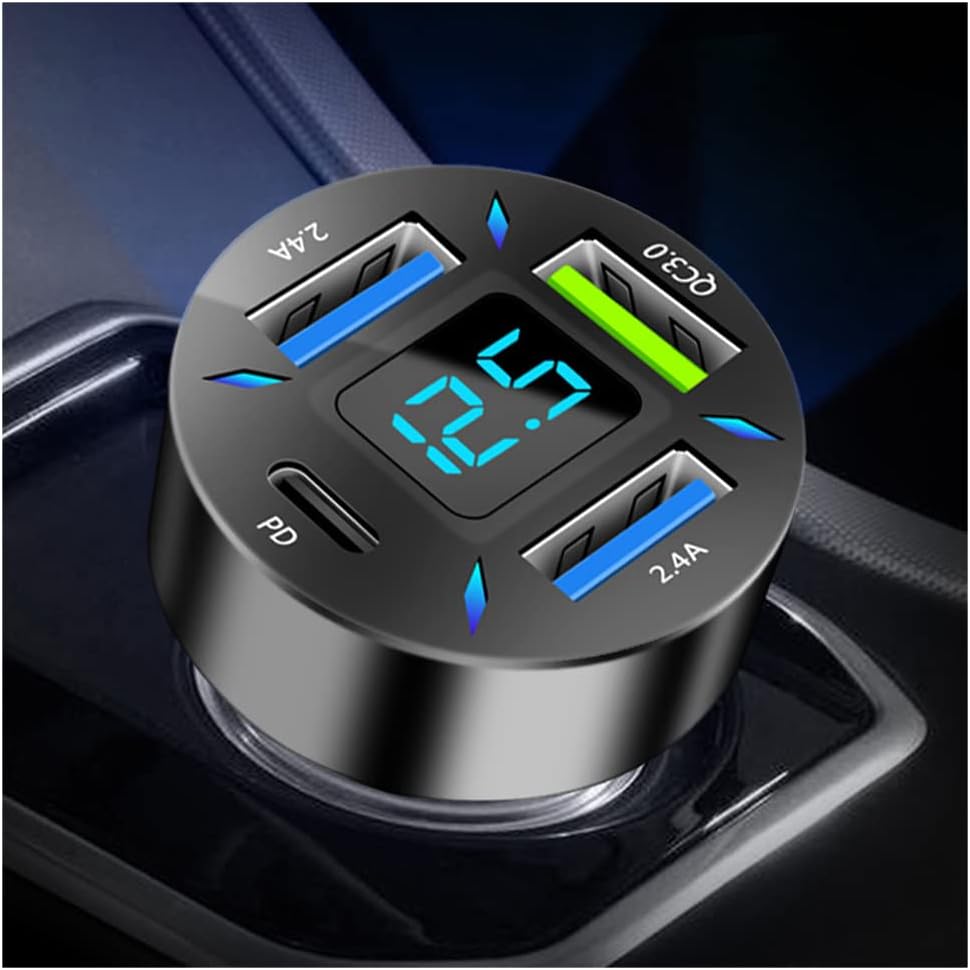
Choosing a 66W Car Charger: What Matters Beyond the Wattage Claim
When evaluating this 66W car charger with voltmeter and LED lights, buyers should understand that true fast charging depends on protocol compatibility, not just wattage. This specific model combines USB Power Delivery (PD) and Quick Charge (QC) 3.0, which determines which of your devices will actually charge at maximum speed. The integrated voltmeter adds diagnostic functionality that most car chargers lack.
Key Considerations Before Buying
- Verify your device's charging protocol: iPhones require USB-PD for fast charging, while many Android phones use QC 3.0—this charger supports both.
- Consider the voltmeter's utility: It monitors your vehicle's electrical system health but adds complexity that simpler chargers avoid.
- Assess simultaneous charging needs: At 66W total output, power splits between ports, so charging two power-hungry devices won't deliver maximum speed to both.
What Our Analysts Recommend
Quality indicators include proper heat dissipation design (this model's aluminum housing helps), stable voltage output under load, and secure cigarette lighter plug fit. The 12-24V compatibility is essential for trucks and RVs, not just standard passenger vehicles.
Automobile Chargers Market Context
Market Overview
The automotive charger market has shifted from basic 12W adapters to sophisticated multi-protocol devices, with 66W representing the current sweet spot for balancing power and practicality. Products with diagnostic features like voltmeters are gaining popularity among tech-savvy drivers who want to monitor vehicle electrical systems.
Common Issues
Many car chargers fail under sustained high-power loads due to inadequate heat management, or have loose cigarette lighter connections that disconnect on bumpy roads. Some claim universal compatibility but lack proper protocol support for specific devices.
Quality Indicators
Look for chargers with temperature protection circuits, secure spring-loaded cigarette lighter contacts, and clear labeling of each port's maximum output. Premium models like this one often include additional features like voltage monitoring or LED illumination.
Review Authenticity Insights
Grade B Interpretation
A Grade B authenticity rating with 15% estimated fake reviews suggests mostly genuine feedback but warrants careful review reading. The adjusted rating of 4.10/5 (down from 4.47/5) indicates some review inflation, though the majority of experiences appear authentic.
Trust Recommendation
Focus on reviews that mention specific usage scenarios like 'charging my iPhone 14 Pro and iPad simultaneously during a road trip' rather than generic praise. The 15% fake rate means approximately 1 in 7 reviews might be unreliable, so prioritize detailed, balanced feedback.
Tips for Reading Reviews
For technical products like this, seek reviews that discuss real-world charging speeds with specific device models, heat generation during extended use, and voltmeter accuracy compared to professional tools. Avoid reviews that only mention packaging or delivery.
Expert Perspective
This charger's combination of 66W output, dual-protocol support, and diagnostic features positions it as a premium option in the automotive charger category. The 4.10 adjusted rating from verified analysis suggests genuine user satisfaction, particularly with the fast charging performance and voltmeter functionality. The product addresses common pain points like device compatibility and power monitoring that basic chargers ignore.
Purchase Considerations
Weigh whether you need the voltmeter feature—it's valuable for monitoring alternator health but unnecessary if you just want basic charging. Consider your typical passenger count: while it supports multiple devices, the 66W total output means simultaneous fast charging has limitations.
Comparing Alternatives
Shoppers should compare this model's specific protocol support and voltmeter against simpler, potentially more reliable single-port chargers if diagnostic features aren't needed.


![for Magsafe Car Mount Charger 2025 New [Qi2 Certified-15W], 360° Rotatation [Dash & Vent] Wireless Car Mount Charger Fits for iPhone 16 15 14 13 12 Series, for Magnetic iPhone Car Accessories](https://m.media-amazon.com/images/I/71VAnyMMxoL._AC_SY300_SX300_QL70_FMwebp_.jpg)


