
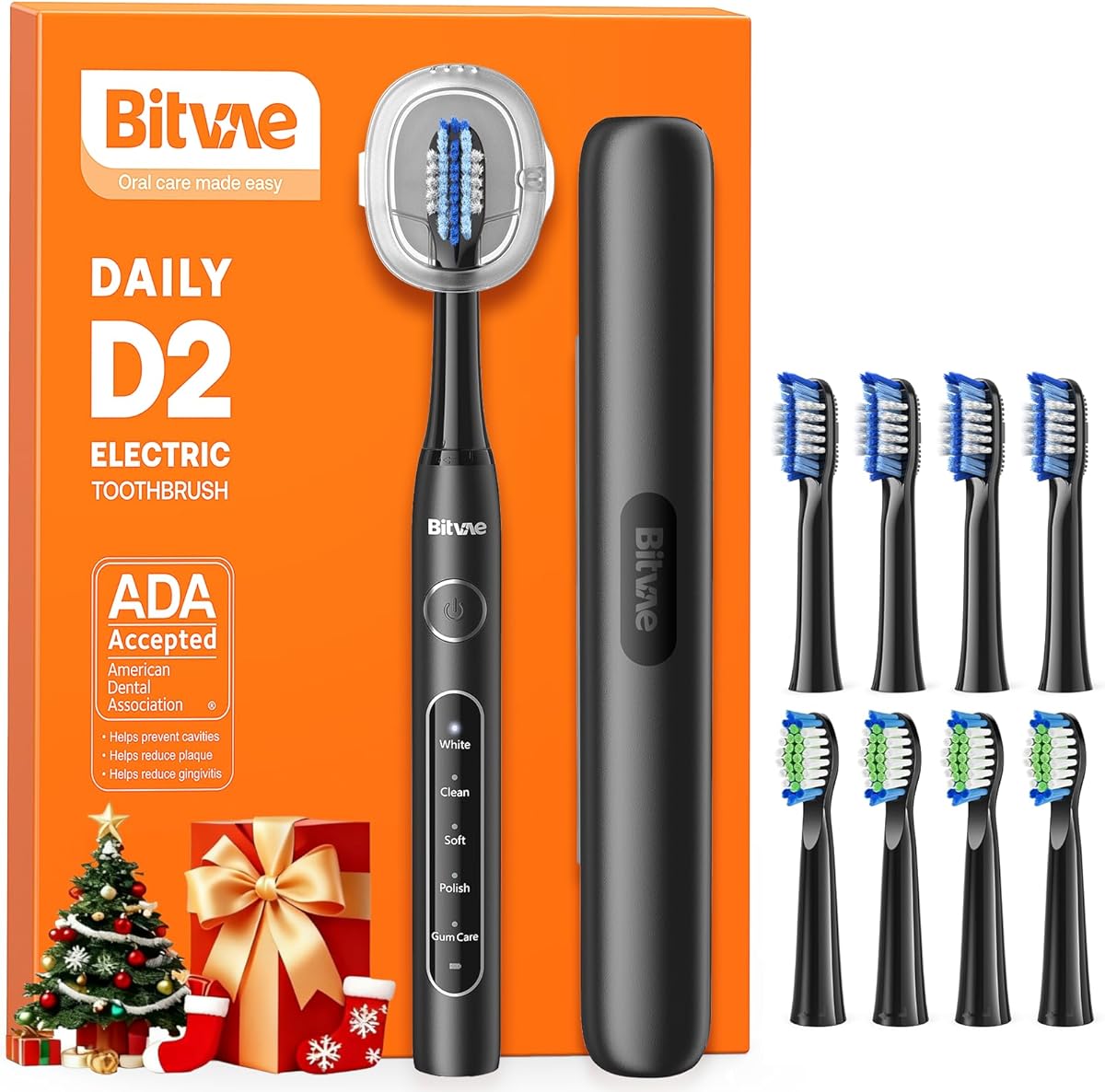
Evaluating Ultrasonic Toothbrushes: What the Bitvae D2's Features Mean for You
When considering the Bitvae D2 Ultrasonic Electric Toothbrush, buyers should understand how its 40,000+ vibrations per minute differ from oscillating-rotating models. This specific ultrasonic technology uses high-frequency vibrations to create a cleaning fluid dynamic, which requires proper technique to be effective. The inclusion of 8 brush heads and 5 modes suggests versatility but demands evaluation of brush head quality and mode practicality.
Key Considerations Before Buying
- Ultrasonic brushes like the D2 require lighter pressure than mechanical models—excessive force can reduce cleaning effectiveness and potentially damage gums.
- The 5 modes (likely including Clean, White, Polish, Sensitive, and Massage) should match your specific dental needs, not just serve as marketing features.
- Rechargeable power performance matters more than battery life claims—look for consistent power delivery throughout the charge cycle.
What Our Analysts Recommend
For ultrasonic toothbrushes, quality indicators include consistent vibration amplitude across all modes and brush head compatibility. The D2's inclusion of 8 brush heads suggests family use, but check if replacement heads maintain the same bristle density and quality as the originals. Genuine ultrasonic brushes should produce minimal audible buzz while delivering substantial cleaning action.
Ultrasonic Market Context
Market Overview
The UK ultrasonic toothbrush market has expanded beyond premium brands, with models like the Bitvae D2 offering similar specifications at lower price points. Consumers now face choices between established dental brands and value-focused alternatives that promise comparable vibration frequencies. This category differentiation often comes down to brush head quality and long-term reliability rather than initial specifications.
Common Issues
Common concerns with budget ultrasonic models include inconsistent power delivery as batteries age, brush heads that wear faster than premium alternatives, and modes that feel indistinguishable in practice. Some users report 'tingling' sensations with ultrasonic models, which may indicate improper technique or sensitivity to the high-frequency vibrations.
Quality Indicators
Quality ultrasonic toothbrushes maintain consistent vibration frequency regardless of pressure applied. Look for brush heads with rounded, multi-length bristles that effectively transmit vibrations. The charging system should support the brush's power demands—USB charging convenience shouldn't compromise charging stability or battery longevity.
Review Authenticity Insights
Grade B Interpretation
A Grade B authenticity rating with 15% estimated fake reviews indicates generally reliable feedback with some promotional content. For the Bitvae D2, this suggests most of the 14,682 reviews represent genuine experiences, though approximately 2,200 may be artificially positive. The 0.3-point drop from the displayed 4.40 to adjusted 4.10 rating reflects this manipulation.
Trust Recommendation
Focus on reviews discussing specific features like the 5 modes' actual differences or brush head durability over time. Verified purchase status adds credibility, but look for detailed experiences with the ultrasonic cleaning sensation rather than generic praise. The adjusted 4.10 rating likely represents a more accurate quality assessment than the displayed 4.40.
Tips for Reading Reviews
For ultrasonic toothbrushes, prioritize reviews that mention technique adjustments, gum sensitivity responses, and comparative experiences with other brush types. Be skeptical of reviews focusing solely on packaging or unboxing without discussing actual brushing performance over weeks of use.
Expert Perspective
The Bitvae D2 presents as a feature-rich ultrasonic option with its 8 brush heads and 5 modes, though the authenticity analysis suggests some review inflation. The 4.10 adjusted rating from verified purchasers indicates solid satisfaction, particularly for a budget-conscious ultrasonic model. The family-oriented approach with multiple brush heads addresses a common ultrasonic adoption barrier—replacement cost—but brush head quality consistency warrants attention. Ultrasonic effectiveness depends heavily on proper technique, which the D2's multiple modes may help users develop through gradual intensity progression.
Purchase Considerations
Weigh the included brush head quantity against their individual quality and replacement availability. Consider whether you'll actually utilize all 5 modes or primarily use 1-2 settings. The ultrasonic technology requires adaptation if you're transitioning from manual or oscillating brushes—some users never adjust to the high-frequency vibrations.
Comparing Alternatives
Shoppers should compare the D2's ultrasonic approach with oscillating-rotating models at similar price points, as cleaning mechanisms differ substantially.


