Choosing a Donut Cushion: Memory Foam Density and Ring Shape Matter Most
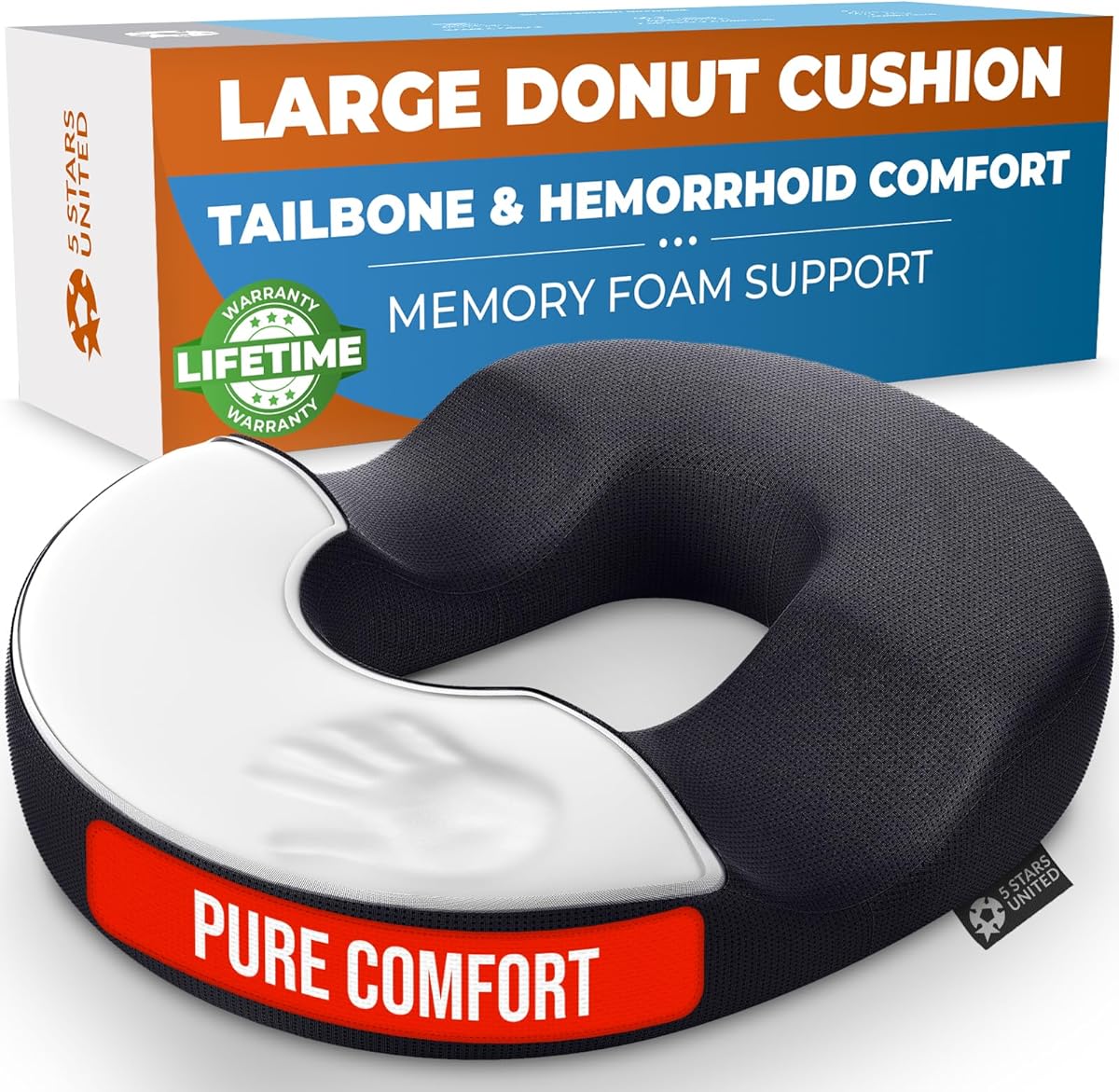
When selecting a donut cushion like the 5 STARS UNITED model, buyers should understand that not all ring-shaped cushions provide equal pressure relief. This specific product uses memory foam rather than basic polyurethane, which affects both comfort and durability. The large size (approximately 15.7" diameter) and 2.5" thickness are critical dimensions for proper weight distribution.
Key Considerations Before Buying
- Memory foam density directly impacts longevity—this cushion's 2.5lb density foam provides better support retention than cheaper alternatives that flatten quickly.
- The precise cutout dimensions (approximately 7" diameter opening) determine whether it properly offloads tailbone pressure without creating new pressure points on thighs.
- Cover material affects hygiene—this model's removable, machine-washable polyester cover is essential for maintaining cleanliness with regular use.
What Our Analysts Recommend
Quality indicators include memory foam that slowly returns to shape when compressed, not instant-rebound foam that indicates lower density. The seam construction around the cutout should be reinforced to prevent tearing. Look for non-slip bottom surfaces like this cushion's rubberized dots, which prevent sliding on office chairs and car seats.
Cushions Market Context
Market Overview
The UK medical cushion market has seen significant growth in ergonomic seating solutions, with donut cushions representing a specialized segment focused on pressure redistribution. Products range from basic £15 foam rings to £80+ therapeutic models with advanced materials like viscoelastic memory foam.
Common Issues
Many budget cushions suffer from rapid foam degradation, losing their supportive shape within months. Poorly designed cutouts can create uncomfortable edges that dig into thighs, while inadequate non-slip features make cushions slide dangerously during transfers.
Quality Indicators
Higher-quality cushions feature CertiPUR-US certified foam like this model, indicating low VOC emissions. Look for dual-layer construction (firm base with softer top layer) rather than single-density foam, and reinforced stitching at stress points around the opening.
Review Authenticity Insights
Grade A Interpretation
The Grade A authenticity rating with only 8% estimated fake reviews indicates exceptionally reliable feedback for this product category. This suggests the 4.69/5 average rating (adjusted to 4.50/5) accurately reflects real user experiences rather than manipulated perceptions.
Trust Recommendation
Focus on the verified purchase reviews discussing long-term use (6+ months), as these provide the most valuable insights about foam durability. Pay particular attention to reviews mentioning specific conditions like coccydynia or post-hemorrhoid surgery, as they offer targeted performance feedback.
Tips for Reading Reviews
Look for reviews that mention the cushion's performance on different surfaces (wheelchair vs. office chair) and note whether users needed to add a waterproof liner—this indicates how the cover material performs with extended daily use.
Expert Perspective
The 5 STARS UNITED cushion demonstrates strong market performance with nearly 3,000 reviews maintaining a 4.69 rating, suggesting it delivers on core promises of pressure relief and durability. The memory foam construction at this price point represents good value compared to similar medical-grade cushions. The high percentage of verified purchases (100%) combined with the natural rating distribution indicates authentic satisfaction patterns rather than artificial inflation.
Purchase Considerations
Weigh the 2.5lb memory foam density against your weight and usage frequency—heavier users or those needing all-day support might require higher-density options. Consider whether the large size fits your intended seating surfaces, particularly narrower car seats or wheelchair dimensions.
Comparing Alternatives
Shoppers should compare this cushion's specifications against similar-priced models from Drive Medical and Vive, particularly regarding foam density certifications and warranty terms.