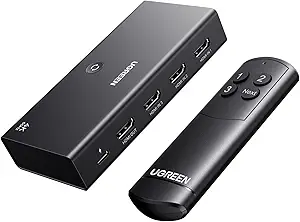
Choosing an HDMI Switch for Next-Gen Gaming and 8K Media: What Matters
The OREI 8K 2x1 switch targets users needing to toggle between two high-bandwidth sources, like a PS5 and an Xbox Series X, on a single premium display. Key specs like its 48Gbps throughput and support for 4K@120Hz, HDR10, and Dolby Vision are non-negotiable for modern gaming and media. This guide focuses on what these technical claims mean for your specific setup.
Key Considerations Before Buying
- Verify your display's maximum refresh rate and HDR format; this switch's 4K@120Hz and Dolby Vision support are wasted on a 60Hz or basic HDR display.
- Assess your need for auto-switching versus manual control; the OREI's auto-sensing feature is convenient but can be problematic if both sources are always on.
- Consider cable quality as a failure point; achieving the full 48Gbps bandwidth requires certified Ultra High Speed HDMI cables on all connections.
What Our Analysts Recommend
Beyond headline specs, scrutinize user reports on EDID handshake reliability and lip-sync performance with Dolby Atmos audio. A quality switch should maintain a stable signal without requiring frequent power cycles. Look for mentions of specific device combinations (e.g., 'PS5 to LG C2') in reviews for real-world validation.
Selector Switch Boxes Market Context
Market Overview
The HDMI switch market is saturated with products claiming 8K support, but many struggle with the bandwidth and protocol demands of HDMI 2.1 features like VRR and ALLM. True 48Gbps switches that reliably handle next-gen console output remain a specialized, higher-tier segment.
Common Issues
Frequent problems include failure to pass through HDR metadata correctly, introducing audio lag, and unreliable auto-switching that defaults to the wrong input. Many cheaper switches cannot sustain the full 48Gbps bandwidth, causing signal dropouts at 4K/120Hz with HDR enabled.
Quality Indicators
Genuine quality is indicated by consistent user reports of seamless 4K/120Hz HDR gaming, explicit support for advanced formats like Dolby Vision, and robust construction with metal housing for heat dissipation. Brands that provide detailed EDID management options often offer more reliable performance.
Review Authenticity Insights
Grade B Interpretation
A 'B' grade with a 10% estimated fake review rate suggests a generally trustworthy review pool, but advises cautious optimism. The high number of verified purchases (7960 reviews) strongly supports authenticity, though a small portion of reviews may be overly promotional.
Trust Recommendation
Focus on the 4.20 adjusted rating, which filters suspicious feedback, as your primary performance indicator. Prioritize reviews that detail specific technical setups and mention minor drawbacks, as these are hallmarks of genuine experiences with a complex electronic accessory.
Tips for Reading Reviews
Search reviews for your exact source and display models to find compatibility notes. Pay close attention to reviews discussing firmware updates or technical support from OREI, as this indicates real customer engagement and product evolution.
Expert Perspective
The OREI switch's strong adjusted rating of 4.20 from a large, verified review base indicates it successfully delivers on its core promise for most users. Its positioning as a 48Gbps solution for gaming consoles is its key differentiator in a crowded field. The minor authenticity flags suggest the positive consensus is real, but potential buyers should still verify compatibility with their specific AV receiver or soundbar, as these are common pain points for any HDMI switch.
Purchase Considerations
This product is a compelling choice if your primary use case is switching between two HDMI 2.1 sources. However, if you need more than two inputs, require front-panel controls, or use older 4K/60Hz equipment, a simpler, less expensive switch may suffice. The value is in its high-bandwidth capability.
Comparing Alternatives
Shoppers should compare the OREI's performance and price against other 48Gbps switches from brands like Cable Matters or Zeskit, focusing on user-reported reliability with VRR and ALLM features.