
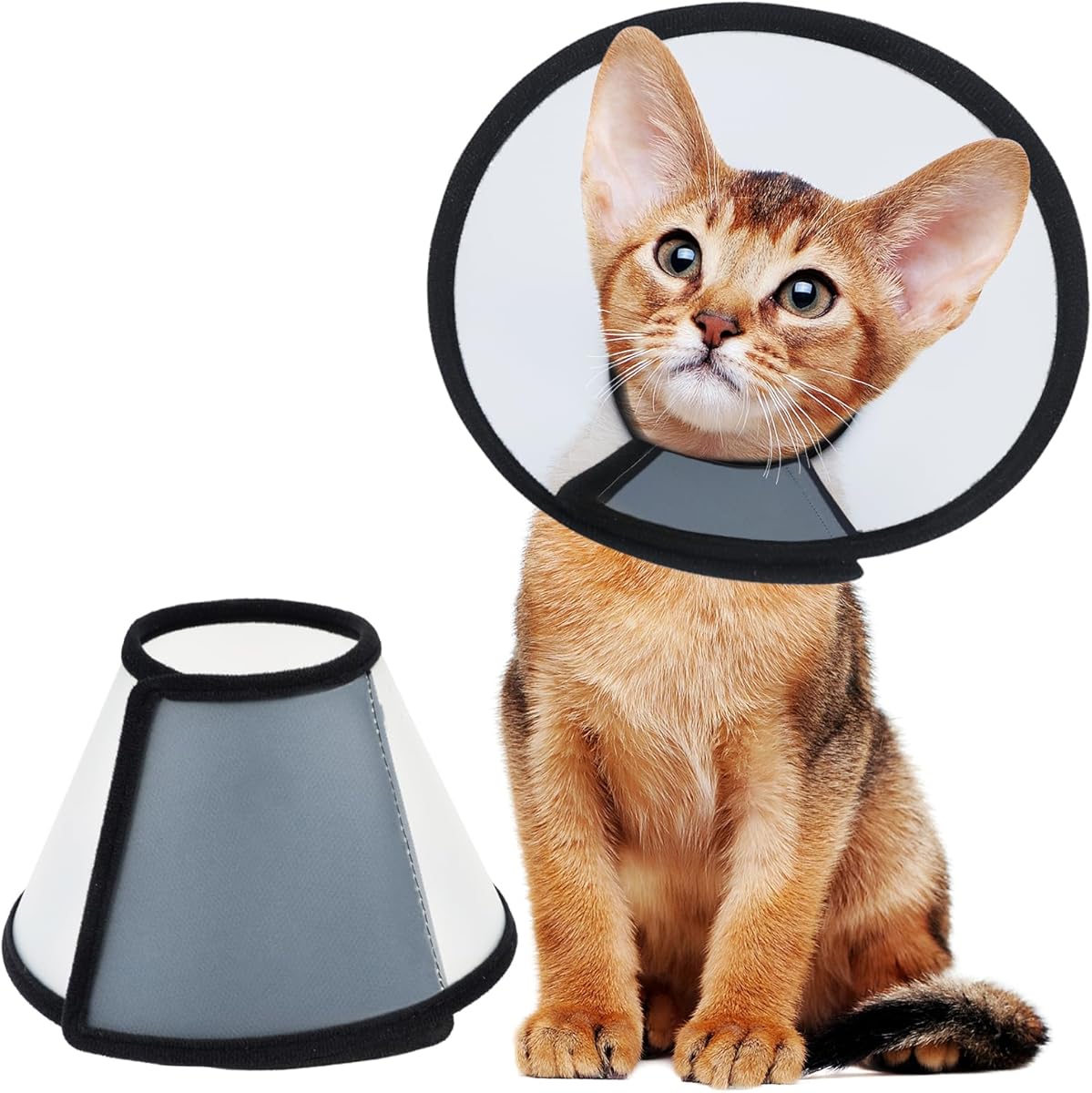
Choosing the Right Recovery Collar: Lightweight Design vs. Traditional Protection
The Vivifying Cat Cone Collar represents a specific approach to post-surgical protection, emphasizing a lightweight plastic construction with a soft rolled edge. Unlike rigid veterinary cones, this product aims to balance restriction with relative comfort, which buyers should evaluate against their cat's specific recovery needs and temperament.
Key Considerations Before Buying
- The 'soft edge' design is intended to reduce neck chafing, but its effectiveness depends on proper fit and your cat's activity level; a restless cat may still experience irritation.
- The adjustable plastic strap system allows for a custom fit, but ensure the closure is secure enough to prevent a determined cat from pawing it off without being uncomfortably tight.
- While lightweight, this plastic cone provides less peripheral visibility than newer fabric or inflatable alternatives, which may affect your cat's willingness to eat, drink, and navigate.
What Our Analysts Recommend
For this style of collar, examine how the plastic edge is finished—a smooth, rounded roll is crucial. Check that the adjustment buckle is sturdy and won't snap under pressure. The plastic should be flexible enough to resist cracking but rigid enough to prevent folding over if your cat presses against furniture.
Recovery Collars & Cones Market Context
Market Overview
The recovery collar market has expanded beyond traditional hard plastic 'cones of shame' to include inflatable rings, soft fabric cones, and flexible plastic designs like the Vivifying. Consumers now balance protection level against animal stress, with many opting for designs that allow more normal behavior.
Common Issues
Poor sizing leads to escapes or over-restriction; cats often refuse to eat or drink with standard cones; and cheap plastics crack or have sharp edges that cause secondary injury. Adjustable straps can fail if made from flimsy materials.
Quality Indicators
Look for clear size guides based on neck measurement, not just weight. High-quality plastic cones have uniform thickness without brittle spots. The best designs incorporate a slight inward curve at the wide end to help guide food bowls closer to the cat's mouth.
Review Authenticity Insights
Grade B Interpretation
A Grade B with a 10% estimated fake review rate suggests generally reliable feedback with some minor manipulation, likely concentrated in 5-star ratings. The adjusted rating of 4.20/5 (down from 4.44) indicates the authentic satisfaction level is still strong but slightly less glowing than the raw average implies.
Trust Recommendation
Focus on the verified purchase 3- and 4-star reviews for balanced insights about fit and durability issues. Be slightly skeptical of 5-star reviews that lack specific details about the cat's surgery type or how long the collar was worn.
Tips for Reading Reviews
Prioritize reviews that mention the cat's size/breed and what procedure the collar was used for (e.g., spay, wound care). Look for comments about the plastic's flexibility in real-world use, such as whether it survived being slept on or caught on doorways.
Expert Perspective
The Vivifying collar's strong adjusted rating of 4.20/5 from thousands of verified purchases indicates it successfully addresses key pain points for many cat owners: weight and edge comfort. Its specific design—lightweight plastic with a soft rolled rim—appears to be a viable middle ground between hard cones and less protective alternatives. The authenticity data suggests this positive reception is organic, though shoppers should note that a 10% fake review rate means the very top-tier ratings may be slightly inflated.
Purchase Considerations
This product is best suited for cats recovering from routine procedures where complete immobilization isn't critical, but where a determined licker needs a physical barrier. Consider your cat's personality: anxious cats may tolerate this better than a rigid cone, but Houdini-like escape artists might defeat the adjustable strap.
Comparing Alternatives
Shoppers should compare this specific soft-edge plastic design with inflatable collars and soft fabric cones, as the protection-comfort trade-off differs significantly between these types.


