
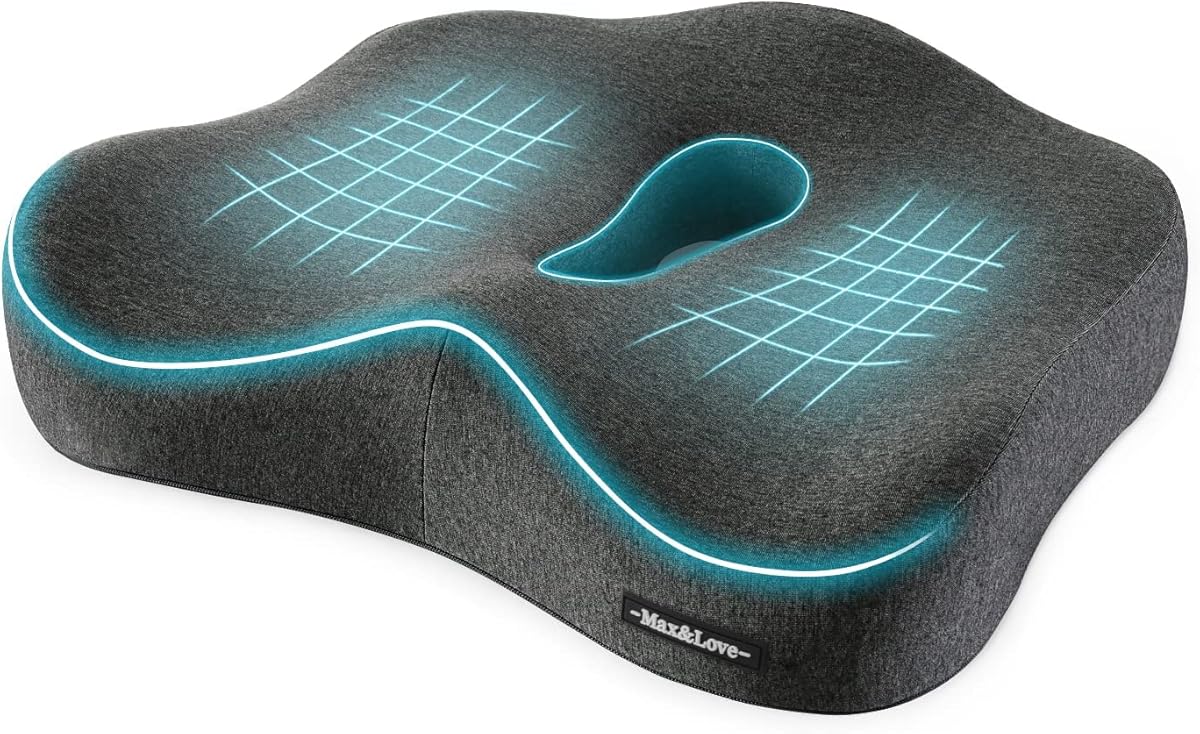
Choosing a therapeutic memory foam cushion for targeted pain relief and support
This specific cushion is designed as a multi-condition orthopedic aid, not just a comfort accessory. Its elongated U-shape and high-density memory foam target pressure point relief for the tailbone (coccyx), prostate, and sciatic nerve, distinguishing it from basic seat pads. Buyers should understand its medical-grade positioning versus standard ergonomic cushions.
Key Considerations Before Buying
- Assess your primary pain point: The U-cutout specifically offloads the coccyx and perineum, making it ideal for tailbone injuries, post-surgical recovery, or prostate discomfort, but may be less optimal for general lower back pain requiring lumbar support.
- Evaluate chair compatibility: This non-slip cushion's dimensions and flat base are designed for standard office or car seats; it may not conform well to deeply contoured or soft-cushioned chairs, reducing its effectiveness.
- Consider break-in time: High-density memory foam, like in this product, requires a period to adapt to your body's weight and temperature for optimal pressure redistribution, meaning immediate comfort may differ from long-term benefit.
What Our Analysts Recommend
For therapeutic cushions, prioritize a clearly defined cutout shape that matches your anatomy and a foam density high enough to prevent bottoming-out. The cover should be removable and breathable, like the likely polyester blend here, for hygiene given extended daily use. Check that the base fabric has a strong non-slip pattern to prevent shifting during sit-to-stand movements.
Market Context
Market Overview
The therapeutic seat cushion market is saturated with products making broad pain relief claims, but genuine orthopedic designs with specific cutouts for coccyx and perineal relief form a distinct, medically-informed subcategory. Products are increasingly marketed for hybrid use in office chairs, car seats, and wheelchairs.
Common Issues
Many cushions use low-density foam that compresses flat within months, failing to provide lasting relief. Others have poorly positioned or sized cutouts that can create new pressure points. Non-slip bottoms often lose grip after repeated washing or on certain fabrics.
Quality Indicators
Look for explicit foam density ratings (often missing, making high review ratings critical), a multi-layered construction for durability, and a design that clearly illustrates the biomechanics of pressure offloading. A high number of verified purchases in reviews, as seen with this product's 9,070 ratings, is a strong market signal.
Review Authenticity Insights
Grade A Interpretation
A Grade A with a 0.00% estimated fake review rate indicates an exceptionally trustworthy feedback profile. For a therapeutic product, this means the reported pain relief and durability experiences are highly likely to be genuine user testimonials, not manufactured marketing.
Trust Recommendation
You can place significant weight on the consistent patterns in the 9,070 reviews. Look for recurring specifics about relief from coccyx pain or prolonged sitting comfort, as these are authentic signals. The sustained 4.8/5 rating across a large review pool suggests reliable performance, not temporary hype.
Tips for Reading Reviews
Focus on reviews that detail the user's specific condition (e.g., 'post-coccyx fracture,' 'desk job sciatica') and the break-in period. For this cushion, pay special attention to comments about long-term foam resilience and the effectiveness of the U-shape for your particular pain location.
Expert Perspective
This product's exceptional review authenticity and rating position it as a high-confidence option within the therapeutic cushion niche. Its design specificity—targeting the coccyx, perineum, and ischial tuberosities—means it is not a generic comfort pad but a tool for specific anatomical relief. The overwhelming positive feedback suggests it successfully delivers on its core promise for the majority with those targeted needs. The dark gray color and likely straightforward design indicate a focus on function over aesthetics, which aligns with its medical-use positioning.
Purchase Considerations
Weigh the specificity of the U-cutout against your needs; it's a benefit for tailbone issues but a potential drawback if you prefer full-seat support. Consider your sitting duration, as high-density memory foam excels in long-term sitting but may feel initially firm. The high rating indicates low risk, but ensure your return window allows for a proper multi-week trial to assess true therapeutic benefit.
Comparing Alternatives
Shoppers with diffuse lower back pain without tailbone issues should compare with solid or wedge-shaped lumbar cushions, as this product's primary relief zone is posterior.


