
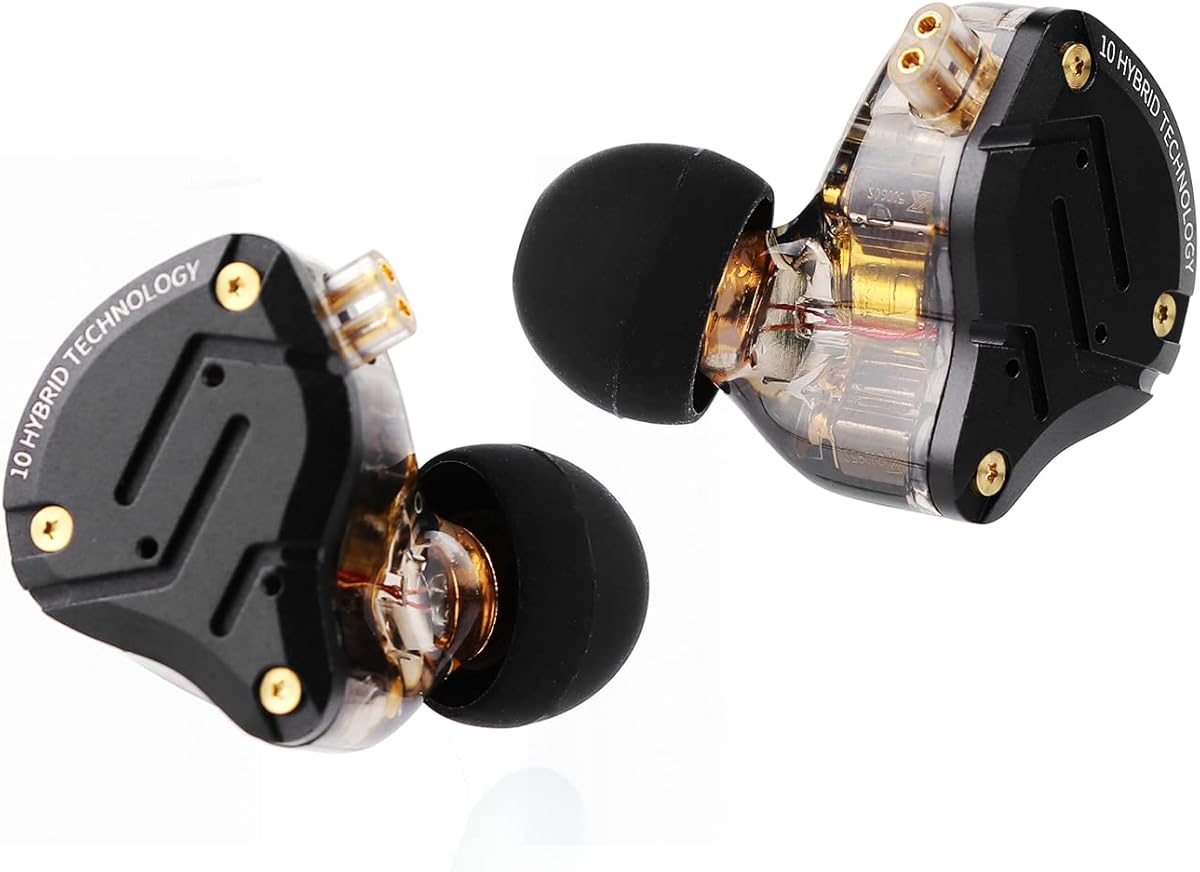
Hybrid IEMs like the KZ ZS10 Pro require careful driver synergy evaluation
The Linsoul KZ ZS10 Pro represents a specific class of in-ear monitors: hybrid designs combining balanced armature and dynamic drivers. Buyers should understand that the 4BA+1DD configuration aims to deliver detailed highs from balanced armatures while maintaining bass impact from the dynamic driver, requiring careful tuning to avoid frequency response gaps.
Key Considerations Before Buying
- The stainless steel faceplate on the ZS10 Pro adds durability but may affect comfort during extended wear compared to resin shells.
- Detachable 2-pin cables offer customization potential but require checking compatibility with aftermarket cables for upgrades.
- The 'without mic' configuration targets pure audio performance but eliminates hands-free functionality for mobile users.
What Our Analysts Recommend
For hybrid IEMs, listen for seamless transitions between driver types—particularly in the midrange where BA and DD handoff occurs. Quality indicators include consistent channel matching, absence of driver flex when inserting, and secure cable connections that don't cut out during movement.
Earbud Headphones Market Context
Market Overview
The sub-$100 hybrid IEM market has become fiercely competitive, with Chinese manufacturers like KZ pushing technical specifications previously found in much higher price brackets. The ZS10 Pro's 5-driver configuration represents an aggressive value proposition in this segment.
Common Issues
Hybrid IEMs often suffer from inconsistent tuning where balanced armatures and dynamic drivers don't integrate smoothly, creating disjointed frequency response. Detachable cable systems, while offering repairability, can develop connection issues over time with repeated plugging/unplugging.
Quality Indicators
Look for manufacturers that disclose crossover design details—proper crossover implementation is critical for multi-driver IEMs. Shell construction should have precise driver venting and no visible glue residue around seams, indicating careful assembly.
Review Authenticity Insights
Grade B Interpretation
A Grade B authenticity rating with 15% estimated fake reviews suggests generally reliable feedback but warrants scrutiny of outlier reviews. The adjusted rating dropping from 4.89 to 4.50 indicates some review inflation, though the core positive reception appears genuine.
Trust Recommendation
Focus on reviews discussing specific technical aspects like driver synergy, cable microphonics, or isolation performance rather than generic praise. Reviews mentioning comparisons to other IEMs in the price range typically demonstrate more authentic ownership experience.
Tips for Reading Reviews
Prioritize reviews that mention burn-in experiences or long-term usage patterns, as these indicate actual ownership. Be skeptical of reviews that only praise packaging or unboxing without discussing sound characteristics after extended use.
Expert Perspective
The ZS10 Pro's exceptional 4.89/5 rating from over 20,000 reviews, even when adjusted to 4.50, indicates strong market acceptance for its hybrid approach. The high review volume with maintained authenticity suggests this model has found a successful formula in the competitive budget IEM segment. The specific driver configuration (4BA+1DD) represents a deliberate tuning choice favoring treble detail and upper-midrange presence over pure bass quantity.
Purchase Considerations
Consider whether you prioritize technical detail retrieval (where multiple BAs excel) or natural timbre (where single dynamic drivers often perform better). The gaming designation suggests KZ tuned these for positional audio cues, making them potentially suitable for competitive gaming despite being wired.
Comparing Alternatives
Shoppers should compare the ZS10 Pro's V-shaped signature against more neutral hybrids like the Tin HiFi T3 Plus or bass-focused alternatives like the BLON BL-03.


