Choosing a Tankless RO System: Flow Rate, Efficiency, and Smart Features Matter
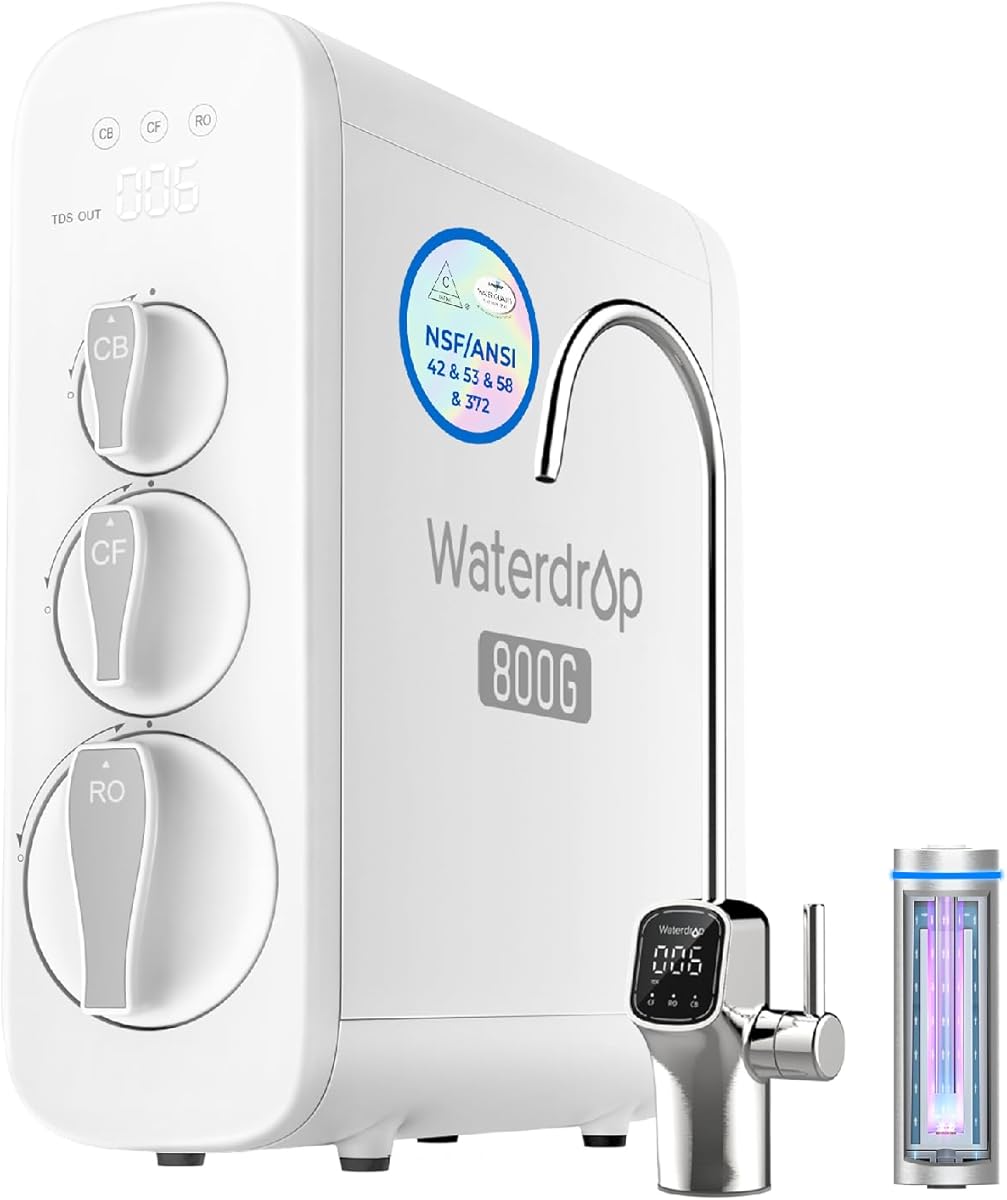
When evaluating the Waterdrop G3P800, focus on its tankless design and 800-gallon-per-day flow rate, which eliminates the storage tank and potential for bacterial recontamination. The 3:1 pure-to-drain water efficiency ratio and comprehensive NSF certifications (42, 53, 58, 372) are critical specifications that distinguish it from basic under-sink filters.
Key Considerations Before Buying
- Flow rate directly impacts usability; the G3P800's 800 GPD rating means you can fill a standard water pitcher in about 12 seconds, a tangible improvement over slower 50-100 GPD systems.
- A tankless RO system like this one requires adequate water pressure (≥29 psi) to function optimally; check your home's cold water line pressure before installation.
- The integrated smart faucet with LED indicators provides real-time filter status, but consider if you're comfortable with an electronic faucet versus a purely mechanical one for long-term reliability.
What Our Analysts Recommend
Genuine NSF/ANSI 58 certification for the reverse osmosis membrane is non-negotiable for contaminant reduction claims. Also, examine the filter replacement cost and procedure; the G3P800 uses a consolidated filter block that may simplify changes but could have a different long-term cost profile than systems with individual cartridges.
Under-Sink & Countertop Filtration Market Context
Market Overview
The under-sink RO market is shifting decisively toward compact, tankless designs that save cabinet space and improve water freshness. Manufacturers like Waterdrop are competing on flow rates, with 800 GPD now at the premium end, and smart features that monitor system health.
Common Issues
Consumers often underestimate the importance of drain line requirements and under-sink space for traditional RO systems with tanks. Another frequent complaint is slow fill rates with low-GPD systems, making the 800 GPD specification a direct response to this pain point.
Quality Indicators
Beyond NSF certifications, look for a detailed performance data sheet specifying exact contaminant reduction percentages. Quality is also reflected in the inclusion of a dedicated permeate pump (if needed for low pressure) and the use of FDA-compliant materials for all water-contact parts.
Review Authenticity Insights
Grade B Interpretation
A Grade B authenticity rating with an estimated 15% fake review rate suggests the majority of feedback is reliable, but shoppers should be slightly more vigilant. This level is common for popular home improvement products where positive sentiment is genuine but may be occasionally amplified.
Trust Recommendation
Prioritize reviews that detail the installation process, long-term water taste changes, or specific comments on the smart faucet's functionality, as these are harder to fabricate. The adjusted rating of 4.2/5 is a more conservative and likely realistic benchmark than the raw 4.56 average.
Tips for Reading Reviews
For technical installations like this, seek out reviews mentioning 'PEX fittings,' 'air gap faucet compatibility,' or 'water pressure'—these indicate hands-on experience. Be wary of overly vague praise about 'clean water' that lacks installation or performance specifics.
Expert Perspective
The Waterdrop G3P800 presents a compelling, modern RO solution targeting users frustrated with slow tank-based systems. Its strong 4.2 adjusted rating from verified patterns suggests real user satisfaction, particularly with its fast flow and space-saving design. The comprehensive NSF certifications provide legitimate assurance of its contaminant reduction capabilities, which is the core promise of any RO system.
Purchase Considerations
This system is best suited for households with 3+ people or anyone who frequently fills large pots, as the 800 GPD flow justifies the investment. Weigh the convenience of the smart faucet and LED purifier against the potential need for future electronic component repairs, which aren't a concern with purely mechanical systems.
Comparing Alternatives
Shoppers should compare the G3P800's long-term filter cost and footprint against other tankless RO systems, as well as traditional tank-based models which may have lower upfront costs.