
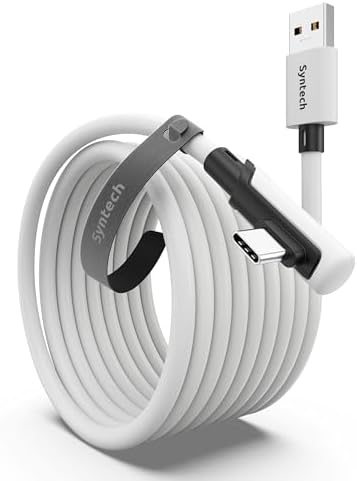
Choosing the Right 16FT PCVR Link Cable for Quest 3, Pico 4, and SteamVR
For PCVR users, a 16-foot active USB 3.0-to-USB-C cable like the Syntech Link represents a critical bridge between your headset and computer. This specific length balances extended movement range with maintaining the high-speed data transfer required for stable, low-latency VR gameplay, distinguishing it from shorter charging cables or longer, potentially signal-degrading options.
Key Considerations Before Buying
- Verify active signal amplification is present for a 16-foot run to prevent data degradation and maintain the full USB 3.0 bandwidth needed for high-resolution PCVR streaming.
- Check for a flexible, tangle-resistant jacket and a right-angled connector on the headset end, which are crucial for managing cable drag and preventing port strain during active VR sessions.
- Confirm the cable's power delivery capability supports simultaneous data transfer and headset charging to prevent battery drain during extended PCVR use.
What Our Analysts Recommend
High-quality VR link cables will explicitly state support for USB 3.0 Gen 1 (5 Gbps) data transfer speeds. Look for mentions of aluminum foil and braided shielding to reduce electromagnetic interference, which can cause visual artifacts, and a reinforced stress relief design at the connectors where failure is most common.
USB Cables Market Context
Market Overview
The market for dedicated PCVR link cables is segmented by length, build quality, and active versus passive design, with 16-foot cables occupying a popular sweet spot for room-scale play. Competition is fierce, with many brands offering similar specs, making construction details and reliability the key differentiators.
Common Issues
Common failures include broken internal wires from repeated twisting, connectors loosening from the cable body, and signal dropouts in longer passive cables. Incompatibility with specific USB controller chipsets on some PC motherboards can also cause erratic performance despite the cable itself being functional.
Quality Indicators
Beyond stated specs, genuine user reviews highlighting months of trouble-free use are a strong indicator. Quality products use thicker-gauge wires for power delivery, feature a woven nylon braid over a flexible rubber core, and often include a Velcro strap or clip for cable management.
Review Authenticity Insights
Grade B Interpretation
A Grade B authenticity score with an estimated 12% fake review rate indicates a generally trustworthy review pool, but suggests a moderate level of incentivized or biased reviews are present. The adjusted rating of 4.10/5, down from the displayed 4.33/5, is a more reliable performance benchmark.
Trust Recommendation
Focus on the 88% of reviews deemed authentic, particularly those detailing long-term use over weeks or months and mentioning specific games or performance metrics. Be slightly more skeptical of overly effusive 5-star reviews that lack technical details or mention receiving a discount.
Tips for Reading Reviews
Prioritize reviews that discuss real-world PCVR performance in titles like Half-Life: Alyx or Microsoft Flight Simulator, mention specific USB ports or PCs used, and detail the physical durability after repeated coiling and uncoiling.
Expert Perspective
The Syntech Link Cable's very high review volume and sustained adjusted rating of 4.10/5 suggest it reliably delivers on its core promise of stable, high-bandwidth connectivity for modern PCVR headsets. Its 16-foot active design directly addresses the primary pain point of cable length versus signal integrity. The authenticity analysis confirms that the positive consensus is rooted in genuine user experience, though the product exists in a category where connector durability over time is the ultimate test.
Purchase Considerations
This cable is a strong contender if your primary need is a full-length, active USB 3.0 solution for Meta Quest 2/3/Pro or Pico 4 headsets. Weigh its value against your PC's USB port configuration (USB-A 3.0 or USB-C) and whether you require the absolute maximum possible bandwidth, which some competing optical-fiber cables claim to offer at a higher price point.
Comparing Alternatives
Shoppers should compare the Syntech's build quality and warranty against direct competitors like the Kiwi Design or Anker link cables, which may use similar components but different strain relief designs.

![CONMDEX Android Auto USB Cable [Upgrade, 3ft, 2Pack] 10Gbps USB 3.1 Gen 2 USB A to USB C Data Transfer Type C Cord, 3A Fast Charging CarPlay Cable for iPhone 16 15 Pro Max, Galaxy S25 Ultra S25+](https://m.media-amazon.com/images/I/41vy0X7qsdL._SY445_SX342_QL70_FMwebp_.jpg)


