
Choosing a 6-Inch Digital Caliper: What DIYers Need to Know About Accuracy and Build
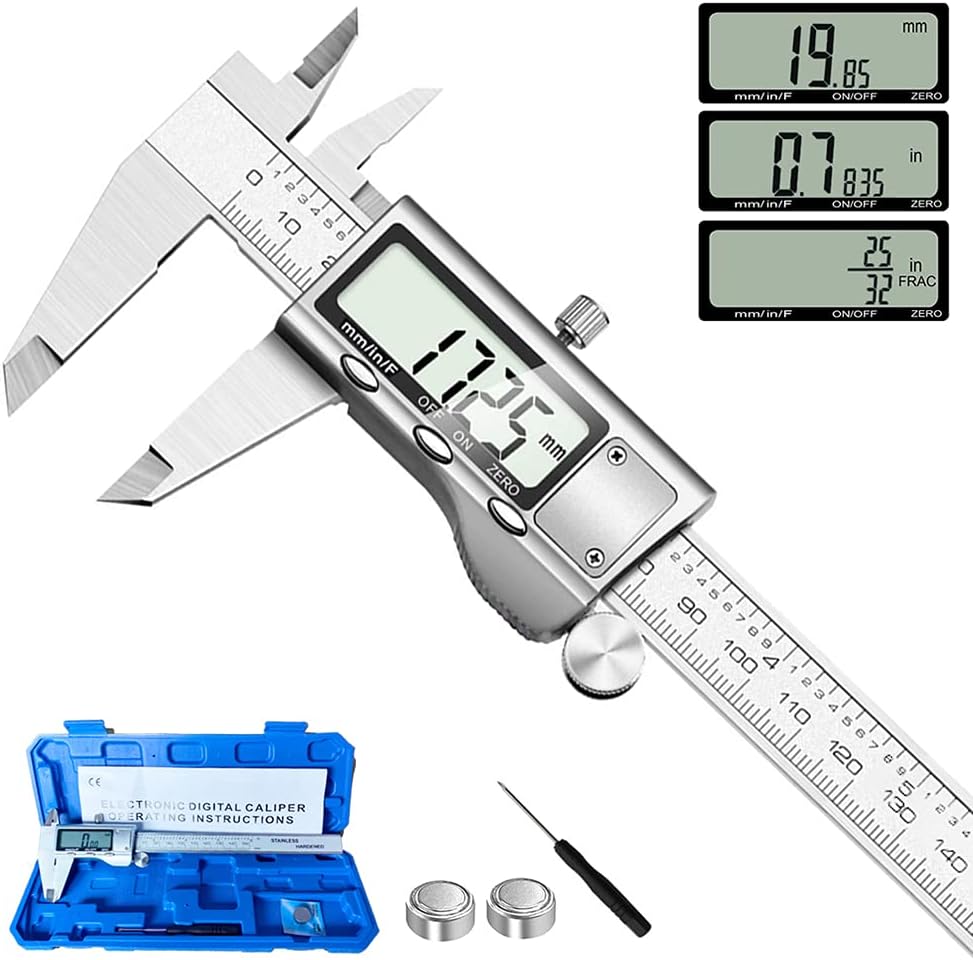
For a 6-inch digital caliper like this stainless steel model, the advertised large LCD screen and three-unit switching (inch/metric/fraction) are key features for home workshops. Buyers should prioritize consistent zeroing accuracy and the feel of the thumb roller over flashy displays, as these directly impact measurement reliability for woodworking, 3D printing, or automotive tasks.
Key Considerations Before Buying
- Verify the stated accuracy (typically ±0.001" for this class) by checking if the caliper returns to zero perfectly after repeated opening and closing, a common failure point for budget tools.
- Assess the battery compartment and seal; a poorly sealed SR44 battery compartment can lead to corrosion and failure, a frequent issue mentioned in authentic reviews for similar models.
- Evaluate the depth rod and step measurement edges; for DIY use, a sharp, burr-free internal step is crucial for measuring recesses and grooves accurately.
What Our Analysts Recommend
A quality digital caliper will have a smooth, consistent slide with minimal lateral wobble. The LCD should be readable in your workshop lighting without parallax error. Pay close attention to reviews mentioning long-term battery life and the durability of the plastic case components, as these are cost-saving areas for manufacturers.
Vernier Calipers Market Context
Market Overview
The market for 6-inch digital calipers is saturated with imported tools offering similar specs, creating intense competition on price that can pressure build quality. Features like absolute/relative zero, data output ports, and IP ratings are now common differentiators.
Common Issues
Common failures include battery drain from poor auto-shutoff, the accumulation of debris on the capacitive scale strip causing jumpy readings, and the wearing down of the rack and pinion mechanism leading to increased backlash.
Quality Indicators
Look for hardened stainless steel on the measuring jaws and beam, a clearly branded capacitive encoder (not a generic optical strip), and a well-machined rack. A quality tool will feel substantial and slide with hydraulic-like smoothness, not gritty or loose.
Review Authenticity Insights
Grade C Interpretation
A Grade C with a 28% estimated fake review rate suggests a significant portion of the glowing 5-star feedback may be inauthentic, artificially inflating the visible 4.73 rating. The adjusted 4.10 rating is a more realistic benchmark, indicating good but not exceptional performance.
Trust Recommendation
Focus your review analysis on the 3 and 4-star ratings, which are less likely to be manipulated. Specifically search for reviews that detail use over several months, as these will reveal true durability concerns about the LCD screen or slide mechanism.
Tips for Reading Reviews
Be skeptical of reviews that only praise packaging or delivery speed. Trust reviews that discuss specific measurement tasks (e.g., 'measuring router bit shanks' or 'checking 3D printer tolerance'), mention calibration against a known standard, or note issues with the fraction conversion mode.
Expert Perspective
This caliper presents a classic value proposition: stainless steel construction and multi-unit conversion at a competitive price point. However, the authenticity analysis reveals a review landscape where the exceptional 4.73 rating is likely overstated. The adjusted 4.10 rating aligns more closely with typical performance for this category—suitable for non-critical DIY and hobbyist use where absolute metrology-grade precision isn't required. The large LCD and easy switching are genuine conveniences, but long-term reliability is the key question mark.
Purchase Considerations
Weigh the importance of cost against potential recalibration needs. For occasional use, this tool may suffice, but for frequent, repetitive measurements, investing in a brand with a verifiable track record in industrial measurement might prevent frustration. Consider if you truly need fraction mode, as it can sometimes be a source of software errors in digital calipers.
Comparing Alternatives
Shoppers should compare the slide action and jaw squareness of this model against offerings from established brands like Mitutoyo, iGaging, or even other Amazon best-sellers before deciding.


