Choosing a Posture Corrector: Adjustability, Breathability, and Targeted Support
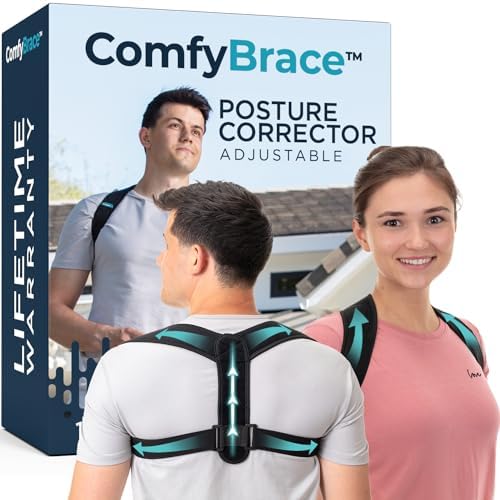
When evaluating the ComfyBrace Posture Corrector, focus on its specific claims of mid and upper spine support with clavicle stabilization. Unlike generic back braces, this product positions itself as a multi-region corrector designed to address both thoracic kyphosis (hunching) and forward head posture simultaneously through its strapping system.
Key Considerations Before Buying
- Assess whether you need primary support for the mid-back (thoracic) region, upper spine/cervical area, or both, as this brace's design claims to bridge both zones.
- Consider your activity level while wearing it; the breathable material claim is crucial for extended wear during sedentary work versus short-term corrective sessions.
- Evaluate the 'fully adjustable' claim against your torso dimensions, as effective posture correction requires precise tension on the shoulder straps and abdominal band to avoid over-correction or slippage.
What Our Analysts Recommend
High-quality posture correctors feature durable, non-stretch straps with secure fasteners (like the ComfyBrace's likely hook-and-loop system) that maintain tension. The interface padding should be substantial enough to prevent chafing under the arms and across the shoulders without adding bulk, and seams should be flat-locked to avoid skin irritation during movement.
Back Braces Market Context
Market Overview
The posture corrector market is saturated with products ranging from simple elastic bands to rigid exoskeletons, with the ComfyBrace occupying a middle ground as a semi-rigid, adjustable trainer. Consumer demand is driven by increased remote work and screen time, leading to a focus on devices that offer both pain relief and habitual retraining.
Common Issues
Many lower-quality braces use poor-grade elastic that loses tension quickly, have inadequate padding leading to nerve pressure at the clavicle, or are one-size-fits-all designs that fail to provide proper biomechanical alignment for diverse body types. Others are so restrictive they cannot be worn under clothing.
Quality Indicators
Look for products specifying material composition (e.g., neoprene percentage, mesh panels) and adjustment ranges. Genuine quality is often indicated in reviews discussing long-term durability of the Velcro, stability of any rigid stays, and whether the product maintains its corrective position without constant readjustment.
Review Authenticity Insights
Grade B Interpretation
A Grade B with a 15% estimated fake review rate suggests the ComfyBrace's impressive 4.67-star rating is somewhat inflated but still reflects strong genuine satisfaction. This level indicates moderate but not egregious review manipulation, common in competitive health accessory categories.
Trust Recommendation
Prioritize reviews that detail specific, long-term use cases (e.g., 'wearing at my desk for 3 weeks') and mention both pros and cons. Be slightly more skeptical of hyperbolic, short reviews that only praise pain relief without mentioning an adjustment period or fit specifics.
Tips for Reading Reviews
For this product, pay special attention to reviews discussing the 'clavicle and shoulder pain relief' claim, as this is a nuanced feature. Authentic reviews often describe the break-in process, how they adjusted the straps over time, and comparisons to other braces they've tried.
Expert Perspective
The ComfyBrace presents a compelling value proposition based on its high adjusted rating of 4.3 from a massive review pool (45,973), indicating widespread user-reported effectiveness for its stated purposes. Its design targeting the mid-upper spine and clavicle addresses the common 'tech neck' and rounded shoulder complex. The significant volume of authentic reviews discussing successful pain relief and improved posture habits suggests it delivers on core functional promises for most users.
Purchase Considerations
Weigh the strong evidence of user satisfaction against the need for consistent wear to achieve postural retraining; this is not a passive fix. Consider if your pain is primarily in the regions it targets (neck, upper/mid back, shoulders) versus lower back pain, which it is not designed to support.
Comparing Alternatives
Shoppers should compare the ComfyBrace's specific adjustment points and material breathability against other braces with similar clavicle support features.