
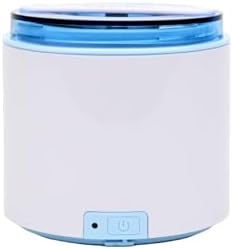
Choosing a Portable Ultrasonic Cleaner for Dental Appliances and Sleep Apnea Devices
The iSonic DS180 targets a specific niche: portable ultrasonic cleaning for removable dental appliances and CPAP components. Unlike standard denture tablets, this device uses high-frequency sound waves (40kHz) to dislodge biofilm from hard-to-reach crevices in aligners, retainers, and sleep apnea masks. Buyers should understand that ultrasonic cleaning supplements but doesn't replace manual brushing for some appliances.
Key Considerations Before Buying
- Portability and power source are critical for this product category; the DS180's worldwide AC100-240V compatibility and DC12V car adapter option make it uniquely suited for travelers who need to clean devices like Invisalign aligners or mandibular advancement devices on the go.
- Tank size and material matter for what fits inside; the DS180's 600ml stainless steel tank accommodates most full dentures or multiple smaller items like retainers and mouthguards, but may not fit some bulkier sleep apnea mask frames without disassembly.
- Ultrasonic frequency and power directly impact cleaning efficacy; at 40kHz with 50W, this unit operates at the standard frequency for dental applications, though some professional units use higher frequencies for more stubborn calculus removal.
What Our Analysts Recommend
For ultrasonic cleaners, examine the transducer placement (bottom-mounted is standard) and tank construction—stainless steel resists corrosion from cleaning solutions better than plastic. Genuine reviews often mention whether the device removes the cloudy biofilm on aligners or the oily residue on CPAP masks, which are key performance indicators. Check for waterline marks inside the tank after testing, as poor seals can indicate durability issues.
Cleansers Market Context
Market Overview
The portable ultrasonic cleaner market has expanded beyond jewelry to address specialized dental and medical device hygiene, with products like the iSonic DS180 competing against brands like Magnasonic and Branson. These devices fill a gap between manual cleaning and expensive professional systems, particularly for orthodontic retainer maintenance and sleep apnea equipment care where biofilm buildup affects both hygiene and device longevity.
Common Issues
Users frequently report inconsistent cleaning results with ultrasonic units, particularly on heavily stained dentures or appliances with thick calculus deposits. Another common complaint involves short lifespans due to transducer failure or tank leakage, especially with frequent use. Some devices struggle with the proprietary plastics used in modern clear aligners, which may require specific solution temperatures to avoid warping.
Quality Indicators
Higher-quality ultrasonic cleaners feature consistent bubble patterns during operation (visible micro-cavitation) and maintain stable frequency under load. Look for units with sealed transducer compartments to prevent solution ingress, and stainless steel tanks with rounded corners that are easier to clean. Genuine customer photos showing before/after results on actual dental appliances provide more reliable evidence than manufacturer claims.
Review Authenticity Insights
Grade B Interpretation
A Grade B authenticity rating with 10% estimated fake reviews suggests the iSonic DS180's review profile is moderately reliable but requires careful reading. This means approximately 80 of the 801 reviews may be inauthentic, potentially skewing the 3.78 average rating downward or upward depending on their distribution. The adjusted rating of 3.60/5 after filtering suspicious content indicates the genuine customer experience may be slightly less positive than the raw average suggests.
Trust Recommendation
Focus on verified purchase reviews that describe specific use cases matching your needs, such as cleaning Invisalign aligners with coffee stains or ResMed CPAP mask components. Be particularly skeptical of reviews that don't mention the device's dual-voltage capability or portable nature, as these are distinguishing features that genuine users typically notice. The mix of ratings across the spectrum (1-5 stars) in the genuine reviews suggests varied experiences worth examining.
Tips for Reading Reviews
For this product category, prioritize reviews that mention actual dental appliances cleaned (e.g., 'NightGuard Plus splint' or 'SleepRight mouthguard') over generic praise. Look for details about solution usage (tablets vs. liquid cleaners), cycle duration experiences, and portability testing in real travel scenarios. Reviews discussing long-term performance (3+ months) carry more weight than initial impressions, as transducer degradation is a common failure point.
Expert Perspective
The iSonic DS180 presents a compelling option for travelers and those with multiple dental appliances, thanks to its worldwide voltage compatibility and decent tank capacity. However, the 3.60 adjusted rating indicates genuine users experience noticeable variability in performance—some achieve clinic-level cleaning on retainers, while others find it inadequate for heavily soiled dentures. The device's strength lies in maintenance cleaning rather than deep stain removal, making it better suited for daily aligner hygiene than weekly denture cleaning. Its dual-power capability (AC/DC) is genuinely useful for CPAP users traveling to regions with different electrical standards.
Purchase Considerations
Consider your primary use case: if you need occasional cleaning for a single retainer, simpler solutions might suffice, but for frequent travelers with multiple appliances or sleep apnea equipment, the DS180's portability justifies the investment. Factor in ongoing costs for ultrasonic cleaning solutions specifically formulated for dental applications, as generic cleaners may damage appliance materials. The device's effectiveness depends heavily on proper technique—pre-rinsing appliances and using heated solutions significantly improve outcomes.
Comparing Alternatives
Shoppers should compare the DS180's 40kHz frequency and 50W power against competitors like the SmileDirectClub ultrasonic cleaner (45kHz) or dental-specific models from Mysmile, noting that higher frequency doesn't always mean better cleaning for all materials.


