
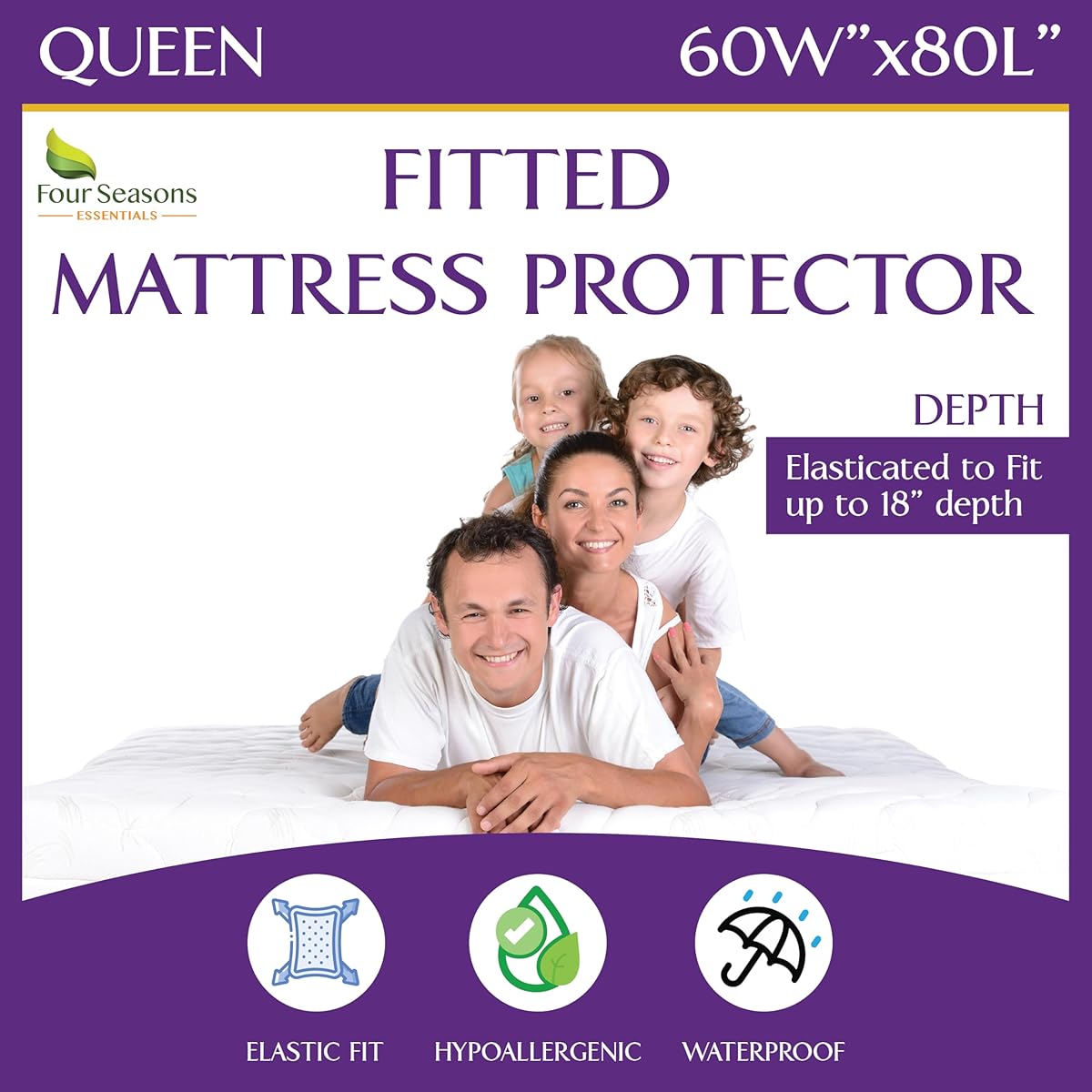
Choosing a Queen Waterproof Protector: Balance Protection with Comfort and Fit
For a queen mattress, a waterproof protector must deliver on its core promise without compromising sleep quality. This specific model emphasizes a 'noiseless, breathable, and vinyl-free' construction, which directly addresses common buyer pain points of crinkly sounds and poor airflow in traditional protectors.
Key Considerations Before Buying
- Deep pocket fit is non-negotiable for modern queen mattresses, which often exceed 12 inches; a protector must have elasticized corners that can stretch to accommodate up to 18-21 inches without slipping.
- The 'breathable' claim is critical for temperature regulation; look for a protector that uses a membrane like polyurethane (PU) instead of vinyl, which allows vapor transmission while blocking liquid.
- Noiseless performance depends on the fabric's weave and backing; a terry cloth or bamboo surface over a quiet membrane prevents the plastic-like rustling that disturbs sleep.
What Our Analysts Recommend
Examine product details for the waterproof technology (e.g., TPU membrane) and fabric composition (like cotton terry or polyester knit). Genuine deep pockets will specify a maximum mattress depth, and true hypoallergenic features require a tightly woven barrier against dust mites and allergens.
Mattress Protectors Market Context
Market Overview
The mattress protector market is saturated with products claiming 'waterproof' and 'hypoallergenic,' but performance varies widely based on material science. Vinyl-free, breathable protectors now dominate the premium segment, responding to consumer demand for protection that doesn't feel like a plastic sheet.
Common Issues
Buyers frequently report protectors that are noisy, trap heat, or have shallow pockets that pop off thick mattresses. Another common complaint is waterproofing that fails after washing or a backing that cracks over time, especially with low-quality vinyl constructions.
Quality Indicators
High-quality protectors specify their waterproof membrane type (e.g., polyurethane), have a high thread count or premium top fabric, and offer clear warranty terms against leaks. Look for OEKO-TEX or CertiPUR-US certifications for material safety assurances.
Review Authenticity Insights
Grade B Interpretation
A 'Grade B' with a 15% estimated fake review rate suggests the majority of feedback is reliable, but a notable portion of reviews may be inauthentically positive. The high adjusted rating of 4.5/5, down from 4.89, indicates genuine satisfaction is strong but was slightly inflated.
Trust Recommendation
Prioritize reading the 3- and 4-star verified purchase reviews for balanced insights on fit and long-term durability. The high number of verified purchases (3781) adds significant credibility; focus on reviews that detail specific use cases like spill protection or allergy management.
Tips for Reading Reviews
Search reviews for mentions of 'noise,' 'heat,' and 'fit after washing'—these are real-world tests of the 'noiseless, breathable, deep pocket' claims. Be skeptical of reviews that are overly vague or repeat marketing keywords verbatim without personal experience.
Expert Perspective
This protector's high adjusted rating and verified purchase volume signal it successfully meets core expectations for waterproofing and fit on queen beds. The emphasis on being vinyl-free and breathable addresses the two biggest compromises in basic protectors. However, the authenticity grade suggests some caution; the product likely performs well but may not be flawless for every sleeper, particularly regarding long-term durability or exact depth fit. The hypoallergenic claim is credible if backed by a tight membrane barrier against dust mites.
Purchase Considerations
Weigh the importance of absolute quiet and coolness against maximum waterproof security. If you have a mattress over 18 inches thick, confirm the exact pocket depth. Consider that a breathable membrane may have a slightly lower fluid barrier threshold than a heavy vinyl one, though it's sufficient for most accidents.
Comparing Alternatives
Shoppers should compare pocket depth specifications and fabric composition with similar-priced protectors to ensure optimal fit and feel.


