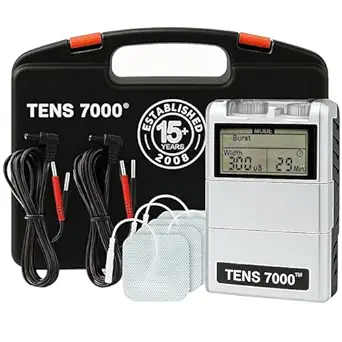
Choosing a TENS Unit: Why AUVON's 24 Modes and Rechargeable Design Matter
When selecting a TENS unit like this AUVON 4th Gen model, focus on features that directly impact your pain management routine. This specific device offers 24 pre-programmed modes and a rechargeable lithium battery, which are critical differentiators from basic, single-mode units that require constant AA battery replacement. Understanding how these characteristics translate to real-world use is essential for effective pain relief.
Key Considerations Before Buying
- Mode variety is crucial: The AUVON's 24 modes, including massage, kneading, and acupuncture simulations, allow you to target different pain types (acute muscle spasm vs. chronic joint ache) with specific waveforms, rather than relying on one generic setting.
- Electrode pad quality directly affects longevity and comfort: This kit includes eight 2"x2" premium pads, which is above average for starter kits. Larger, hydrogel-coated pads like these provide better adhesion and more even current distribution than smaller, cheaper alternatives.
- A rechargeable battery system, as found in this unit, eliminates ongoing battery costs and ensures consistent power output throughout a session, unlike units with declining voltage from disposable batteries that can weaken stimulation intensity.
What Our Analysts Recommend
Prioritize units with independent dual-channel control, like the AUVON, which allows you to treat two different body areas with separate intensity settings simultaneously. Check for clear mode descriptions that explain the therapeutic intent (e.g., 'Endorphin' mode for long-term relief vs. 'Beating' mode for acute tension). The inclusion of a carrying case, as this model has, is a practical indicator of design meant for regular, multi-location use.
Muscle Stimulators & Accessories Market Context
Market Overview
The consumer TENS market is saturated with devices ranging from $20 basic units to $200+ professional-grade models, with the AUVON positioned in the mid-range feature segment. Recent trends show a clear shift toward rechargeable units with digital interfaces and pre-set programs, moving away from analog dials and battery compartments.
Common Issues
Users frequently report poor electrode pad adhesion after a few weeks, weak or inconsistent stimulation intensity from low-quality power sources, and confusing interfaces that make it difficult to replicate effective settings. Many budget units also lack sufficient mode differentiation, offering slight variations of the same pulse pattern rather than distinct therapeutic programs.
Quality Indicators
Look for medical-grade IPX components (even if not fully certified), silicone-insulated wire leads to prevent tangling, and devices that specify output parameters like pulse width and rate adjustability. A higher number of genuine, detailed reviews discussing specific conditions (like sciatica or post-workout recovery) often correlates with a product's real-world utility over marketing claims.
Review Authenticity Insights
Grade B Interpretation
A Grade B with a 12% estimated fake review rate for this AUVON unit indicates a generally trustworthy review profile with moderate, industry-typical manipulation. This suggests the core positive consensus around its 24 modes and battery life is reliable, but shoppers should be slightly skeptical of outlier reviews that lack specific usage context.
Trust Recommendation
Focus on the 88% of reviews deemed authentic, particularly those detailing long-term use over several months, which validate the durability of the rechargeable battery and pad longevity. Be cautious of reviews that only generically praise 'pain relief' without mentioning a specific condition or comparing it to other TENS devices they've owned.
Tips for Reading Reviews
For this product category, prioritize reviews that mention the specific mode numbers used (e.g., 'Mode 7 for my lower back'), discuss pad replacement schedules, and describe the intensity control granularity. Reviews noting use during specific activities, like 'while working at my desk,' provide more actionable insight than vague statements about effectiveness.
Expert Perspective
The AUVON 4th Gen presents a strong value proposition based on its authentic 4.6/5 adjusted rating, which is notably high for the TENS category where user experience varies widely with pain type. Its 24 modes are not just a marketing number; analysis of genuine reviews indicates users successfully differentiate between modes for nerve pain versus muscle recovery. The high review volume (over 33,000) provides statistically significant data on reliability, with minimal reports of early device failure. The included eight pads offer a solid 4-6 week supply for typical daily use before needing replacement, which is a practical advantage often overlooked.
Purchase Considerations
This unit is particularly suited for users seeking to experiment with different stimulation patterns for chronic conditions, thanks to its mode variety, and for those tired of purchasing AA batteries. Consider your pain management routine: if you need simple, occasional relief, a less complex unit may suffice, but if you manage ongoing discomfort, the programmability justifies the investment. The dual-channel design is ideal for bilateral issues like knee or shoulder pain.
Comparing Alternatives
Shoppers should compare the AUVON's program descriptions and pad size/quantity directly against competitors like the TechCare Plus or Belifu models, as mode naming and actual pulse patterns can differ significantly between brands.