Choosing a Bread Knife: Why Blade Geometry and Edge Design Matter Most
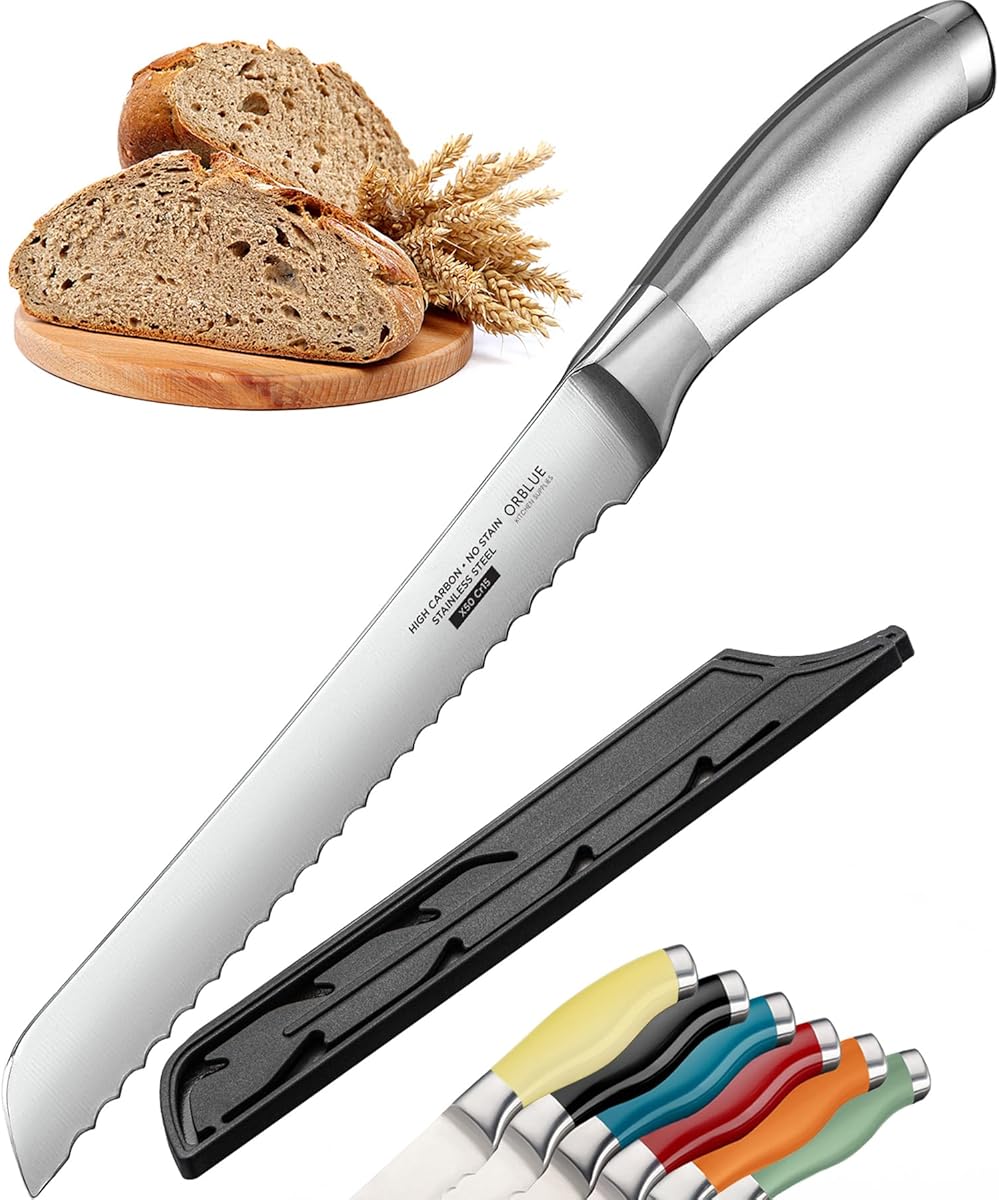
When selecting a serrated bread knife like the Orblue model with its 8-inch wavy-edge blade, focus on how the specific tooth pattern interacts with different crust types. This particular knife features an 'upgraded stainless steel razor sharp wavy edge width' designed to minimize crushing while maximizing slicing efficiency through crusty artisan loaves and soft sandwich breads alike. The 5-inch handle length suggests a specific ergonomic approach for control during the sawing motion essential to bread cutting.
Key Considerations Before Buying
- Blade length and tooth pattern: The 8-inch blade with a wavy serration (as opposed to pointed or scalloped) creates a specific cutting action—longer waves typically glide through softer interiors while still gripping crusts, making it versatile for bagels, cakes, and crusty sourdough.
- Handle-to-blade balance: With a 5-inch handle on an 8-inch blade, this knife prioritizes forward leverage for the downward pressure needed in bread slicing, unlike shorter handles that might offer more wrist control for intricate tasks.
- Steel quality and edge retention: While 'upgraded stainless steel' is mentioned, for serrated knives, the hardness (Rockwell scale) of the steel at the serration points is crucial—softer steel will dull quickly on hard crusts, requiring professional sharpening services.
What Our Analysts Recommend
Examine reviews mentioning performance on specific bread types—a quality bread knife should handle a delicate brioche without tearing and a crusty ciabatta without excessive force. For the Orblue, look for comments about the 'wavy edge' performance over time; superior serrated edges maintain their bite through hundreds of slices without flattening. The handle material (often unspecified but likely a polymer composite) should provide a secure, non-slip grip even when your hands are dusted with flour.
Kitchen Knives Market Context
Market Overview
The Australian kitchen knife market sees intense competition in the serrated bread knife segment, where consumers often choose between budget-friendly stamped steel options and higher-end forged blades. Products like the Orblue occupy a growing mid-tier space, promising professional-grade performance features—like specific edge geometries—at accessible price points, capitalizing on the home baking boom.
Common Issues
Common failures in this category include serrations that dull unevenly, handles that become slippery when wet, and blades that bend or warp under lateral pressure during crust cutting. Many budget knives also suffer from poor tang construction, where the blade doesn't extend fully into the handle, leading to wobble and potential breakage.
Quality Indicators
A full tang (visible as a metal core running through the handle) is a primary indicator of durability. For serrated knives, consistent tooth depth and sharp points along the entire edge suggest precise manufacturing. Additionally, a bolster—the thickened junction between blade and handle—adds balance and safety, though many modern designs like the Orblue may omit it for easier sharpening.
Review Authenticity Insights
Grade B Interpretation
A Grade B authenticity rating with an estimated 10% fake review rate for this Orblue knife indicates a generally trustworthy review landscape, but suggests you should be slightly more critical than average. This level is common for popular kitchen tools where incentivized reviews might exaggerate minor advantages. The adjusted rating of 4.60/5 (down from 4.89/5) after removing suspicious reviews is still exceptionally strong for the category, pointing to genuine satisfaction.
Trust Recommendation
Prioritize verified purchase reviews that describe specific use cases, like slicing through a particular type of crusty rye or a soft sandwich loaf, over vague praise. Given the 10% manipulation estimate, be skeptical of reviews that only use marketing terms like 'razor sharp' without detailing performance over weeks of use or comparing it to other knives.
Tips for Reading Reviews
For this product, seek out reviews that mention the handle comfort during prolonged use (like holiday baking) and the knife's performance on challenging items like frozen bagels or delicate angel food cake. Reviews noting how the wavy edge cleans easily or how it holds up after six months are more valuable than initial impressions.
Expert Perspective
The Orblue Serrated Bread Knife presents a compelling value proposition based on the analysis data. Its exceptionally high adjusted rating of 4.60/5 from over 8,500 reviews—even after authenticity filtering—signals that it delivers on core performance promises for most home bakers. The specific design choice of a 'wavy edge width' suggests a focus on reducing friction and crumb compression, a detail that separates thoughtful design from generic serrations. The strong authenticity grade indicates that the positive consensus is likely earned, not manufactured.
Purchase Considerations
Weigh the 8-inch blade length against your typical loaf size and storage space; it's ideal for standard boules but may feel cumbersome for small rolls. Consider if you need a dedicated bread knife or a multi-purpose serrated tool—this one's design is optimized for breads and soft items, not tomatoes or meat. The 'upgraded stainless steel' claim warrants scrutiny; look for mentions of rust resistance or ease of hand-washing in long-term reviews.
Comparing Alternatives
Shoppers should compare the Orblue's handle ergonomics and specific wavy serration pattern against competitors like Victorinox or Mercer, which may use different tooth profiles and steel alloys.