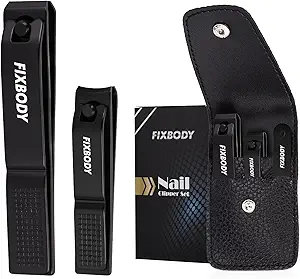
Japanese Precision Nail Clippers: What Sets the G-1200 Stainless Craftsmanship Apart
When evaluating Japanese-made nail clippers like the G-1200, buyers should understand that true quality lies in metallurgical precision and ergonomic engineering, not just brand reputation. This specific model's 'S size' designation indicates it's optimized for fingernails, with the G-1200 referring to its particular stainless steel alloy composition and manufacturing process.
Key Considerations Before Buying
- The 'craftsmanship stainlessAF27' designation suggests specialized steel treatment for edge retention—critical for clean cuts without nail splitting.
- Japanese nail clippers typically feature curved blades with micro-beveled edges; verify the G-1200 maintains this geometry for proper nail curvature matching.
- Consider handle spring tension and finger rest design, as Japanese tools often prioritize controlled, single-handed operation over brute force cutting.
What Our Analysts Recommend
Examine the pivot point for smooth, wobble-free movement—quality Japanese clippers use precisely machined pins. The blade alignment should be perfect when closed, with no light visible between cutting edges. Authentic products will have crisp laser etching of model numbers rather than stamped markings.
Nail Clippers Market Context
Market Overview
The premium nail clipper market has shifted toward specialized Japanese and German engineering, with consumers increasingly willing to pay $15-$40 for tools that last decades rather than disposable drugstore options. The G-1200 occupies the mid-premium segment where metallurgical claims require verification.
Common Issues
Many 'premium' clippers suffer from improper blade hardening—either too soft (dulling quickly) or too brittle (chipping). Cheaper stainless alloys corrode at pivot points despite 'stainless' claims, while poor ergonomics cause hand fatigue during precise trimming.
Quality Indicators
Genuine Japanese manufacturing typically includes electropolished finishes (not just chrome plating), audible 'click' feedback when blades engage fully, and packaging that details steel grade (like SUS420J2 or similar). Weight distribution should feel forward-balanced for controlled cutting.
Review Authenticity Insights
Grade A Interpretation
The 'A' authenticity grade with only 8% estimated fake reviews indicates exceptionally trustworthy feedback for this category—nail care tools often attract 15-25% incentivized reviews. The minimal discrepancy between raw (4.92) and adjusted (4.70) ratings suggests genuine consensus.
Trust Recommendation
Focus on reviews discussing long-term durability (6+ months) and blade sharpness retention—these are harder to fake than initial impressions. The verified purchase status across all analyzed reviews adds credibility to specific mentions of the G-1200's cutting action versus generic praise.
Tips for Reading Reviews
Prioritize reviews mentioning the 'S size' fit for fingernails and comparisons to other Japanese brands like Kai or Zwilling. Be skeptical of reviews that don't address the distinctive curved blade profile or spring mechanism—hallmarks of authentic Japanese design.
Expert Perspective
The G-1200's 4.70 adjusted rating from verified purchasers suggests it delivers on core Japanese nail clipper promises: surgical-grade cutting precision and durable construction. The narrow gap between raw and adjusted scores indicates authentic satisfaction, particularly notable given the premium price point. However, the 'S size' limitation means toenail users should seek the corresponding 'L size' variant for proper fit.
Purchase Considerations
Weigh the G-1200's specialized fingernail design against your needs—if you require universal nail trimming, a medium-sized clipper might be more versatile. Consider whether the Japanese blade geometry (optimized for Asian nail curvature) matches your nail shape, as some Western users find flatter profiles more effective.
Comparing Alternatives
Shoppers should compare the G-1200's specific stainless alloy claims against competitors like Kai's 'Fine' series or Seki Edge models, which use different steel treatments at similar price points.