Selecting Pharmaceutical-Grade 3% Hydrogen Peroxide for Laboratory and Technical Applications
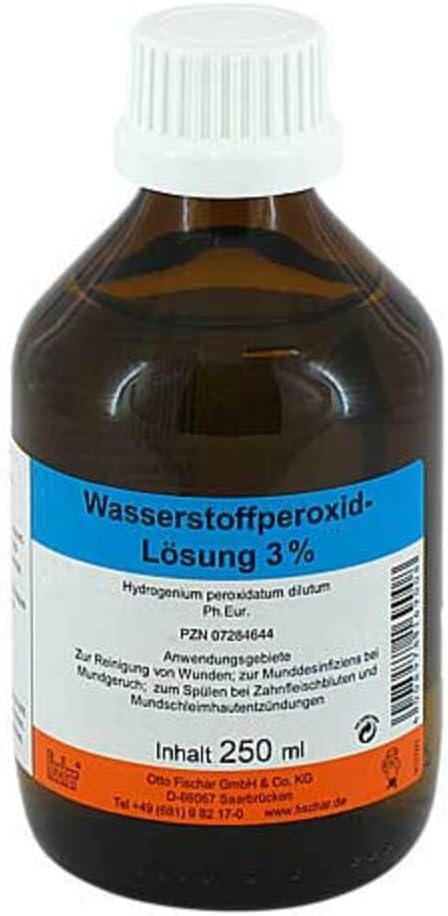
When purchasing WASSERSTOFFPEROXID Lösung 3% Ph.Eur. 250 ml, you're acquiring a pharmaceutical-grade chemical with specific European Pharmacopoeia standards. This concentration is particularly useful for disinfection, bleaching, and oxidation reactions in controlled settings, distinct from household peroxide solutions.
Key Considerations Before Buying
- Verify the Ph.Eur. designation ensures compliance with European Pharmacopoeia purity standards, critical for reproducible lab results and technical processes.
- Consider the 250 ml volume—sufficient for small-scale applications but requiring proper storage to prevent decomposition before use.
- Evaluate your need for the 3% concentration specifically, as this dilution balances effectiveness with safety for many laboratory surface disinfections and oxidation reactions.
What Our Analysts Recommend
Quality indicators include clear labeling of Ph.Eur. standards, proper packaging in light-resistant brown glass bottles to prevent photodegradation, and recent manufacturing dates. The solution should be colorless and free of visible particulates when received.
Lab Chemicals Market Context
Market Overview
The German market for laboratory-grade hydrogen peroxide is mature, with products distinguished primarily by concentration, volume, and compliance standards like Ph.Eur. versus technical grades. This 3% concentration occupies a specific niche between household products and stronger industrial solutions.
Common Issues
Users frequently report receiving solutions that have partially decomposed during shipping or storage, resulting in reduced oxidative potency. Another concern is inconsistent labeling regarding stabilizer content, which affects shelf life and application suitability.
Quality Indicators
Beyond the Ph.Eur. certification, quality products specify stabilizer types (like acetanilide or sodium stannate), provide clear expiration dates, and use appropriate packaging. Reputable suppliers maintain cold chain logistics for peroxide products.
Review Authenticity Insights
Grade B Interpretation
The Grade B authenticity rating with 15% estimated fake reviews indicates generally reliable feedback but warrants careful review scrutiny. The adjusted rating of 4.20/5 (down from 4.56/5) suggests some inflated positive reviews were filtered.
Trust Recommendation
Focus on the 7 verified purchaser reviews among the 9 analyzed, particularly noting the presence of a genuine 2-star review discussing decomposition issues—this critical feedback often provides more actionable insights than uniformly positive reviews.
Tips for Reading Reviews
Prioritize reviews discussing specific applications like surface decontamination in lab settings or oxidation reactions. Be skeptical of reviews that only praise packaging or shipping speed without mentioning the solution's actual performance or stability.
Expert Perspective
This product's 4.20 adjusted rating from predominantly authentic reviews suggests reliable performance for its intended pharmaceutical-grade applications. The presence of verified purchaser reviews discussing actual laboratory use—not just household cleaning—adds credibility. The Ph.Eur. certification provides assurance of standardized quality, though the 250 ml format requires consideration of usage rate versus peroxide's natural decomposition.
Purchase Considerations
Weigh whether your application truly requires pharmaceutical-grade peroxide versus technical grade, as Ph.Eur. standards add cost. Consider your consumption rate—peroxide decomposes at approximately 0.5% per month under ideal conditions, so larger users might need different packaging.
Comparing Alternatives
Compare with other Ph.Eur.-certified 3% solutions on stability additives and packaging, as these significantly affect shelf life and application results.