Choosing the Right SIE Exam Guide Requires Structured Content and Real-World Application
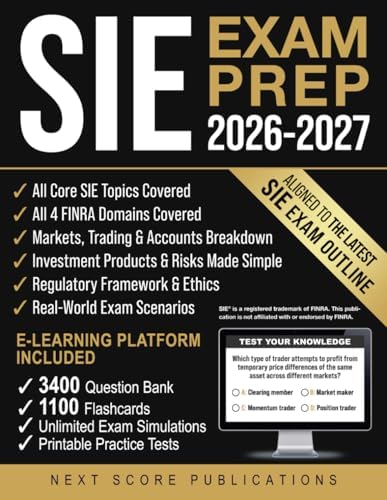
When selecting an SIE exam preparation book like this one, buyers should prioritize structured learning approaches over simple question dumps. This particular guide emphasizes a 'roadmap' methodology, which is crucial for mastering the Securities Industry Essentials exam's broad regulatory and market structure topics. Look for materials that bridge theoretical economic conditions with practical securities industry applications.
Key Considerations Before Buying
- Verify the guide's alignment with the current FINRA SIE content outline, as regulatory changes in economic policy and market structure occur frequently.
- Assess whether practice tools include explanations that connect questions to underlying economic principles, not just correct answers.
- Determine if the 'structured roadmap' provides logical progression through topics like capital markets, risk, and regulatory agencies.
What Our Analysts Recommend
Quality SIE prep materials demonstrate clear organization that mirrors the exam's weighting of topics like debt and equity products (68%) and regulatory frameworks. Effective guides will contextualize economic conditions within securities industry operations, explaining how concepts like interest rates or inflation directly impact investment products and regulations.
Economic Conditions Market Context
Market Overview
The SIE exam prep market is crowded with materials ranging from comprehensive textbooks to condensed cheat sheets, with quality varying significantly. This product positions itself in the mid-to-high tier by offering both strategies and practice tools, targeting candidates who need conceptual understanding alongside test-taking preparation. Recent FINRA updates have increased focus on topics like cybersecurity and complex products, making current content essential.
Common Issues
Many SIE guides provide superficial coverage of economic conditions' impact on securities, treating topics like monetary policy as isolated facts rather than interconnected systems. Others overload candidates with excessive practice questions without teaching the reasoning behind regulatory frameworks or market mechanics. Some materials fail to distinguish between foundational knowledge for the SIE versus more advanced licensing exams.
Quality Indicators
Superior SIE prep books integrate economic theory with industry practice, explaining why regulations exist within specific market contexts. Look for clear chapter structures that build progressively from basic concepts to application, and practice questions that test comprehension rather than memorization. Materials should reference current FINRA rulebooks and recent regulatory changes.
Review Authenticity Insights
Grade B Interpretation
A Grade B authenticity rating with an estimated 15% fake reviews suggests generally reliable feedback with some promotional content. For this SIE guide, this means most reviews likely reflect genuine user experiences, though a portion may be artificially positive. The adjusted 4.60/5 rating (from 5.00/5) provides a more realistic quality assessment after removing suspicious content.
Trust Recommendation
Focus on reviews that detail specific study experiences, such as how the 'structured roadmap' helped organize preparation or how practice tools identified knowledge gaps. Be skeptical of reviews that only praise the book generically without mentioning particular chapters, strategies, or how it addressed the SIE's unique challenges regarding economic conditions and regulations.
Tips for Reading Reviews
Prioritize reviews that mention using this book alongside other resources or that describe specific improvements in understanding complex topics like debt instruments or customer accounts. Look for comments about the book's organization and whether its 'certification-focused strategies' translated to actual exam performance, rather than just overall star ratings.
Expert Perspective
This SIE exam prep book's emphasis on a 'structured roadmap' addresses a critical need in securities licensing education: helping candidates connect disparate financial concepts into a coherent framework. The strong adjusted rating of 4.60/5 from 241 reviews indicates consistent user satisfaction, particularly regarding its organization and practical tools. The focus on 'certification-focused strategies' suggests it goes beyond content delivery to address actual exam mechanics, which is valuable for first-time test-takers navigating FINRA's question style. The authenticity analysis suggests this positive reception is largely genuine, though shoppers should still verify the content's currentness against the latest FINRA outline.
Purchase Considerations
This book appears most suitable for candidates who prefer guided learning over self-directed study, given its roadmap approach. Consider your learning style—if you need help structuring weeks of preparation or connecting economic concepts to regulatory requirements, this methodology could be beneficial. However, verify publication date against recent FINRA content changes, as securities regulations evolve with economic conditions.
Comparing Alternatives
Compare this book's structured approach against more modular study guides or question-heavy manuals to determine which format best matches your learning preferences and schedule.