
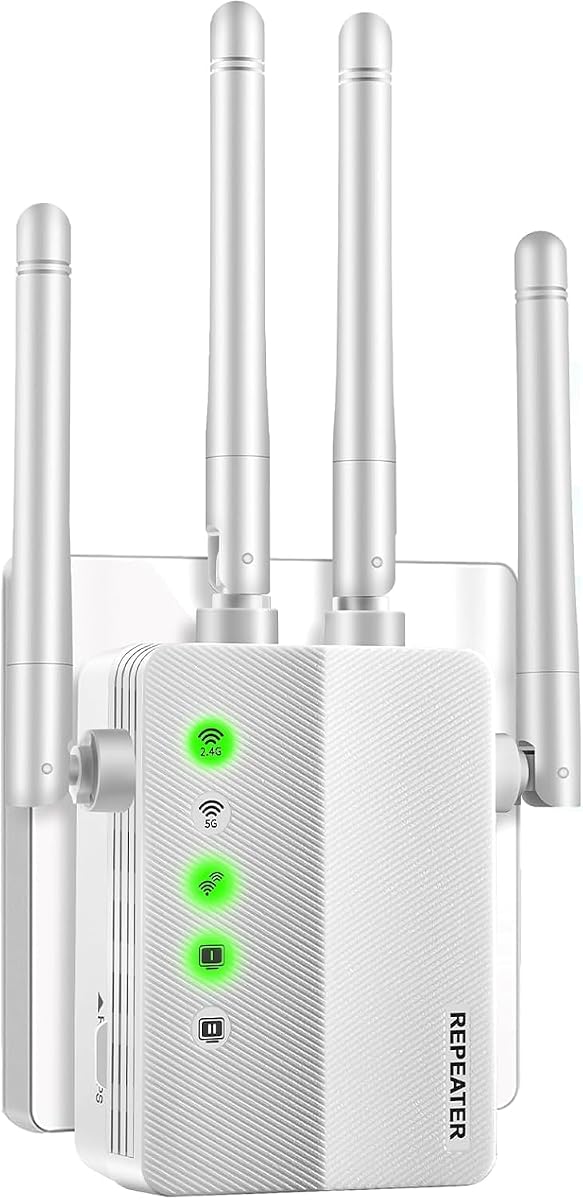
Dual-Band WiFi Extenders: What 1200Mbps Really Delivers at Home
A 1200Mbps dual-band WiFi extender promises to bridge dead zones by rebroadcasting your existing signal on both 2.4GHz and 5GHz bands. But the real-world benefit depends less on the headline speed and more on where you place it, how your router handles band steering, and whether your devices can take advantage of the 5GHz throughput.
Key Considerations Before Buying
- Placement determines performance more than specs: an extender must sit in a spot with a strong existing signal (roughly halfway between router and dead zone), because it can only amplify what it receives. Putting it in the dead zone itself typically yields a weak, unstable connection.
- Dual-band behavior varies: many 1200Mbps models clone your network name (SSID) and let devices roam between bands, but some create separate '_EXT' networks, which means you may need to manually switch bands for best speeds.
- Throughput is shared, not added: an extender halves the effective bandwidth on the repeated link in many configurations, so a 1200Mbps rating is a theoretical ceiling across both bands, not the speed you'll see at a distant device.
What Our Analysts Recommend
Prioritize models with Gigabit Ethernet ports if you want to wire a nearby device like a smart TV or console, and check for WPS push-button setup for simpler pairing. Look for clear documentation on band steering and whether the extender supports AP mode, which lets you use it as a wired access point for more stable performance.
Repeaters Market Context
Market Overview
WiFi extenders are a mature, crowded category dominated by budget dual-band models, with prices ranging from under $30 to over $100. Many units share similar chipsets and 1200Mbps AC-class radios, so brand and firmware quality often matter more than raw specs.
Common Issues
Buyers frequently report disappointing results caused by poor placement, mismatched expectations about speed loss, and difficulty connecting devices that don't roam well between the extender and router. Some units also run hot or require periodic reboots, and setup apps can be inconsistent across brands.
Quality Indicators
Strong indicators include Gigabit (not Fast) Ethernet ports, support for WPA3 or at least WPA2, a documented AP mode, and clear instructions for placement and SSID behavior. Brands that provide firmware updates and responsive support tend to produce more reliable long-term experiences.
Review Authenticity Insights
Grade B Interpretation
A Grade B authenticity rating with an estimated 10% fake review percentage means the review base is largely trustworthy but contains a meaningful minority of suspicious entries. The adjusted 4.80/5 rating, down from a perfect 5.00, suggests the genuine consensus is still very positive but slightly less flawless than the raw score implies.
Trust Recommendation
Treat the 4.80 adjusted rating as the more realistic signal and read a sample of detailed reviews rather than relying on the star average. Look for reviews that mention placement, home size, and specific devices, since those are harder to fake and more useful for your situation.
Tips for Reading Reviews
For extenders, focus on reviews that describe the reviewer's home layout, router model, and measured speed changes, as these reveal real-world performance. Be skeptical of short, generic five-star reviews and of any review that doesn't mention setup or placement challenges.
Expert Perspective
This 1200Mbps dual-band extender appears to be a solid budget-to-midrange option based on its adjusted 4.80 rating across nearly 4,000 reviews, with the majority of feedback described as detailed and genuine. The 10% estimated fake review share is a caution flag but not disqualifying, especially since the adjusted rating remains high. Real-world satisfaction will hinge on whether buyers place it correctly and accept the inherent trade-offs of repeating a signal.
Purchase Considerations
Weigh your home's layout and whether you can place the extender in a location with strong router signal, as well as whether you need Ethernet ports for wired devices. If you have a large home or thick walls, a mesh system may ultimately serve you better than a single repeater.
Comparing Alternatives
Compare this extender against mesh WiFi systems and powerline adapters, which can offer more consistent coverage in challenging layouts, before committing.


