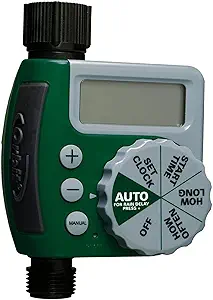
Smart Hose Timers: What to Know Before You Buy WiFi Watering
WiFi sprinkler timers like this model combine Bluetooth app control with hose-end watering, letting you schedule and monitor irrigation from your phone. Unlike basic mechanical timers, they offer remote scheduling, weather-aware adjustments, and water-use tracking—but connectivity and app quality vary widely across brands.
Key Considerations Before Buying
- Verify the wireless protocol: this product lists both WiFi and Bluetooth, but many hose timers rely on Bluetooth-only range (about 50 feet) while WiFi enables remote control. Confirm the timer connects to your 2.4GHz home network and that the app supports remote access, not just in-range Bluetooth pairing.
- Check valve and flow specifications against your water pressure and hose setup. Hose timers typically handle standard residential pressure (around 40–80 PSI), but low-flow drip systems and high-pressure setups need compatible minimum/maximum flow ratings to avoid leaks or failed scheduling.
- Consider weatherproofing and battery life for outdoor placement. Look for an IP-rated housing, UV-resistant casing, and clear battery specifications (often AA or lithium) since cold winters and direct sun can shorten runtime and cause connectivity dropouts.
What Our Analysts Recommend
Prioritize timers with a manual override button, so you can water without the app when connectivity fails. Check whether the app supports multiple schedules per zone, rain-delay settings, and firmware updates—features that separate durable smart timers from disposable gadgets. A clear warranty (12 months or more) and responsive customer support are strong signals of build quality in this category.
Hose Timers Market Context
Market Overview
Hose timers have shifted from mechanical dials to app-connected devices as smart home adoption grows, with WiFi and Bluetooth models competing on price and app features. The U.S. market now includes budget Bluetooth timers under $30 and WiFi models with weather integration at higher price points, making specification comparison essential.
Common Issues
Frequent complaints in this category include app crashes, Bluetooth range limitations that make WiFi claims misleading, and valve failures after a season of freeze-thaw cycles. Water pressure mismatches and battery drain from constant connectivity are also recurring problems that buyers should anticipate.
Quality Indicators
Strong products in this category specify IP waterproof ratings, list supported water pressure ranges, and offer both app and manual control. Look for brands with published firmware update histories and reviews that mention multi-season durability rather than initial setup alone.
Review Authenticity Insights
Grade B Interpretation
A Grade B with an estimated 15% fake review rate means most reviews are likely genuine, but roughly one in seven may be manipulated. All 27 reviews are verified purchases, which raises confidence, yet the perfect 5.00 rating adjusted down to 4.60 suggests some inflated enthusiasm—a common pattern for new smart-home gadgets with small review counts.
Trust Recommendation
Treat the 4.60 adjusted rating as the more realistic signal and read the handful of critical reviews for mentions of connectivity or valve issues. With only 27 reviews, the sample is small, so cross-check this product against similar hose timers with larger review histories before committing.
Tips for Reading Reviews
Focus on reviews that describe months of use, winter storage, and app reliability rather than unboxing impressions. For hose timers, reviews mentioning leak points, battery replacement frequency, and WiFi reconnection after router restarts are the most diagnostically useful.
Expert Perspective
This WiFi and Bluetooth hose timer shows strong early sentiment, but the adjusted 4.60 rating and Grade B authenticity score warrant measured expectations. The dual-connectivity claim is appealing, yet buyers should confirm whether WiFi enables true remote control or merely local Bluetooth pairing. Given the small review base, durability and app stability remain unproven over a full watering season.
Purchase Considerations
Weigh the convenience of app scheduling against the risk of connectivity dropouts and the need for manual fallback. Confirm your water pressure and hose type match the timer's specifications, and budget for quality batteries if the unit runs on AAs. A return window long enough to test through several watering cycles is advisable.
Comparing Alternatives
Compare this timer with established WiFi hose timer brands that publish pressure ratings, IP certifications, and multi-season user feedback before deciding.