
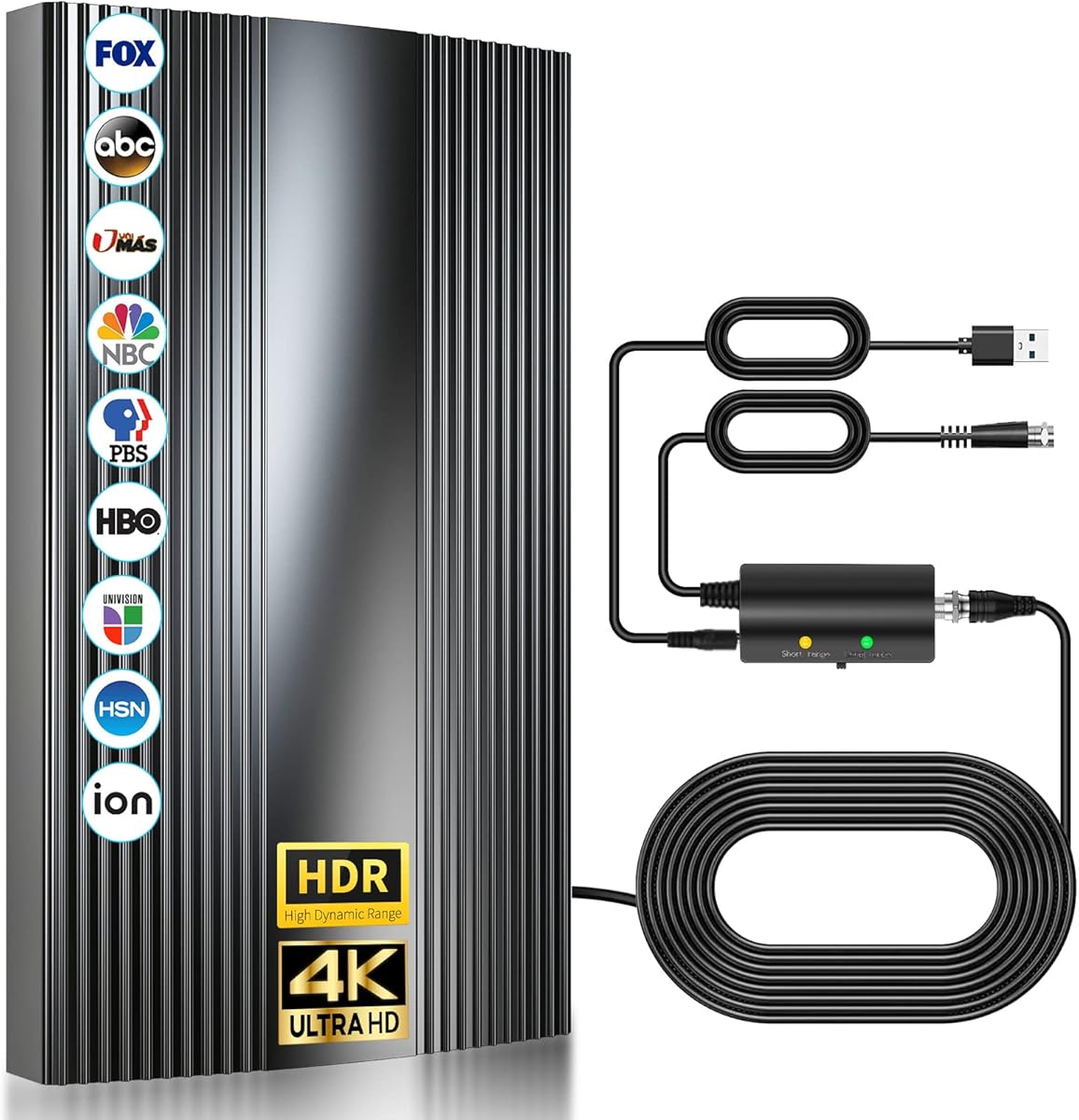
Unlock Free TV: Expert Tips for Choosing a Long-Range 8K Antenna
When considering a TV antenna like the 2026 model claiming 5000+ miles of range, it's crucial to understand that real-world performance depends heavily on your location, terrain, and broadcast tower distances. This guide helps you navigate the specs and set realistic expectations for cord-cutting success.
Key Considerations Before Buying
- Range vs. reality: A 5000-mile claim is marketing hyperbole; actual reception typically maxes out around 70 miles due to Earth's curvature and FCC broadcast limits. Focus on your local tower distances (use sites like RabbitEars) to gauge if this antenna meets your needs.
- Signal booster value: Amplifiers help in weak-signal areas, but if you're close to towers, a booster can overload and cause dropouts. Since this model includes one, check if it's switchable or has a power adapter that can be removed to bypass amplification.
- 8K/4K compatibility: The '8K 4K' tag means the antenna can pass through high-frequency signals (UHF/VHF) without losing quality. Ensure your TV has a built-in tuner that supports ATSC 3.0 (NextGen TV) to actually benefit from 8K broadcasts, which are still limited in the U.S.
What Our Analysts Recommend
Look for an antenna with a robust build (weather-resistant materials for outdoor use), a stable mounting system, and a cable length that fits your setup. Also, check for a 360-degree reception pattern and multi-directional or directional design—this model's claims suggest it can pull from multiple angles, which is ideal for varied tower locations.
TV Antennas Market Context
Market Overview
The TV antenna market is thriving as cord-cutters seek free over-the-air content, with brands emphasizing long-range claims to stand out. However, most consumers live within 35 miles of broadcast towers, making ultra-long-range features less critical than ease of installation and signal clarity.
Common Issues
Common problems include signal dropouts during weather, interference from buildings or trees, and misleading range specs. Many antennas also fail to pick up VHF channels, which are still used by some local stations, so verify frequency support before purchase.
Quality Indicators
Quality antennas feature high-gain elements (like a larger surface area or phased array), built-in filters to reduce cellular interference (LTE/5G), and clear documentation on frequency support. Look for certifications like UL listing and customer photos that show actual installation outcomes.
Review Authenticity Insights
Grade B Interpretation
The Grade B and 10% fake review rate indicate that while the majority of the 104 reviews are genuine (95% verified purchases), a small but notable portion may be incentivized or unverified. This is typical for popular electronics, where some sellers seed reviews to boost initial traction.
Trust Recommendation
Given the 5.00 average (adjusted to 4.80), you can trust the core positive sentiment, but treat extreme 5-star claims with a grain of salt. Focus on reviews that mention specific setups (e.g., 'suburban area, 50 channels') as they are more likely authentic.
Tips for Reading Reviews
Scan for reviews that describe installation details, channel counts, and comparisons to other antennas. Be wary of overly short, generic reviews with no specific location or performance data—these are often less reliable.
Expert Perspective
The 2026 TV Antenna appears to be a solid performer based on user feedback, particularly for suburban users who report pulling in over 50 channels. The inclusion of a signal booster and support for 8K/4K signals positions it well for future-proofing, though the 5000-mile range is unrealistic. With an adjusted rating of 4.8 and a low fake review percentage, it's likely a dependable choice for most households.
Purchase Considerations
Weigh the antenna's price against its features—ensure it covers both VHF and UHF, and consider if you need an amplified model. If you live in a dense urban area, a simpler unamplified antenna might suffice, but this model's versatility could be a bonus for rural users.
Comparing Alternatives
Compare this with other top-rated antennas like the ClearStream or Mohu brands, which offer different form factors and performance characteristics. Your choice should align with your specific reception environment and aesthetic preferences.


