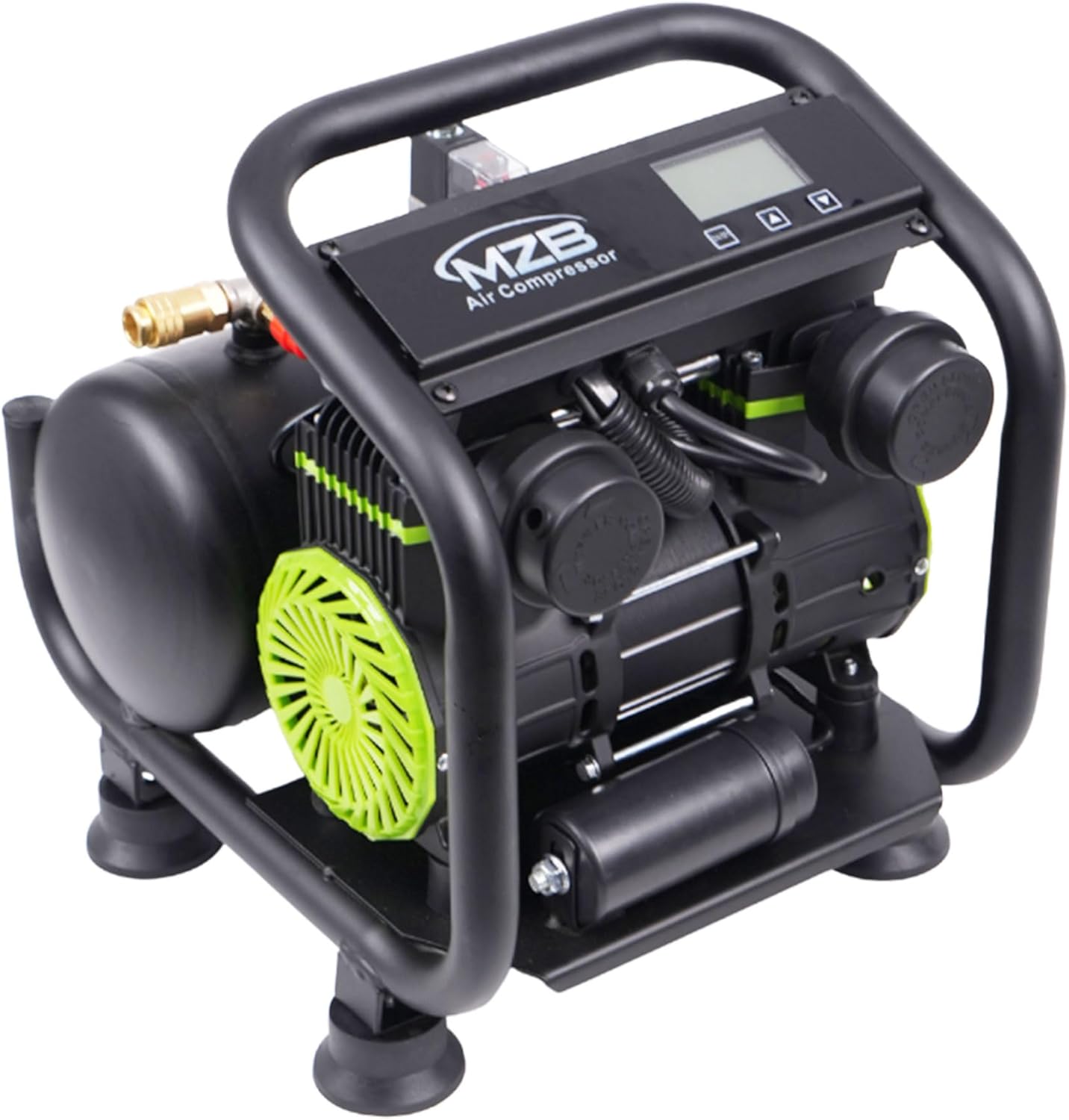
What to Know Before Buying a 3-Gallon Ultra-Quiet Air Compressor
A 3-gallon, 1.2 HP compressor like this model is the sweet spot for home garages and DIY workshops—large enough to run a brad nailer or inflate tires, yet light enough to carry one-handed. The headline feature here is 'ultra quiet' operation, which matters if you work indoors or near neighbors, and the two quick couplers let you keep two tools or hoses connected without swapping fittings.
Key Considerations Before Buying
- Tank size and duty cycle: A 3-gallon tank paired with a 1.2 HP motor is ideal for intermittent tasks like nailing trim, airbrushing, or topping off tires, but it will run continuously during high-demand jobs like die grinding or sanding. Match the tank size to your most frequent task, not your most ambitious one.
- Noise level: 'Ultra quiet' usually means 60–70 dB rather than the 80–90 dB of standard pancake compressors—roughly the difference between a normal conversation and a vacuum cleaner. If you plan to work in a garage with others nearby, this is the single most important spec to verify.
- Coupler configuration: Two quick couplers mean you can leave two hoses or tools attached at once, saving time on multi-tool projects. Check whether the couplers are standard 1/4-inch industrial (most common) or automotive-style, since mismatched fittings require adapters.
What Our Analysts Recommend
Look for a cast-iron or aluminum cylinder sleeve, which dissipates heat better than bare aluminum and extends motor life. Check the duty cycle rating—a 50% duty cycle means the compressor should rest as long as it runs, while 100% duty cycle units can run continuously. Also verify the CFM rating at 90 PSI, not just the max 115 PSI, because most air tools specify a CFM requirement at a working pressure.
Portable Air Compressors Market Context
Market Overview
The portable air compressor market has shifted toward quieter, more compact units as more homeowners use them for indoor projects like trim carpentry and airbrushing. Brands are competing on noise reduction and portability rather than raw tank size, and 3-gallon models have become the default recommendation for casual DIYers who don't need a 20-gallon shop compressor.
Common Issues
The most frequent complaints in this category are misleading noise ratings (manufacturers measure at different distances), short duty cycles that cause overheating during extended use, and leaks at quick couplers or drain valves. Buyers also report that advertised CFM figures are often measured at lower pressures than the tools actually require, leading to underpowered performance.
Quality Indicators
A quality portable compressor will list CFM at a specific pressure (e.g., 2.6 CFM at 90 PSI), include a thermal overload protector, and use metal rather than plastic fittings. Look for rubber feet to reduce vibration, an easy-to-read gauge, and a drain valve that's accessible without disassembling the unit. A one-year or longer warranty on the pump is a good sign of confidence in the build.
Review Authenticity Insights
Grade B Interpretation
A Grade B authenticity rating with an estimated 15% fake reviews means most reviews are genuine, but a meaningful minority may be incentivized or written by non-verified purchasers. The 5.00/5 rating from 18 reviews is suspiciously perfect, and the adjusted 4.60/5 rating suggests that removing questionable reviews brings the score down to a more realistic level—still strong, but not flawless.
Trust Recommendation
Trust the adjusted 4.60 rating more than the displayed 5.00, and focus on reviews that mention specific use cases, measurements, or comparisons to other compressors. Look for reviews with photos or videos of the unit in use, as these are harder to fake and often reveal real-world noise levels and build quality.
Tips for Reading Reviews
When reading reviews for air compressors, prioritize detailed accounts of noise, recovery time, and durability over generic praise like 'works great.' Pay attention to negative reviews that describe specific failures (e.g., 'coupler leaked after two weeks') rather than vague complaints, and note whether the reviewer mentions the tool they used, since performance varies by application.
Expert Perspective
This 3-gallon ultra-quiet compressor with two quick couplers and a 1.2 HP motor fits a clear niche: DIYers who need portability and low noise for tasks like trim nailing, tire inflation, and light airbrushing. The adjusted 4.60 rating from 18 reviews indicates solid satisfaction, and the authenticity analysis suggests the feedback is largely trustworthy. However, the small sample size and perfect 5.00 display rating warrant caution—this is not yet a proven long-term performer. The dual couplers and quiet operation are genuine differentiators in a crowded category.
Purchase Considerations
Weigh the 3-gallon capacity against your actual air demand: if you plan to run a paint sprayer or impact wrench continuously, you'll want a larger tank. Also consider whether the 'ultra quiet' claim holds at your typical working distance, and confirm the coupler type matches your existing tools. If you need a compressor for occasional home use and value low noise, this is a strong candidate; for frequent heavy-duty work, look at higher-CFM models.
Comparing Alternatives
Before buying, compare this unit's CFM at 90 PSI and decibel rating against similar 3-gallon quiet compressors from California Air Tools, Makita, and DeWalt, as well as the warranty terms and available service network.