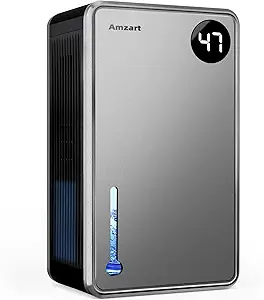
Small-Space Dehumidifiers: Tank Size, Coverage, and Noise Matter
The PSOS Dehumidifier is a compact, 98 oz (about 2.9 L) unit marketed for spaces up to 1,000 sq. ft., but its actual capacity and features—like a humidity display, auto shut-off, and 7-color ambient light—suggest it's best for bathrooms, bedrooms, basements, or closets. Before buying, understand how tank size, extraction rate, and noise level align with your needs.
Key Considerations Before Buying
- Tank capacity and extraction rate: A 98 oz tank is relatively small for a 1,000 sq. ft. space; in humid conditions, you may need to empty it multiple times a day. Check the pint rating (often 30–50 pints/day for larger units) to see if it matches your room size and humidity level.
- Noise level and placement: Described as 'quiet,' but without a decibel rating, consider user reviews for actual noise. Compressor-based units are louder than thermo-electric ones; for bedrooms, a unit under 45 dB is ideal.
- Drainage options and auto shut-off: Auto shut-off prevents overflow, but continuous drainage via hose (if supported) is more convenient for long-term use. Verify if a hose adapter is included or sold separately.
What Our Analysts Recommend
Look for energy efficiency (Energy Star rating), a built-in humidistat for automatic operation, and a washable filter to reduce maintenance. A humidity display helps monitor progress, while ambient lighting is a nice aesthetic touch but not a performance feature.
Dehumidifiers Market Context
Market Overview
The dehumidifier market is split between large compressor-based units for whole-home use and smaller thermo-electric or mini dehumidifiers for targeted spaces. Demand has grown with increased awareness of mold and indoor air quality, especially in humid regions. Portable, quiet models with smart features are trending.
Common Issues
Common complaints include units that fail to reduce humidity effectively in larger spaces, noisy operation, and frequent tank emptying. Some mini dehumidifiers are underpowered and best for closets or bathrooms only. Durability and customer service also vary widely by brand.
Quality Indicators
A quality dehumidifier lists a clear pint capacity (e.g., 30 pints/day) and coverage area, offers continuous drainage, and has a humidistat with precise settings. Brands with robust warranties and responsive support are preferable, as are units with Energy Star certification for efficiency.
Review Authenticity Insights
Grade B Interpretation
The PSOS Dehumidifier has a Grade C authenticity rating with an estimated 22% fake reviews, meaning a significant portion of its 4.89-star rating may be inflated. The adjusted rating of 4.40/5 is more realistic but still based on potentially unreliable data. This suggests you should scrutinize reviews carefully.
Trust Recommendation
Focus on reviews with detailed, specific use cases (e.g., 'used in a 200 sq. ft. basement for two weeks') and check dates to see if feedback is consistent over time. Be wary of generic praise or repeated phrasing. Consider the adjusted rating as a more trustworthy benchmark.
Tips for Reading Reviews
Look for reviews that mention tank size, noise level, and effectiveness in specific room sizes. Negative reviews often reveal limitations like frequent emptying or poor performance in high humidity. Cross-reference with external sources like forums or expert reviews.
Expert Perspective
The PSOS Dehumidifier offers appealing features like a humidity display and ambient light, but its 98 oz tank and 1,000 sq. ft. claim may be optimistic for high-humidity areas. The high adjusted rating (4.40) suggests most users are satisfied, but the 22% fake review estimate means you should verify performance claims. It's likely best for small rooms (bathrooms, bedrooms) where its compact size and quiet operation shine.
Purchase Considerations
Weigh the convenience of a small tank against your room's humidity level and your willingness to empty it often. If noise is critical, seek decibel data from reviews. Ensure the coverage area matches your space; for larger areas, a higher-capacity unit may be needed.
Comparing Alternatives
Compare with other mini dehumidifiers from brands like Pro Breeze or hOmeLabs, which may offer similar features with more transparent review histories. Check for units with continuous drainage if you need unattended operation.