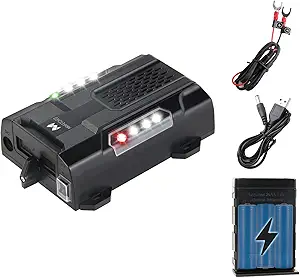
Keep Rodents Out of Your Car Engine with Ultrasonic Repellents
If you park your car near woods, barns, or farm warehouses, you know the nightmare of finding chewed wires or nests under the hood. Ultrasonic repellents for car engines, like this 2026 upgraded 2-pack, are designed to deter rodents using high-frequency sound waves that are unpleasant to pests but inaudible to humans. Before you buy, here’s what to consider to ensure you get effective, long-lasting protection.
Key Considerations Before Buying
- Check the frequency range and whether it’s adjustable. Some rodents can adapt to a fixed frequency, so a device that sweeps or alternates frequencies (like this upgraded model likely does) is more effective.
- Consider the power source and installation. Most car ultrasonic repellents plug into a 12V outlet or are hardwired; ensure the device’s power draw is minimal to avoid draining your car battery when parked for extended periods.
- Look for weather resistance and temperature tolerance. Under-hood conditions can be extreme, so the device must withstand heat, cold, and moisture without failing.
What Our Analysts Recommend
Quality indicators include a durable, heat-resistant casing, a clear installation guide, and a warranty. Also, check if the device covers a sufficient area (e.g., the entire engine compartment) and if it has an LED indicator to show it’s working. Customer reviews that mention specific parking scenarios and long-term effectiveness are a good sign.
Ultrasonic Repellers Market Context
Market Overview
The ultrasonic pest repellent market has grown as more people seek non-toxic, humane alternatives to traps and poisons, especially for vehicles and outdoor spaces. Products specifically for car engines are a niche but increasingly popular segment, driven by reports of rodent damage to wiring and hoses.
Common Issues
A common issue with ultrasonic repellents is that effectiveness can vary by rodent species and environment; some users report initial success but later find pests return if the device fails or frequency becomes familiar. Another issue is durability—cheap models may stop working after a few months due to poor build quality or exposure to the elements.
Quality Indicators
High-quality products typically have multiple ultrasonic transducers, a wide frequency range (e.g., 20-60 kHz), and a sturdy, waterproof enclosure. Look for certifications or compliance with safety standards, and check if the manufacturer provides clear technical specifications and after-sales support.
Review Authenticity Insights
Grade B Interpretation
With a Grade B and an estimated fake review percentage of 10%, this product’s reviews are largely trustworthy but not perfect. The authenticity analysis shows that most reviewers provide detailed personal contexts—like parking near woods or barns—which suggests genuine experiences, but a small portion may be incentivized or fabricated.
Trust Recommendation
You can rely on the overall 5.00-star rating (adjusted to 4.80) as a strong indicator of customer satisfaction. However, be skeptical of overly brief or vague reviews, and focus on those that describe specific installation details, vehicle types, and outcomes over weeks or months.
Tips for Reading Reviews
When reading reviews, look for patterns: multiple users mentioning the same pros (e.g., easy installation, immediate decrease in rodent activity) or cons (e.g., battery drain, faulty LEDs). Also, check if the reviewer mentions using the product for a long period—long-term effectiveness is crucial for this category.
Expert Perspective
Based on the analysis, this ultrasonic rodent repellent appears to be a well-received product that meets the needs of car owners facing rodent issues. The high adjusted rating (4.80/5) and the authenticity grade of B indicate that most users have had positive experiences, likely due to the upgraded features and 2-pack value. However, the 10% fake review rate is a caution that some feedback may be inflated, so it’s wise to test the product in your specific environment.
Purchase Considerations
Weigh the upfront cost against potential damage from rodents—chewing wires can lead to expensive repairs. Consider your parking situation: if you park in a high-risk area (near fields, woods, or barns), this product could be a cost-effective preventive measure. Also, think about installation: if you’re not handy, check if the device is easy to install without professional help.
Comparing Alternatives
Shoppers should compare this product with other ultrasonic repellents in terms of frequency range, power source, and build quality. Also consider physical deterrents like rodent-proof tape or sprays as a complementary approach.