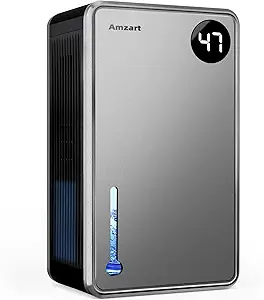
Basement Dehumidifier Buying Guide: 21 Pints, Compressor Power, and Quiet Operation
When tackling basement moisture, a 21-pint compressor dehumidifier like this one offers a balance of capacity and efficiency for spaces up to 1,500 square feet. Before you buy, consider your basement's specific conditions—temperature, humidity level, and drainage—to ensure you choose a unit that can actually keep up. This guide breaks down the key features and potential pitfalls to help you make a smart choice.
Key Considerations Before Buying
- Capacity vs. square footage: While rated for 1,500 sq ft, the 21-pint capacity (per DOE 2019 standards) is best for moderately damp spaces. For severely wet basements, you might need a higher-capacity unit or multiple dehumidifiers.
- Compressor vs. thermoelectric: Compressor models, like this one, are more powerful and effective in cooler basement temperatures, but they can be noisier and consume more energy. If your basement gets below 65°F, the compressor's efficiency may drop, so consider a unit with a defrost feature.
- Drainage options: Look for a continuous drain hose connection to avoid emptying the water tank constantly. This is especially important for a basement unit you plan to run frequently—check if the included hose length and gravity drain work with your setup.
What Our Analysts Recommend
Quality indicators include a reliable compressor (brands like LG, Panasonic, or GMCC are common), a robust humidistat that accurately reads and maintains your desired humidity level, and a build that feels solid, with a secure water tank and easy-to-clean filter. Also, check for energy efficiency (Energy Star rating) and a warranty that covers the compressor and parts for at least a year.
Dehumidifiers Market Context
Market Overview
The dehumidifier market is crowded, with options ranging from small 20-pint units to heavy-duty 70-pint models. The 21-pint segment is popular for basements and medium rooms, but consumers often confuse peak capacity with actual performance—new DOE standards have made ratings more realistic, so a 21-pint unit today is less powerful than a similarly named model from a few years ago.
Common Issues
Common problems include units that struggle to keep up in very damp conditions, noisy operation that disrupts living spaces, and frosting up in cooler temperatures. Another frequent complaint is that the water tank sensor fails prematurely, causing the unit to shut off even when empty.
Quality Indicators
Look for dehumidifiers with a high Energy Factor (liters per kWh), a low noise rating (measured in dB), and a built-in pump for vertical drainage if you don't have a floor drain. Also, check for a company with good customer support and a solid warranty—these are signs of confidence in the product.
Review Authenticity Insights
Grade B Interpretation
The Grade B rating and 10% estimated fake review percentage suggest that while most reviews are genuine, a small but notable portion may be incentivized or fabricated. This means you can trust the overall sentiment, but you should still read individual reviews critically, especially those with extreme praise or vague details.
Trust Recommendation
Given the 4.00 adjusted rating (down from 4.22), the product is likely decent but not exceptional. Pay attention to verified purchase badges and look for reviews that mention specific usage scenarios, like 'we used it in a 1,200 sq ft basement' or 'it lowers humidity from 70% to 50% in X hours.' These are more reliable than generic 'works great' comments.
Tips for Reading Reviews
For dehumidifiers, focus on reviews that discuss noise levels at different fan speeds, ease of setting up the continuous drain, and how well the unit maintains a set humidity over time. Also, check for complaints about the water tank design—overflow issues or a flimsy float mechanism are red flags.
Expert Perspective
Based on the analysis, this 21-pint dehumidifier appears to be a solid mid-range option for basement use, but it's not without flaws. The genuine reviews highlight real-world effectiveness in spaces up to 1,500 sq ft, but also note that it may be loud on high settings and that the tank could be larger. The slight downgrade in adjusted rating suggests that some positive reviews are overhyped, so temper your expectations.
Purchase Considerations
Weigh the unit's capacity against your basement's humidity level—if you have a serious moisture problem, you might need a 30-pint or larger. Also, consider the noise factor: if your basement is a living space, look for a model with a 'quiet' mode or a lower dB rating. Finally, factor in the cost of electricity—check the wattage and Energy Star rating to estimate running costs.
Comparing Alternatives
Before committing, compare this unit with other 21-pint models from brands like hOmeLabs, Vremi, and Frigidaire, which often have similar features and price points. Look for side-by-side comparisons of noise levels and energy efficiency to ensure you get the best value for your specific needs.