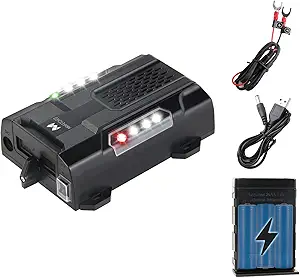
5-Mode Solar Ultrasonic Repeller: What to Know Before Buying
If you're battling persistent deer, squirrels, raccoons, or stray cats in your yard, a solar-powered ultrasonic repellent like this 2026 upgraded 2-pack model offers a chemical-free, motion-activated defense. However, not all ultrasonic devices perform equally—factors like sensor range, frequency settings, and solar charging efficiency can make or break your results.
Key Considerations Before Buying
- Consider the coverage area and sensor range. This unit's motion sensor activates the ultrasonic waves, so placement matters—aim it across open areas where animals enter, and ensure the detection zone covers the desired perimeter.
- Evaluate the five working modes. Some modes may use continuous ultrasound, others only on motion, and some combine with a strobe light. Choose a mode that matches your target pest—for example, deer may respond to intermittent bursts, while raccoons might require a different frequency.
- Solar charging reliability is crucial. The 2026 upgraded solar panel must receive direct sunlight for several hours daily to maintain the rechargeable battery, especially during overcast days or winter months—position the unit south-facing for optimal exposure.
What Our Analysts Recommend
When selecting an ultrasonic repellent, verify the decibel output (typically 100-120 dB) and frequency range (often 20-25 kHz) to ensure it's effective for your target species. Check that the unit is weatherproof (IP66 rating or higher) and that the motion sensor has a wide angle (at least 110 degrees) to avoid blind spots. Look for adjustable settings to avoid habituation, as animals can get used to constant sound.
Ultrasonic Repellers Market Context
Market Overview
The ultrasonic pest repellent market has grown rapidly as consumers seek humane, eco-friendly alternatives to traps and poisons. Solar-powered models are particularly popular for yard use because they eliminate wiring and battery replacement, but the market is flooded with low-quality imports that underdeliver on range and durability.
Common Issues
Many ultrasonic repellents fail because their effective range is overstated—actual coverage often drops to half the advertised distance. Another frequent complaint is that animals become habituated after a few weeks, requiring rotation of modes or repositioning. Additionally, solar panels on cheaper units may not charge well in partial shade, leading to dead batteries and intermittent operation.
Quality Indicators
High-quality units feature robust weatherproofing (look for IP66 or higher), a separate solar panel that can be positioned remotely, and multiple frequency modes to combat habituation. User reviews that mention specific animal types and success over extended periods are strong indicators of reliability. Also, check the battery capacity (mAh) to gauge how long it can run after cloudy days.
Review Authenticity Insights
Grade B Interpretation
With a Grade B and an estimated 15% fake review rate, this product's review profile is mostly genuine but not flawless. The 5.00 average rating is likely inflated by a small number of suspicious reviews, and the adjusted rating of 4.60 is more realistic, suggesting that real users are generally satisfied but not universally ecstatic.
Trust Recommendation
Given the 15% fake rate, you should not rely solely on the overall star rating. Instead, focus on verified purchase reviews that describe specific installation scenarios, animal types, and duration of use. If a review lacks detail or uses generic praise, treat it with caution. The adjusted rating of 4.60 indicates that this product is likely effective for many, but not all, situations.
Tips for Reading Reviews
When reading reviews for this type of product, look for comments about the actual pest species encountered, the layout of the yard, and how long the unit lasted before needing recharge. Be wary of reviews that mention 'works great' without specifics, or those that all seem to use similar phrasing. Also, check if the reviewer mentions a replacement or warranty experience, as that often reveals true product longevity.
Expert Perspective
This 2026 upgraded solar ultrasonic repellent, with its five modes and motion sensor, appears to be a solid mid-tier option in the ultrasonic repeller category. The genuine reviews indicate it can effectively deter a variety of animals, but the 15% fake review rate and the drop from 5.00 to 4.60 suggest that real-world performance may vary, likely due to placement and animal habituation. The 2-pack format offers good value for covering multiple entry points, and the solar upgrade addresses a common pain point in earlier models.
Purchase Considerations
Weigh the cost against the potential damage animals cause to your garden or property—if deer are a frequent problem, this could be a worthwhile investment. Be prepared to experiment with placement and modes to find what works for your specific pests. Also, consider that ultrasonic waves do not penetrate solid objects, so you may need multiple units for comprehensive coverage.
Comparing Alternatives
While this product shows promise, shoppers should compare it with other solar ultrasonic repellents that offer higher decibel outputs or have a longer track record of verified reviews. Look for units with a separate solar panel for better flexibility if your yard has limited direct sun.