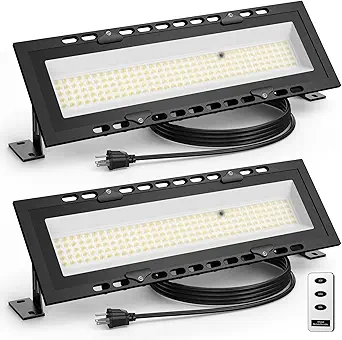
Solar Shed Lights: What to Know Before You Buy
The MMKT Solar Shed Light is a 3-foot, warm white LED fixture that charges via solar panel and activates with a dusk-to-dawn motion sensor, rated IP65 waterproof for garages, barns, patios, or parking areas. This 2-pack is designed for off-grid or hard-to-wire spaces, but performance depends on sun exposure and motion coverage.
Key Considerations Before Buying
- Solar panel placement is critical: the included panel needs direct sunlight for most of the day to fully charge the battery, especially in winter or shaded areas. If your shed roof is shaded, the light may not run reliably through the night.
- Motion sensor range and detection angle determine how well the light activates when you need it. Check the specified detection distance (often 10–20 feet) and ensure it covers your entry path or work area without false triggers from passing cars or animals.
- IP65 waterproofing means the light is protected against dust and water jets, but it’s not submersible. For coastal or heavy rain areas, ensure all cable connections are sealed and the panel is mounted securely to avoid water ingress over time.
What Our Analysts Recommend
Look for a solar light with a separate panel for flexible mounting, a replaceable battery (often 18650 or similar), and a clear lumen output rating—warm white is typically 3000K and better for ambiance than task lighting. Check that the motion sensor has adjustable sensitivity and time settings, and that the housing is UV-resistant to prevent yellowing.
Job Site Lighting Market Context
Market Overview
Solar job site lighting has grown as a practical solution for remote or unpowered structures, with many brands offering integrated or separate-panel designs. The market is crowded with generic products, but reputable brands focus on battery quality, sensor reliability, and durable waterproofing.
Common Issues
Common complaints include batteries failing within a year, motion sensors that are either too sensitive or not sensitive enough, and insufficient brightness for the intended space. Many low-cost units also have poor waterproofing, leading to corrosion or short circuits after exposure to rain.
Quality Indicators
Quality solar lights use monocrystalline solar panels, lithium batteries with high cycle life, and IP65 or higher ratings. Look for clear specifications on lumens, battery capacity (mAh), and sensor range, and prefer brands that offer replacement parts or warranties.
Review Authenticity Insights
Grade B Interpretation
The B authenticity grade and 15% estimated fake review percentage indicate that while most reviews are genuine, there is a notable minority of potentially incentivized or fake reviews. This means the adjusted rating of 4.20/5 is more reliable than the raw 4.56/5, but still reflects generally positive experiences.
Trust Recommendation
Trust the adjusted rating of 4.20/5 as a solid indicator of satisfactory performance, but be aware that some glowing reviews may be exaggerated. Focus on reviews that mention specific installation details, long-term use, and comparisons to other solar lights.
Tips for Reading Reviews
When reading reviews for solar lights, prioritize those that discuss battery life after several months, real-world brightness, and how well the motion sensor works in different weather. Ignore generic praise without specifics, and look for patterns in complaints about durability or sensor issues.
Expert Perspective
The MMKT Solar Shed Light offers a practical off-grid lighting solution with a 3-foot warm white LED bar, motion sensor, and IP65 rating, backed by a solid adjusted rating of 4.20/5 from 28 reviews. While the review authenticity grade is B, the majority of feedback is genuine and highlights successful installations in sheds and garages. The 2-pack provides good value for covering multiple areas, but performance hinges on adequate sunlight and proper sensor placement. For the price, it’s a reasonable option for basic illumination, though not a substitute for wired lighting in critical workspaces.
Purchase Considerations
Consider your daily sun exposure—if your shed gets less than 4–5 hours of direct sunlight, this light may struggle to stay charged. Also, assess whether the motion sensor coverage matches your needs; if you need constant light, look for a model with a manual override or dusk-to-dawn mode without motion activation.
Comparing Alternatives
Compare with other solar shed lights that offer higher lumen output or larger battery capacity, and check for brands with better review authenticity grades if you’re wary of fake reviews.