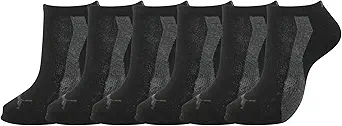
Why Toe Socks Could Be Your Hiking Game-Changer
If you're dealing with persistent blisters or toe rubbing during hikes, a five-finger sock design like this one might be the solution you haven't tried. These Merino wool crew socks are built with individual toe pockets to keep toes separated, reducing friction while providing moisture-wicking warmth and compressive arch support. They're a niche but increasingly popular choice for hikers who want both thermal insulation and blister prevention.
Key Considerations Before Buying
- Consider your hiking terrain and intensity: these reinforced cushion socks are ideal for moderate to rugged trails where foot fatigue and blisters are common, but they may feel bulky in tight boots or for ultralight backpacking.
- Evaluate your foot shape and sensitivity: the five-finger design requires a bit of adjustment for first-time users, and those with very wide toes or bunions may find the pockets restrictive, while others report a liberating, natural alignment.
- Think about temperature regulation: Merino wool offers excellent thermal warmth for cold-weather hikes, but if you hike primarily in hot climates, the wool blend may be too warm, even with moisture-wicking properties.
What Our Analysts Recommend
Quality toe socks should have reinforced stitching at the toe seams and heel to prevent tearing under stress. Look for a compressive arch band that is snug but not restrictive, and a cushion density that matches your boot's interior volume. Also, check the Merino wool percentage—higher amounts (50% or more) improve breathability and odor resistance.
Athletic Socks Market Context
Market Overview
The athletic sock market has seen a surge in specialized designs, especially for hiking, where blister prevention and moisture management are top priorities. Toe socks remain a smaller but loyal segment, with brands like Injinji leading the category, but more affordable options like this one are gaining traction among budget-conscious hikers.
Common Issues
Common complaints in hiking socks include seam irritation, inadequate cushioning, and socks that slip down into boots. For toe socks specifically, some users struggle with the learning curve of getting toes into the individual pockets, and a poorly fitted pair can actually cause new friction points.
Quality Indicators
High-quality hiking toe socks feature seamless toe closures, a reinforced heel and toe box, and a graduated compression zone that supports the arch without cutting off circulation. Merino wool blends that include nylon or spandex offer better durability and shape retention than pure wool.
Review Authenticity Insights
Grade B Interpretation
With a Grade B and an estimated 10% fake review rate, this product shows strong overall authenticity but has a small cluster of potentially unreliable reviews. The 4.67/5 star rating is likely slightly inflated, and the adjusted rating of 4.40/5 gives a more realistic picture of customer satisfaction.
Trust Recommendation
You can generally trust the bulk of the reviews, especially those from verified purchasers who describe specific hiking conditions or compare these socks to other brands. However, be cautious of overly brief, five-star reviews that lack personal context—these may be the 10% that are fabricated.
Tips for Reading Reviews
Focus on reviews that mention durability after multiple washes, fit with specific hiking boots, and performance in wet or cold conditions. Look for comments about toe pocket sizing and arch compression tightness, as these are the most common pain points for this product type.
Expert Perspective
This product delivers on its core promises—blister prevention, moisture wicking, and thermal warmth—making it a solid choice for hikers who value toe separation. The 4.40/5 adjusted rating suggests genuine satisfaction, though the 10% fake review rate means you should read a range of detailed reviews to confirm fit and durability. The compressive arch support and reinforced cushion are standout features that align with what experienced hikers look for in a performance sock.
Purchase Considerations
Weigh the learning curve of toe socks against your blister history—if you're prone to toe rubbing, this design could be transformative, but if you're happy with traditional socks, the adjustment may not be worth it. Also, consider that 3 pairs offer a good rotation for a long weekend trip, but you may want more for multi-day treks.
Comparing Alternatives
For comparison, consider Injinji's outdoor series for a higher Merino wool content and more rigorous quality control, or look at traditional crew socks from Darn Tough or Smartwool if you prefer a non-toe design.