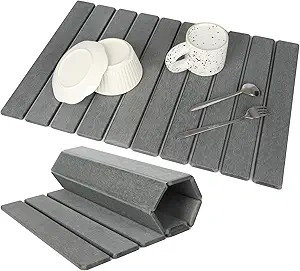
Silicone Dish Drying Mats: Absorbency, Size, and Care Explained
Silicone dish drying mats offer a flexible, space-saving alternative to bulky drying racks, protecting your countertops from water spots and scratches. When choosing one, consider its absorbency, heat resistance, and whether it can handle your daily dish load without curling or slipping.
Key Considerations Before Buying
- Measure your counter space and sink area – mats come in various sizes, and you'll want one that fits your most-used dishes without overcrowding. A mat that's too small will lead to water on the counter.
- Look for mats with raised edges or a lip to catch water and prevent spills. Some designs have a slight trough to channel water back toward the sink, which is a practical feature to prioritize.
- Check the material's heat resistance if you plan to place hot pots or pans on it. Most silicone mats are heat-resistant up to 400°F, but confirm this to avoid melting or warping.
What Our Analysts Recommend
Quality silicone mats are made from food-grade, BPA-free silicone that is durable yet flexible, and they should lie flat without curling. A good mat will also be easy to clean, either by wiping or in the dishwasher, and should not retain odors or stains over time.
Dish Drying Mats Market Context
Market Overview
The dish drying mat market has expanded with a variety of silicone, microfiber, and hybrid options, each claiming to solve countertop water issues. Silicone mats are popular for their durability and ease of cleaning, but they lack the absorbency of fabric mats, which can be a trade-off for some users.
Common Issues
Common complaints include mats that are too thin and don't absorb water, edges that curl up after repeated use, and surfaces that attract lint or dust. Some silicone mats also develop a slippery film if not cleaned thoroughly, especially when used with certain dish soaps.
Quality Indicators
High-quality silicone mats will have a non-slip base, reinforced edges, and a smooth yet grippy surface that holds dishes in place. Look for user photos showing real-life usage, and check for certifications like FDA or LFGB approval for food contact.
Review Authenticity Insights
Grade B Interpretation
The Grade B and 10% estimated fake review rate suggest that while the majority of reviews are genuine, a small fraction may be incentivized or inauthentic. This is relatively low for the category, so you can trust the overall 4.89 rating, but the adjusted 4.60 rating gives a more conservative view.
Trust Recommendation
Given the high rating and mostly authentic reviews, you can confidently consider this mat, but be aware that the adjusted rating indicates some reviews may be overly positive. Focus on detailed, verified purchase reviews that mention specific usage scenarios to gauge real-world performance.
Tips for Reading Reviews
When reading reviews, look for those that mention the mat's size, thickness, and how it behaves over time (e.g., curling, staining). Photos from customers showing the mat in use are particularly valuable, as they reveal true color and scale. Also, note any negative reviews that discuss issues like water pooling or difficulty cleaning.
Expert Perspective
This silicone dish drying mat appears to be a well-received product with a strong reputation for durability and functionality, as reflected in its high rating and low fake review percentage. The adjusted rating still indicates solid performance, suggesting that even when discounting potentially inflated reviews, the mat meets expectations. Its design likely addresses common pain points like slipping and water runoff, making it a reliable choice for everyday kitchen use.
Purchase Considerations
Weigh the mat's absorbency (or lack thereof) against your dish drying needs – if you prefer quick-drying dishes, a silicone mat may not be ideal, but it excels for delicate items like glassware. Also consider the mat's size relative to your sink and counter layout, and whether you need a heat-resistant surface for hot cookware.
Comparing Alternatives
Shoppers should compare this mat with microfiber alternatives that offer absorbency, and other silicone mats with different edge designs or thicknesses to find the best fit for their kitchen workflow.